 Pin it
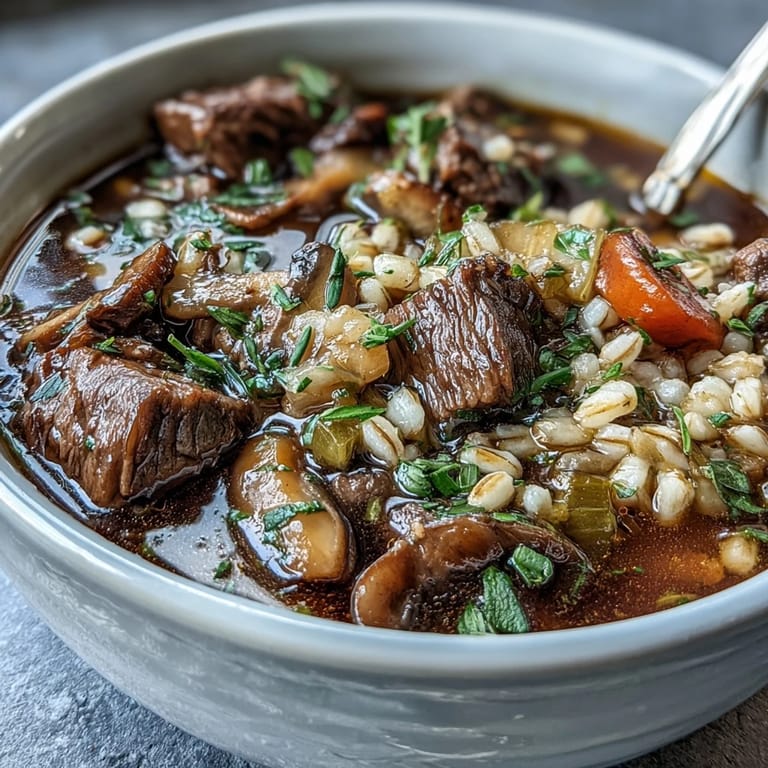
 There's something about the smell of beef browning in a hot pot that makes everything feel right in the kitchen. My grandmother had this soup simmering whenever the weather turned cold, and I'd wander in to find her stirring slowly, lost in thought. Years later, I realized she wasn't just making soup—she was creating something that would warm people from the inside out. This beef and barley soup became my go-to comfort dish, the one I make when I want to feed someone properly.
I made this for my best friend the week she moved into her new place, and we sat in her half-empty kitchen eating straight from the pot. She'd been stressed about the move, barely eating, and watching her have three bowls of this felt like the most useful thing I'd done in months. That's when I understood—this soup isn't just food, it's conversation and care in edible form.
Ingredients
- Beef stew meat (1 lb, cut into 1-inch cubes): Go for meat with a little marbling—it'll render down and make the broth richer as it cooks, and you'll actually taste the difference.
- Pearl barley (3/4 cup, rinsed): Rinsing removes the starch so it won't turn your soup into glue, and the barley will stay distinct and chewy rather than mushy.
- Carrots (2 medium, diced): Cut them uniform so they cook at the same rate, and don't skip peeling—the skin can be bitter after an hour of simmering.
- Celery (2 stalks, diced): This is the backbone of flavor most people underestimate; it builds the base layer that everything else sits on top of.
- Onion (1 large, chopped): Sweet onions work best here because you want them to mellow and almost disappear into the broth by the end.
- Garlic (2 cloves, minced): Fresh is non-negotiable—add it after the softer vegetables so it doesn't burn and turn bitter.
- Potatoes (1 cup, diced): Waxy potatoes hold their shape better than floury ones, so they won't disintegrate into the broth.
- Mushrooms (1 cup, sliced): They add earthiness and umami that makes the whole soup taste deeper and more savory.
- Frozen peas (1 cup): Add them at the end so they stay bright and don't turn gray; they give little pops of sweetness and color.
- Diced tomatoes (1 can, optional but recommended): The acidity cuts through the richness and adds complexity without tasting like tomato soup.
- Beef broth (8 cups): Use good quality broth here because it's doing the heavy lifting; skip the bouillon cubes and taste the difference.
- Bay leaves (2): These slowly release their quiet, piney flavor over the long simmer—don't forget to fish them out before serving.
- Dried thyme and parsley (1 tsp each): Dried herbs work better than fresh in long-cooking soups because they need time to bloom and distribute.
- Olive oil (2 tbsp): Use it for browning the beef at the beginning—it creates those golden bits that stick to the pot and build flavor.
- Salt and black pepper (to taste): Taste as you go; the broth will concentrate as it simmers, so hold back at first and adjust at the end.
Tired of Takeout? 🥡
Get 10 meals you can make faster than delivery arrives. Seriously.
One email. No spam. Unsubscribe anytime.
Instructions
- Brown the beef:
- Heat oil in your pot until it shimmers, then add beef in a single layer without crowding—patience here pays off because good browning creates flavor that nothing else can give you. You want deep golden color on at least two sides, which takes about five minutes total.
- Build the vegetable base:
- Add onions, carrots, celery, and mushrooms to the same pot and let them soften for five minutes, scraping up all those brown bits stuck to the bottom. The vegetables start releasing their moisture and begin mingling with the beef flavors.
- Wake up the garlic:
- Stir in minced garlic for just one minute—this brief window is crucial because garlic burns faster than you'd think and becomes acrid if left too long.
- Combine everything:
- Return the beef to the pot and add potatoes, barley, tomatoes if using, beef broth, bay leaves, thyme, and parsley. The pot will seem full, but everything settles as it cooks down.
- Simmer low and slow:
- Bring to a boil, then reduce heat to low, cover, and let it go for an hour—you want the gentlest simmer, not a rolling boil that breaks down the meat. Stir occasionally so nothing sticks to the bottom.
- Finish and rest:
- Add the frozen peas and simmer uncovered for another 20 to 30 minutes until the barley is tender and the beef falls apart at a spoon's touch. Taste and adjust salt and pepper, then fish out the bay leaves before serving.
 Pin it
 My neighbor came by on a gray afternoon and mentioned he'd been eating takeout all week, looking a little lost in the way people do when they're not eating real food. I sent him home with a container of this soup, and he texted me the next day saying he'd eaten it for three meals straight. Sometimes the most meaningful cooking isn't fancy—it's just showing up for someone with something warm.
The Barley Question
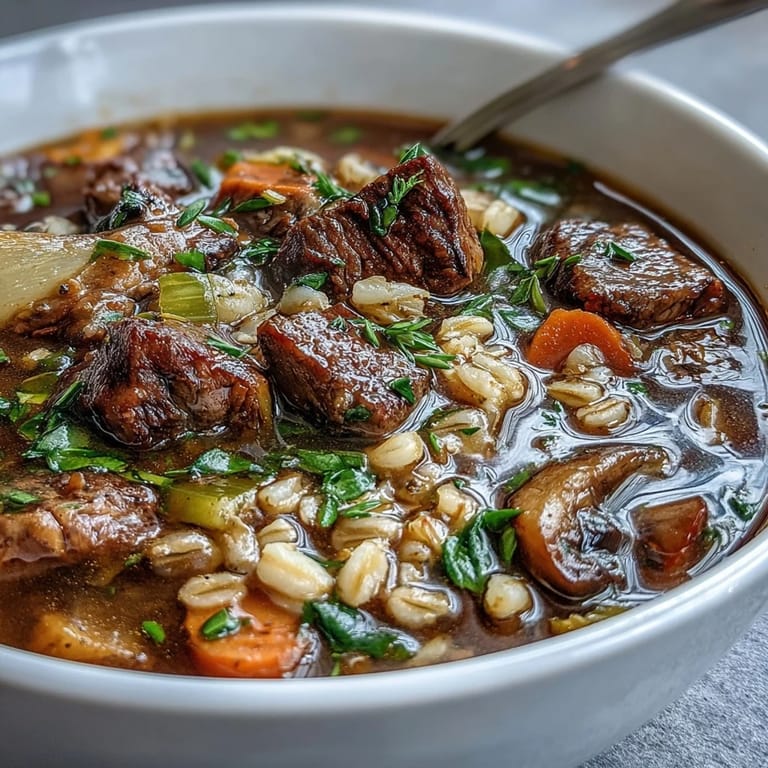
Barley is the soul of this soup, and it does something magical as it simmers—it absorbs the broth and becomes slightly creamy while staying chewy at the center, giving the whole pot a luxurious texture. Some people skip it and just use more vegetables, which is fine, but you lose that special thing that makes this soup different from vegetable beef. If you can't find pearl barley, pot barley works too, though it takes a few minutes longer to soften.
Make It Your Own
This recipe is forgiving enough to handle changes without falling apart. Root vegetables like parsnips or turnips work beautifully, especially parsnips which add a subtle sweetness that plays well against the savory broth. You could use ground beef if that's what you have, though it won't give you those tender chunks and you'll want to brown it first to break it up. Some people add red wine or a splash of vinegar at the end to brighten everything, which is worth trying next time.
Storing and Serving
This soup actually tastes better the next day once all the flavors have gotten to know each other, so don't hesitate to make it ahead. The barley will continue to absorb liquid as it sits, so when you reheat it, you might need to add a little extra broth to get back to the consistency you want. Serve it in deep bowls with crusty bread for soaking up every last bit, and maybe a glass of something red if that's your style.
- Refrigerate in an airtight container for up to four days, or freeze for up to three months (it freezes beautifully with no texture loss).
- Reheat gently on the stovetop rather than blasting it in the microwave, which can make the vegetables mushy.
- If it's too thick when you reheat it, thin it with extra broth or water until it feels right.
 Pin it
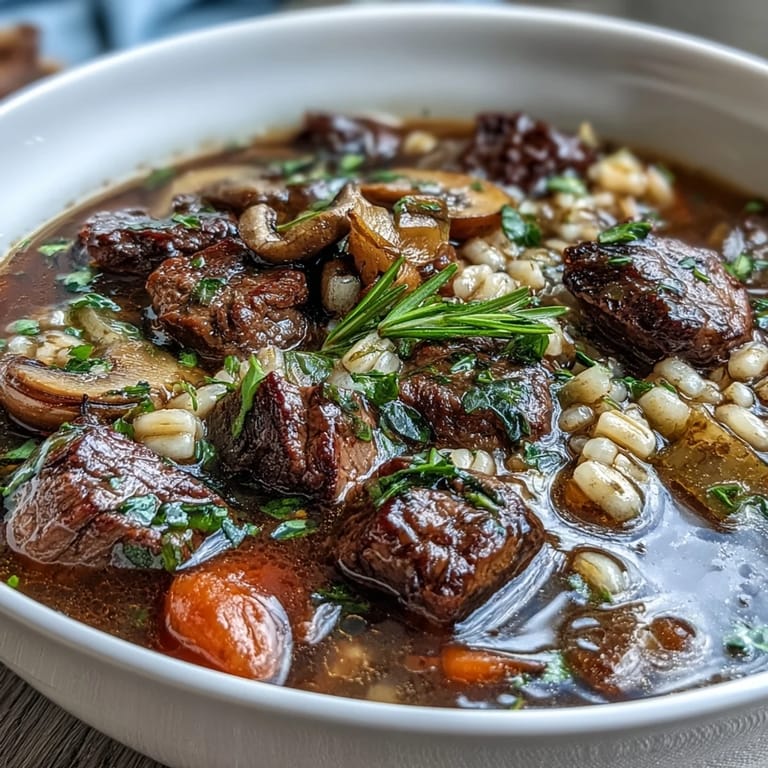
 There's a reason this soup has been made in kitchens for generations—it asks for simple ingredients and time, and gives back something that feels like more than the sum of its parts. Make it when you need comfort, when you want to feed someone, or just because a cold day is calling for something warm.
Recipe Questions & Answers
- → How long does beef and barley soup keep?
This soup stores well in the refrigerator for up to 4 days, allowing flavors to develop and intensify over time.
- → Can I freeze this soup?
Yes, it freezes beautifully for up to 3 months. The barley may soften slightly but remains tasty. Thaw overnight in the refrigerator before reheating.
- → What cut of beef works best?
Beef stew meat or chuck roast cut into cubes works perfectly. These cuts become tender during the long simmering process.
- → Do I need to soak the barley first?
No soaking required. Pearl barley cooks directly in the broth, absorbing flavor while softening during the simmering time.
- → What can I serve with this soup?
Crusty bread for dipping and a glass of robust red wine complement the rich flavors. A simple green salad adds freshness to the meal.
- → Can I make this in a slow cooker?
Brown the meat first, then transfer everything to a slow cooker. Cook on low for 7-8 hours or high for 4-5 hours until beef and barley are tender.