 Pin it
 My kitchen smelled like caramelized sugar and autumn the first time I roasted butternut squash intentionally instead of just tossing it in the pot raw. A friend had mentioned that roasting transforms the whole vegetable, and I was skeptical until the moment I pulled those golden cubes from the oven and realized the difference was immediate and undeniable. That soup turned into something I make whenever the weather shifts and I need comfort that tastes like it came from somewhere real. The maple syrup melts into the spice, the cream catches the light, and suddenly you're holding a bowl that feels like it knows exactly what you needed.
I brought this soup to a dinner party last November when everyone was pretending it wasn't getting dark at five o'clock. One guest asked if I'd bought it from somewhere, which felt like the highest compliment I could receive without saying a word. She sat there with her spoon suspended mid-air, eyes closed, and when she opened them she just said the word home. That's when I understood this soup does something beyond nourishing—it reminds people why they love eating in the first place.
Ingredients
- Butternut squash: Choose one that feels heavy for its size and has a deep tan color; smaller squashes tend to be sweeter and less stringy than the giants.
- Yellow onion: The sweetness mellows into the background during cooking, creating depth without any sharp edges.
- Garlic: Two cloves is enough; too much and you lose the delicate balance of spice and sweetness.
- Vegetable broth: Quality matters here since it becomes the foundation of every spoonful—taste it first if you can.
- Coconut milk or heavy cream: This is your choice between vegan richness or traditional decadence; both work beautifully.
- Maple syrup: Pure maple tastes cleaner and lets the squash shine; avoid the pancake syrup imposters.
- Nutmeg and cinnamon: Measure these carefully because they can easily overwhelm; you want warmth, not clove-forward intensity.
- Olive oil: Use it to coat the squash before roasting and to sauté your aromatics gently.
- Salt and pepper: Taste as you go because every broth is different and needs adjustment.
Tired of Takeout? 🥡
Get 10 meals you can make faster than delivery arrives. Seriously.
One email. No spam. Unsubscribe anytime.
Instructions
- Heat your oven and prepare the squash:
- Set the oven to 200°C (400°F) and while it's warming, cut your squash in half lengthwise, scoop out the seeds with a sturdy spoon, then peel away the skin with a sharp knife or vegetable peeler. Cube the flesh into roughly 2-centimeter pieces so they roast evenly.
- Roast until caramelized:
- Toss your squash cubes with 1 tablespoon of olive oil, a pinch of salt, and pepper, then spread them on a baking sheet in a single layer. Roast for 30 to 35 minutes, stirring halfway through, until the edges are golden and slightly crispy—this is where the magic happens.
- Build your flavor base:
- While the squash roasts, heat your remaining tablespoon of olive oil in a large pot over medium heat and add your chopped onion. Let it soften for 4 to 5 minutes until it turns translucent, then add your minced garlic and stir for about a minute until the aroma becomes almost too good to ignore.
- Combine and simmer:
- Add the roasted squash to the pot along with your vegetable broth, water, maple syrup, nutmeg, and cinnamon. Stir everything together, bring it to a boil, then immediately reduce the heat and let it simmer gently for 10 minutes so the flavors can mingle.
- Blend until silky:
- Use an immersion blender directly in the pot and pulse until the soup is completely smooth, or carefully transfer it in batches to a countertop blender for a more uniform texture. Work in stages if using a regular blender to avoid filling it more than halfway.
- Finish with cream and taste:
- Stir in your coconut milk or heavy cream, then taste and adjust the seasoning with more salt and pepper if needed—the cream will mellow some of the spice, so it's the right time to recalibrate. Heat gently if necessary, but never let it boil once the cream is added.
- Serve with intention:
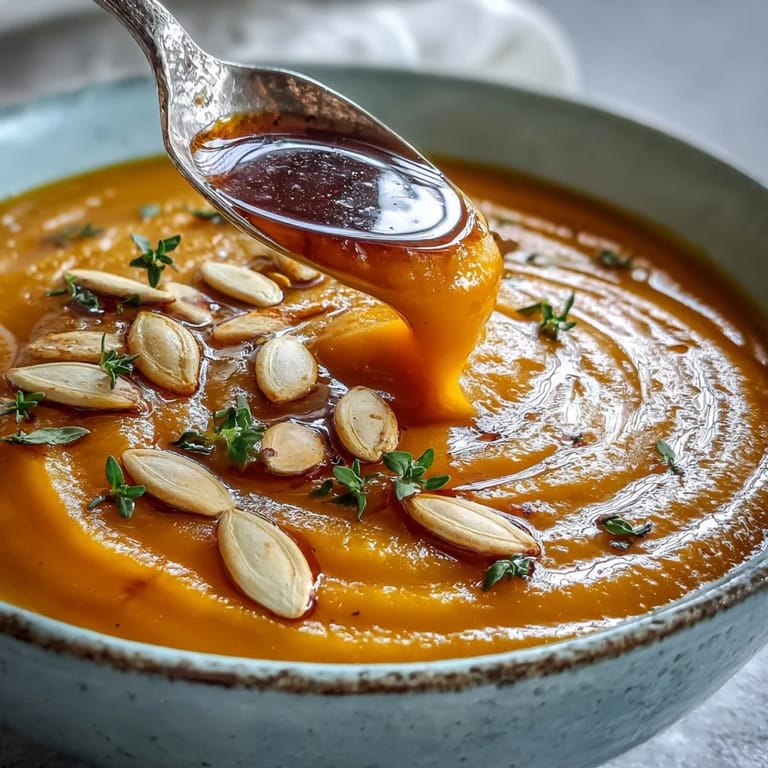
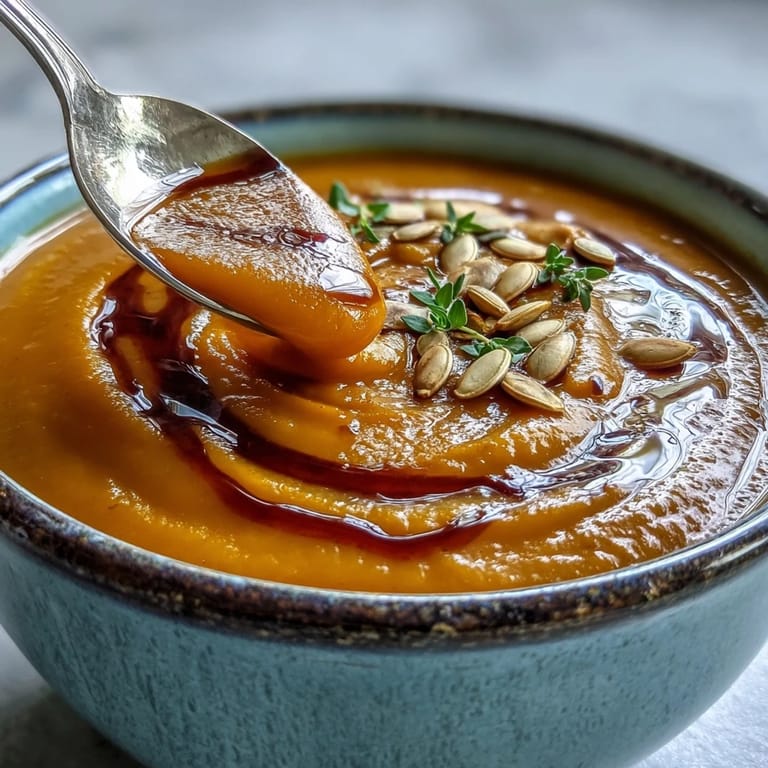
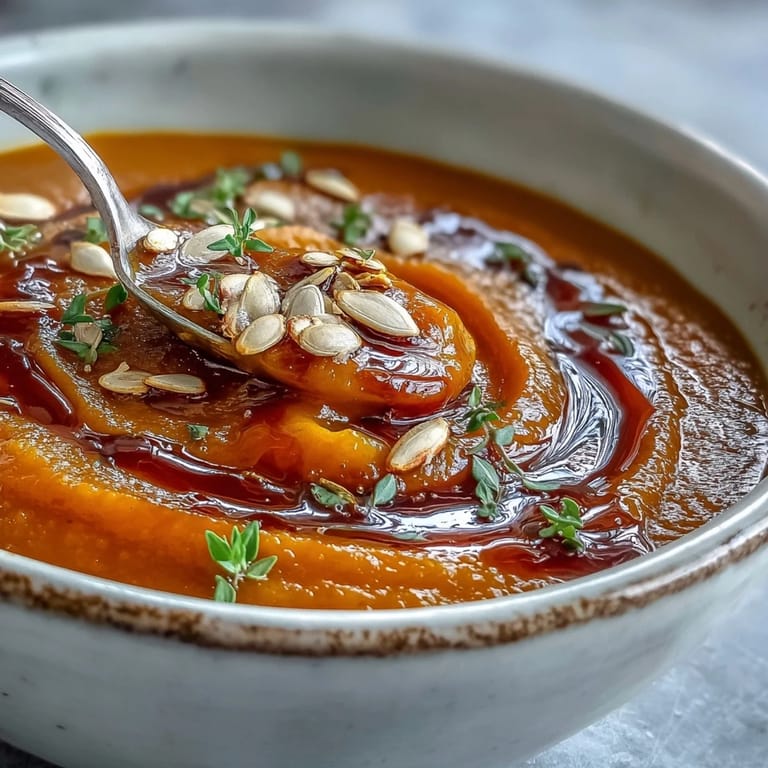
- Ladle the soup into bowls and top with toasted pumpkin seeds, a light drizzle of maple syrup, and fresh thyme if you have it.
 Pin it
 This soup changed everything about how I think about vegetable-based meals when my usually meat-focused dinner companion asked for a second bowl without prompting. There's something quietly powerful about making someone realize that vegetables aren't the side dish—they're the entire point.
The Magic of Roasting
Roasting transforms butternut squash from a mild, watery vegetable into something with caramelized edges and concentrated sweetness. The direct heat causes the natural sugars to concentrate and brown slightly, creating a depth of flavor that boiling or steaming simply cannot achieve. I learned this the hard way after making pale, forgettable squash soup for years without understanding why restaurant versions tasted so much better. Once you taste roasted squash soup, you'll never go back to the unroasted version.
Storing and Reheating
This soup keeps beautifully in the refrigerator for four days and actually develops a rounder, more integrated flavor as it sits. I've also frozen it successfully in portions for up to three months, though I recommend leaving out the cream and stirring it in fresh after reheating so the texture stays velvety. Reheat gently over medium-low heat, stirring occasionally, rather than blasting it on high heat which can separate the cream.
Ways to Make It Your Own
Once you master the base, this soup becomes a canvas for your own preferences and what you have on hand. I've added sage and brown butter, swirled in crispy bacon (for non-vegetarian occasions), and even stirred in a touch of apple cider vinegar for brightness. The spice ratio can shift depending on your mood—cinnamon can decrease if you prefer less sweetness, or cayenne pepper can wake everything up if you want subtle heat. Try these adjustments the next time you make it:
- A pinch of cayenne pepper adds a gentle warmth that makes people pause and ask what that subtle heat is.
- Fresh sage or thyme stirred in at the end brings an herbal note that feels more sophisticated.
- A squeeze of fresh lemon juice just before serving brightens the whole bowl.
 Pin it
 This soup is the kind of recipe that becomes part of your routine once you've made it a few times. There's something deeply satisfying about turning a single vegetable and a handful of pantry ingredients into something that tastes like it came from somewhere with a kitchen much bigger than yours.
Recipe Questions & Answers
- → Can I make this soup ahead of time?
Absolutely. This soup keeps well in the refrigerator for up to 4 days and actually develops deeper flavor as it sits. Gently reheat on the stove, adding a splash of broth if needed to thin the consistency.
- → Can I freeze this soup?
Yes, freeze cooled portions in airtight containers for up to 3 months. Thaw overnight in the refrigerator before reheating. Note that the texture may become slightly grainy after freezing, but blending again will restore smoothness.
- → What's the best way to garnish this soup?
Toasted pumpkin seeds add a delightful crunch, while an extra drizzle of maple syrup highlights the sweetness. Fresh thyme leaves provide a bright herbal contrast, and a dollop of sour cream or coconut cream creates beautiful swirls.
- → Do I have to roast the squash first?
While you could simmer raw squash cubes directly in the broth, roasting first is highly recommended. The high heat caramelizes the natural sugars, adding depth and intensity that simply cannot be achieved through boiling alone.
- → How can I make this soup vegan?
Simply replace any heavy cream with full-fat coconut milk. Most vegetable broths are naturally vegan, but always double-check labels to ensure no animal-derived ingredients are present.
- → What should I serve with this soup?
Crusty bread, garlic knots, or focaccia are perfect for dipping. A simple green salad with vinaigrette balances the richness, or serve alongside a grilled cheese sandwich for the ultimate comfort meal.