 Pin it
 The smell of Thai basil hitting hot oil is impossible to forget once you know it. I didnt grow up with Thai flavors, but a friend invited me to help prep for a dinner party, and she had me tearing basil leaves while ground beef sizzled in her wok. The kitchen smelled like a summer night in Bangkok even though wed never been. By the time we rolled the first batch, our fingers were sticky with rice paper and we were laughing at how lumpy they looked, but one bite and I understood why she made them every month.
I started making these on weekends when I wanted something that felt special but didnt require an oven or a long simmer. My brother came over once and ate six in a row, dipping each one so heavily in the sauce that it pooled on his plate. He said they reminded him of summer rolls but with actual substance. Now whenever he visits, he asks if Im making the beef ones, and I always say yes even if I hadnt planned to.
Ingredients
- Ground beef: Choose 85 to 90 percent lean so you get flavor without excess grease pooling in the pan, which can make the filling too heavy for delicate rice paper.
- Thai basil: This is the star herb with its anise like sweetness and peppery finish, if you cant find it, regular basil mixed with a bit of mint gets you close but not quite the same magic.
- Fish sauce: It smells strong in the bottle but transforms into umami depth when cooked, balancing the sugar and lime in both the filling and the dipping sauce.
- Rice paper wrappers: Look for large round sheets, usually sold dried in Asian markets, and make sure theyre pliable after a quick dip in warm water.
- Fresh lime juice: Always use fresh, never bottled, because the bright acidity is what makes the flavors sing and cuts through the richness of the beef.
- Vegetables and herbs: Cucumber, carrot, lettuce, cilantro, and mint add crunch, color, and freshness, turning each roll into a textural adventure.
Tired of Takeout? 🥡
Get 10 meals you can make faster than delivery arrives. Seriously.
One email. No spam. Unsubscribe anytime.
Instructions
- Mix the sauce seasoning:
- Combine soy sauce, fish sauce, oyster sauce, dark soy if using, and sugar in a small bowl, stirring until the sugar dissolves and the mixture looks glossy. Add a tablespoon or two of water to thin it just enough to coat the beef later without clumping.
- Start the aromatics:
- Heat your oil in a large skillet or wok over medium high, then add the garlic and shallot, stirring constantly for about 30 to 45 seconds until they smell toasty and turn golden at the edges. Add the minced chilies and white parts of the green onions, tossing for another 20 to 30 seconds until the kitchen smells like a Thai street stall.
- Cook the beef:
- Crumble in the ground beef, breaking it up with your spatula, and let it cook for 4 to 6 minutes, stirring often so it browns in spots and releases its fat. Toss in the diced red bell pepper and cook another 2 to 3 minutes until it softens slightly but still has a bit of bite.
- Add the sauce and finish:
- Pour the prepared sauce over the beef, tossing everything together so each crumble gets coated, and let it cook 2 to 3 minutes more until the sauce thickens and clings. Turn the heat to low, fold in the chopped Thai basil and green parts of the green onions, and toss just until the basil wilts, about 30 to 45 seconds, then turn off the heat and stir in the lime juice.
- Cool and prep:
- Transfer the beef to a plate and let it cool completely to room temperature so it doesnt tear the rice paper later. While it cools, cook your rice or noodles if using, let them cool, and prep all your vegetables and herbs, laying them out in small bowls so assembly feels like a game.
- Make the dipping sauce:
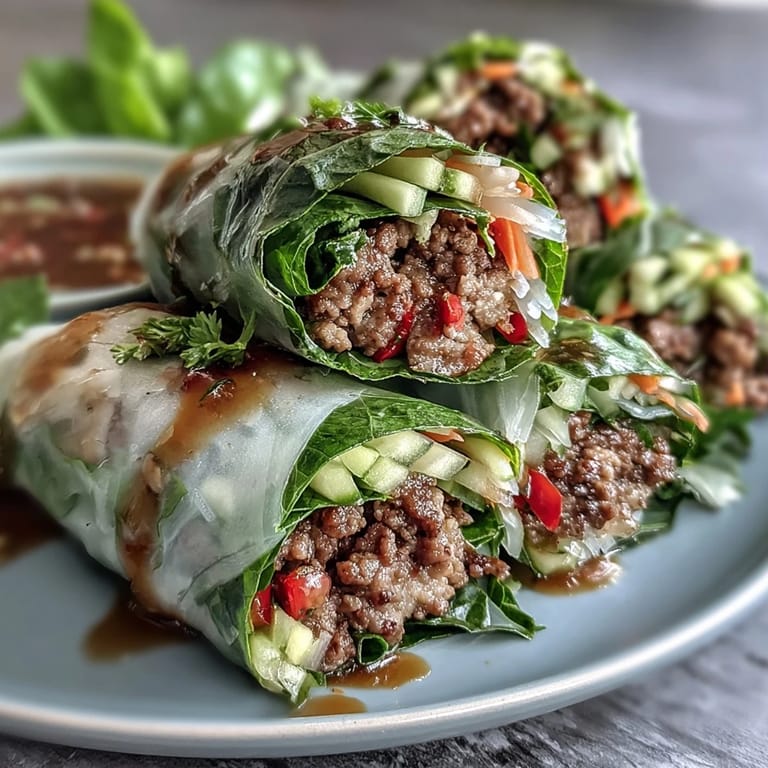
- Whisk together fish sauce, lime juice, sugar, and warm water until the sugar dissolves, then stir in the minced garlic, sliced chilies, shredded carrot, and herbs if you like. Taste and adjust, aiming for a balance that makes your mouth water, salty, sour, sweet, and spicy all at once.
- Soften the rice paper:
- Fill a shallow dish with warm water, dip one rice paper wrapper in for 3 to 5 seconds, rotating it so the whole sheet gets wet, then lay it on a clean lightly oiled board. It will continue softening as you work, becoming pliable and sticky.
- Fill and fold:
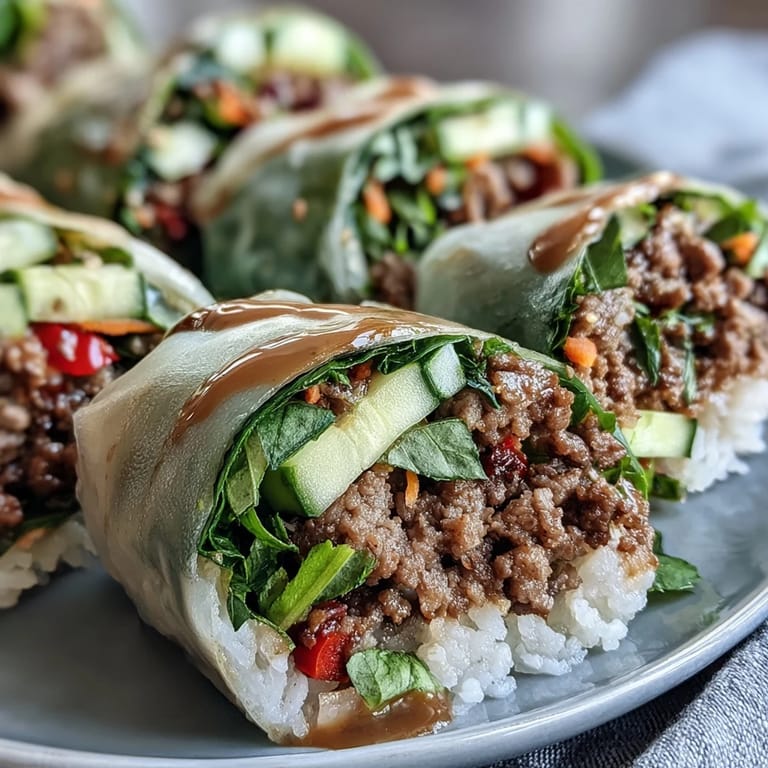
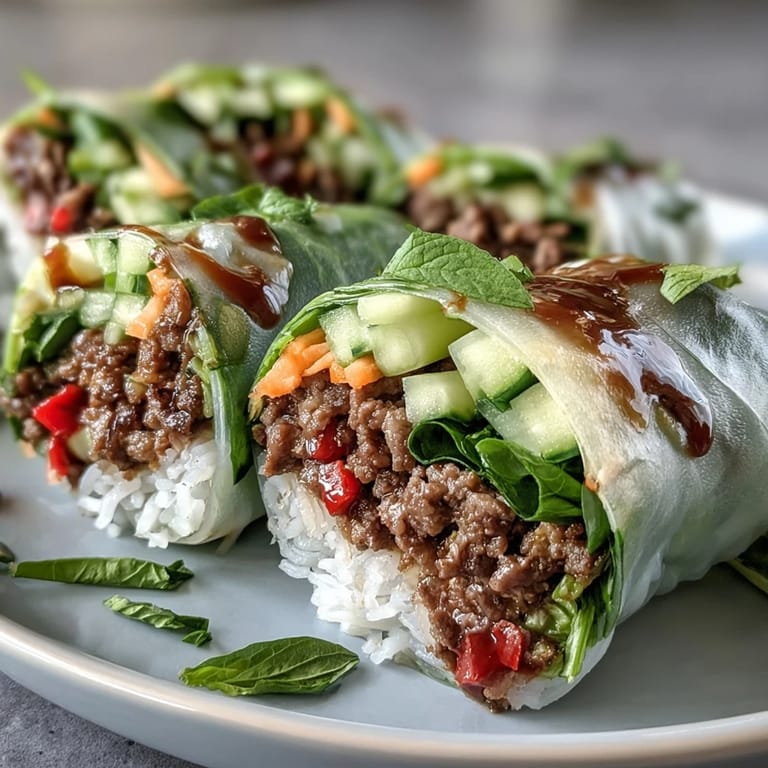
- Place 2 to 3 tablespoons of rice or noodles on the bottom third of the wrapper, top with the same amount of beef, a few strips of cucumber and carrot, a small handful of lettuce, and a generous pinch of cilantro, basil, and mint. Fold the bottom edge over the filling, tuck in the sides like a burrito, then roll tightly away from you to form a neat cylinder.
- Finish and serve:
- Set each roll seam side down on a plate and repeat with the remaining wrappers and filling. Serve them whole or sliced diagonally, with the dipping sauce on the side, and if you need to store them, cover with a damp towel and plastic wrap for up to 2 to 3 hours in the fridge, letting them sit at room temperature for 10 to 15 minutes before eating.
 Pin it
 I brought these to a potluck once and watched people who claimed they didnt like beef or who were skeptical of anything wrapped in rice paper come back for seconds. One friend admitted she ate four and skipped the main course entirely. It felt good to share something that surprised people, something that looked delicate but tasted bold and made them ask for the recipe before they even finished chewing.
Making It Your Own
If you want a lighter version, swap the beef for ground turkey or chicken, though youll want to add a tiny bit more oil since theyre leaner and can dry out. You can also skip the rice or noodles entirely and pack in extra vegetables like shredded cabbage, bean sprouts, or thinly sliced radishes for crunch without the carbs. I once added pickled daikon because I had some in the fridge, and the tangy bite was a revelation.
Storing and Serving Tips
These rolls taste best within an hour of rolling, when the rice paper is still soft and the vegetables are crisp. If you need to make them ahead, cover them with a damp paper towel and plastic wrap, then refrigerate for up to 2 to 3 hours, but know that the wrappers will firm up a bit in the cold. Let them sit at room temperature for 10 to 15 minutes before serving so they soften again and dont feel rubbery.
What to Do with Leftovers
If you have extra beef filling, it makes a fantastic base for lettuce wraps, spooned over jasmine rice, or tossed with warm rice noodles and a squeeze of lime. I once stuffed it into a pita with extra herbs and it worked beautifully. The dipping sauce keeps in the fridge for up to a week and is incredible drizzled over grilled chicken, roasted vegetables, or even as a salad dressing.
- Use leftover herbs to make a quick side salad dressed with lime and a pinch of sugar.
- If your rice paper tears during rolling, dont worry, just layer two sheets together for extra strength.
- Serve with extra lime wedges on the side so everyone can add a fresh squeeze right before eating.
 Pin it
 These rolls have become my go to whenever I want to feel like Im cooking something special without the stress of a complicated recipe. They remind me that sometimes the best meals are the ones you can eat with your hands, dipping and laughing and going back for just one more.
Recipe Questions & Answers
- → Can I make these rolls ahead of time?
Yes, you can assemble the rolls up to 2-3 hours in advance. Cover them with a damp towel and plastic wrap, then refrigerate. Let them sit at room temperature for 10-15 minutes before serving to restore their soft texture.
- → What can I substitute for Thai basil?
If Thai basil is unavailable, you can use a combination of Italian basil and fresh mint to mimic the aromatic, slightly anise-like flavor. The taste won't be identical, but it will still be delicious and fragrant.
- → How do I prevent rice paper from tearing?
Dip the rice paper in warm (not hot) water for only 3-5 seconds. Place it on a lightly oiled surface and let it continue softening for a few seconds before filling. Avoid overfilling and roll gently but firmly to prevent tears.
- → Can I use a different protein instead of beef?
Absolutely. Ground turkey, chicken, or pork work well as substitutes. You can also use finely diced tofu or mushrooms for a vegetarian version. Adjust cooking times as needed for different proteins.
- → How do I make these rolls gluten-free?
Use gluten-free soy sauce or tamari, and check that your oyster sauce is gluten-free (or substitute with hoisin sauce labeled gluten-free). Rice paper and rice noodles are naturally gluten-free, so the rest of the ingredients should be safe.
- → What vegetables work best in these rolls?
Crisp, fresh vegetables like cucumber, carrots, lettuce, and cabbage provide the best texture and flavor contrast. You can also add bean sprouts, radishes, bell peppers, or thinly sliced red cabbage for extra crunch and color.