 Pin it
 There's something almost meditative about standing over a pot of onions for nearly an hour, watching them transform from sharp and pungent into something sweet and golden. I discovered French onion soup years ago on a grey afternoon when a friend insisted on teaching me the one dish her Parisian grandmother swore by, and it changed how I think about patience in cooking. The first time I got the caramelization right, I couldn't quite believe something so humble could taste this way. That soup became my go-to remedy for everything from rainy days to impressing people who thought they'd tasted everything.
I made this soup for my sister the winter she moved back home, and we ate it at midnight while sitting on the kitchen floor talking about everything we'd missed. She'd take a spoonful, close her eyes, and it was like watching someone remember something they'd forgotten about themselves. That bowl of soup became the thing that got us talking about real stuff again, the kind of cooking that does more than just feed you.
Ingredients
- Yellow onions (4 large): They caramelize into something almost jammy and sweet, so don't skip the time or rush this step by turning up the heat.
- Leeks and shallots (2 leeks and 3 shallots): These add a softer, more delicate onion flavor that balances the main onions and keeps the soup from tasting too one-note.
- Garlic (3 cloves, minced): Added at the very end of the caramelizing stage so it doesn't burn and turn bitter in all that time.
- Butter and olive oil (3 tablespoons and 2 tablespoons): The butter gives richness while the oil keeps things from burning, a combination that's proven over decades of French cooking.
- Beef broth (8 cups, high-quality): This is not the place to use sad, salty store-brand broth; taste it before you buy and you'll taste the difference in every spoonful of soup.
- White wine (1/2 cup dry): The acidity cuts through all that richness and the alcohol burns off, leaving only flavor.
- Worcestershire and soy sauce (1 tablespoon and 2 teaspoons): These are your secret umami boosters, the ones that make people ask what your secret ingredient is.
- Thyme and bay leaf (2 teaspoons fresh thyme, 1 bay leaf): The thyme adds an herbal earthiness while the bay leaf whispers in the background without ever announcing itself.
- Gruyère cheese (2 cups, grated): Its nuttiness melts into something almost caramel-like, so resist the urge to substitute with something milder.
- Baguette (1, sliced into 1/2-inch rounds): The bread needs to be sturdy enough to hold up under cheese and broiler heat without dissolving into the soup.
- Salt and black pepper: Taste constantly as you go because the broth and seasonings vary, and you need to season to your own preference.
Tired of Takeout? 🥡
Get 10 meals you can make faster than delivery arrives. Seriously.
One email. No spam. Unsubscribe anytime.
Instructions
- Heat your fat and ready your onions:
- Get your butter and oil hot enough that it shimmers but doesn't smoke, then add all those sliced onions, leeks, and shallots at once. You'll hear them hiss a little as they hit the pan, which is exactly what you want.
- Begin the long caramelize:
- Stir every few minutes for the first 15 minutes, then you can back off a bit and let them do their thing, stirring occasionally for another 20-25 minutes. You're looking for them to go from pale to golden to deep amber, and yes, it really does take nearly 40 minutes.
- Toast the garlic gently:
- Once those onions are soft and deeply colored, add your minced garlic and let it cook for just 2 minutes until it smells incredible but before it can turn dark and bitter.
- Deglaze and capture those caramel bits:
- Pour in your white wine and use a wooden spoon to scrape up all those browned, stuck bits from the bottom of the pot because that's pure flavor. You'll hear the sizzle and see the wine bubble, and then watch as the pot stops smoking.
- Build the broth base:
- Add your beef broth, Worcestershire sauce, soy sauce, fresh thyme, and bay leaf all together, then bring it to a simmer. Once it's gently bubbling, turn the heat down and let it cook uncovered for 30 minutes so some of the liquid can reduce and concentrate.
- Taste and season carefully:
- Remove the bay leaf and taste the soup, then add salt and pepper in small amounts because it's easier to add more than to take it out. Remember that the cheese topping will also add saltiness.
- Toast your bread rounds:
- While the soup finishes, arrange your baguette slices on a baking sheet and toast them under the broiler, watching them carefully so they go golden and crispy rather than burnt and charred. You want bread that's sturdy enough to hold up under a pile of melting cheese.
- Assemble in oven-safe bowls:
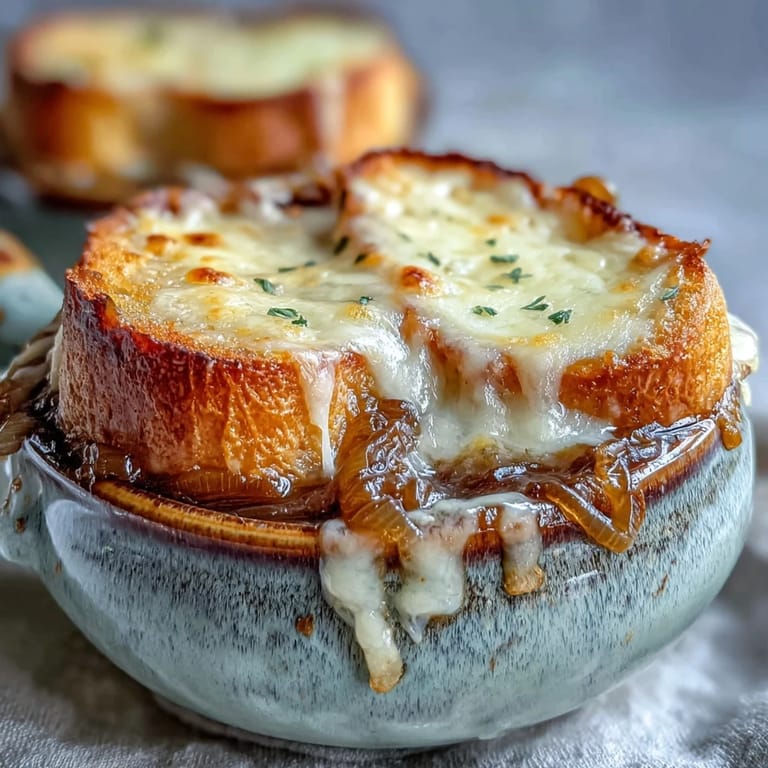
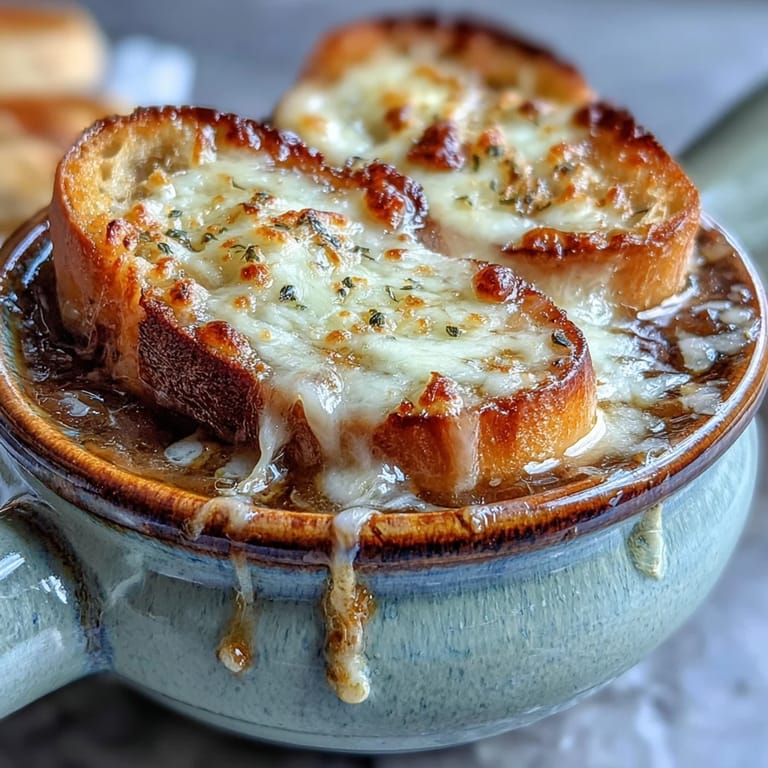
- Ladle that hot soup into bowls that can handle the broiler, then top each one with toasted bread rounds and a generous handful of grated Gruyère cheese. Don't be shy with the cheese because it's the whole point.
- Final melt under the broiler:
- Put the bowls under a preheated broiler for 3-5 minutes until the cheese is melted and bubbly and just starting to brown on top. Watch it like a hawk because the line between perfectly golden and overdone is about 30 seconds.
- Serve immediately with ceremony:
- Bring these bowls to the table right away while everything is still hot and the cheese is at its most creamy and perfect. A sprinkle of fresh thyme on top is nice but optional.
 Pin it
 Years later, my friend's grandmother visited from Paris and I made this soup for her without telling her what it was, watching her face as she took that first spoonful. She nodded once, smiled slowly, and said something in French that my friend translated as a kind of approval that meant more than any words could. It was the moment I understood that cooking is how we say things we don't always know how to speak aloud.
The Art of Caramelizing Onions
Most people think caramelizing onions is impossible because they're imagining some complicated chemistry, but it's really just time and heat working together. The sugars in the onions are already there, hidden under that sharpness, and slow heat just coaxes them out. I used to rush this part and wondered why my soup tasted flat and one-dimensional, until someone told me that you can't shortcut golden flavor. Now I see that 40 minutes as part of the meditation, not an obstacle.
Why Quality Broth Matters So Much
I learned this lesson the hard way by making this soup with whatever broth was on sale, and it was like serving someone a photocopy of a photograph instead of the real thing. The difference between mediocre broth and good broth is the difference between a dish that tastes watery and timid versus one that tastes like someone's been simmering bones and vegetables for hours. When you taste the broth on its own before you add anything else, you'll know immediately if it's worth using.
Cheese, Bread, and the Broiler Finale
The broiler is where this soup either becomes magical or becomes a disaster, so you have to stay present and watch it like you're guarding something precious. The cheese should melt into this bubbly, golden, almost caramelized layer on top, and the bread underneath should get toasted but not hard. I've learned to do a test run with just one bowl first, timing how long it takes under my specific broiler, because every oven is different and the difference between perfect and ruined is maybe 30 seconds.
- Keep your oven-safe bowls on the baking sheet while they're under the broiler so they're easier to handle and safer to pull out.
- If the cheese isn't melting fast enough, move the bowls closer to the heating element, but then watch them even more carefully.
- Have a kitchen towel ready to grab the bowls with because that cheese gets hot enough to cause real burns.
 Pin it
 This soup taught me that the best dishes aren't about fancy techniques or expensive ingredients, but about respecting what you're making and giving it the time it deserves. Every time I make it, I remember why I fell in love with cooking in the first place.
Recipe Questions & Answers
- → How do I get perfectly caramelized onions?
Cook them slowly over medium heat, stirring frequently. This process takes 35–40 minutes but develops essential depth and sweetness. Don't rush—those deep brown bits are where the magic happens.
- → Can I make this vegetarian?
Absolutely. Use a high-quality vegetable broth instead of beef broth, and either omit Worcestershire sauce or choose a vegetarian brand. The result remains rich and satisfying.
- → What's the best cheese for French onion soup?
Gruyère is traditional for its nutty, complex flavor and superior melting properties. Swiss or Emmental work beautifully as alternatives. Adding Parmesan enhances the savory depth.
- → Can I prepare this in advance?
The soup base actually improves after a day or two in the refrigerator. Prepare through step 5, then store. When ready to serve, reheat and complete the broiling step for fresh, bubbly cheese topping.
- → Why include leeks and shallots?
This allium trio creates layered flavor—shallots bring sweetness, leeks add mild onion notes, and yellow onions provide robust backbone. Together they create complexity beyond regular onions alone.
- → What should I serve alongside?
A crisp green salad with vinaigrette cuts through the richness. Dry white wine complements both the soup and the cheese. Crusty bread for dipping is always welcome.