 Pin it
 I'll never forget the first time I arranged a cheese board by color instead of by flavor—it was for a gallery opening, and someone said the platter looked like a painting. That's when I realized food could be art before it became taste. This Crimson and Gold Gala was born from that moment, a celebration of contrast that makes people pause before they eat. The deep wine-soaked cheeses against the brilliant roasted golds create this magnetic pull, like two sides of a story that finally meet on the same plate.
I made this for my sister's dinner party when she was nervous about impressing her new partner's family. She stood in the kitchen watching me arrange those two color blocks and whispered, 'It looks too good to eat.' By the end of the night, those blocks had been completely dismantled by happy hands, and everyone was asking for the recipe. That's when I knew this wasn't just a pretty platter—it was something that brought people together through pure joy.
Ingredients
- Fresh sweet cherries: These are your jewels—pitted and ready to shine. I learned to buy them a day or two early so they're at peak sweetness and slightly firm. If they're soft, they'll bruise when arranged.
- Wine-soaked cheese (Drunken Goat or Merlot BellaVitano): This is the flavor anchor that makes people stop mid-bite and ask what they're tasting. The wine runs through the cheese like a vein, making each slice taste like a small indulgence. Look for it at a good cheese counter—it's worth the hunt.
- Dried cranberries: These add a tart snap that cuts through the richness. They're your flavor balancer, the responsible friend at the party.
- Red grapes, halved: The juice that spills when you bite them adds life to the arrangement. Always halve them just before serving so they stay juicy and don't oxidize.
- Pomegranate seeds: These are pure garnish magic. They catch the light and add texture that feels luxurious without any real effort.
- Yellow bell peppers, roasted: Roasting these transforms them from vegetable to confection—the skin chars, the flesh softens and sweetens. This is non-negotiable for flavor. Don't skip the roasting step.
- Aged cheddar or gouda: Cubed rather than sliced, so they feel substantial and different from the wine-soaked cheese across the board. The age matters—younger cheese tastes flat here.
- Gold leaf–topped crackers: If you can't find them pre-topped, plain water crackers work beautifully. They're your structural element, the foundation that lets people compose their own bites.
- Golden raisins: Softer and more floral than regular raisins, these disappear into luxury. Soak them in warm water for five minutes before using if they seem dried out.
- Yellow cherry tomatoes, halved: These add acidity and brightness. Choose the smallest ones you can find—they feel more intentional on the board.
- Edible gold leaf (optional): If you use it, apply it gently and just before serving. It's theater. It costs almost nothing and makes everything feel like a celebration.
- Fresh basil or microgreens: These are your final breath—they add contrast and freshness right at the end. Microgreens feel more modern and delicate.
- Olive oil: This finishes the roasted peppers and keeps them from drying out. Use something good here, something you'd taste on its own.
Tired of Takeout? 🥡
Get 10 meals you can make faster than delivery arrives. Seriously.
One email. No spam. Unsubscribe anytime.
Instructions
- Roast the yellow peppers into glory:
- Preheat your oven to 220°C (425°F). Place whole yellow bell peppers directly on a baking sheet and let them roast for 10 to 12 minutes, turning them occasionally so they char evenly on all sides. You want the skin to blister and blacken in places—that's where the flavor comes from. Once they're properly charred, transfer them to a bowl and cover it with plastic wrap. Let them steam for 5 minutes. This is crucial: the steam loosens the skin. Then peel—it should come away easily, revealing the sweet, tender flesh beneath. Remove the seeds, slice into strips, drizzle with olive oil, season with black pepper, and let cool completely. The peppers taste even better at room temperature.
- Gold leaf your crackers (if you're feeling fancy):
- If you're using edible gold leaf, this is delicate work. Handle the sheets with tweezers or a dry finger—they tear if you breathe on them wrong. Follow the package instructions, but usually it's a light dab of something sticky, then place the gold leaf gently on top. It catches light like nothing else and costs about the same as a coffee. Do this no more than an hour before serving, or the gold will look dull.
- Gather your reds into one block:
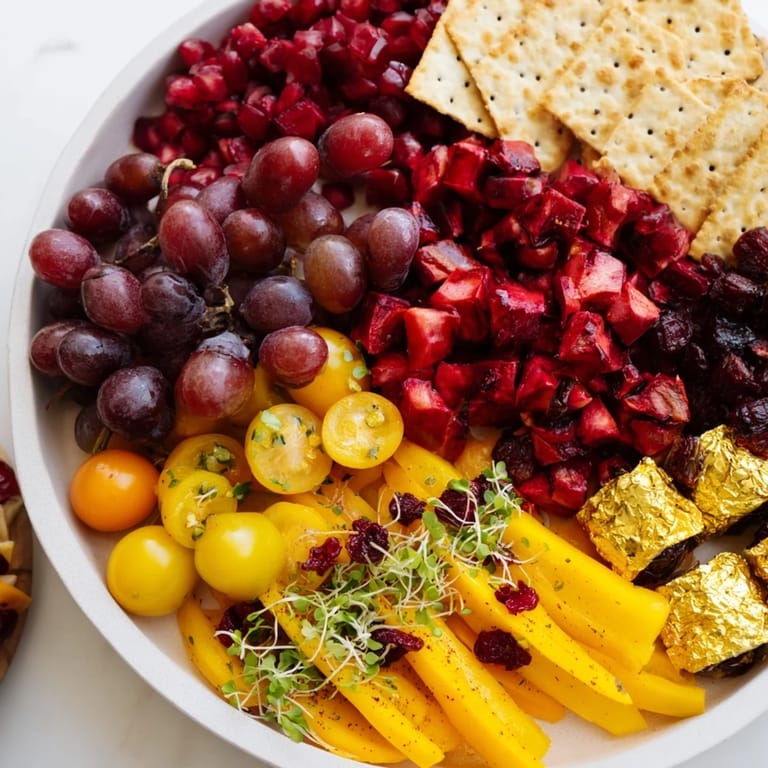
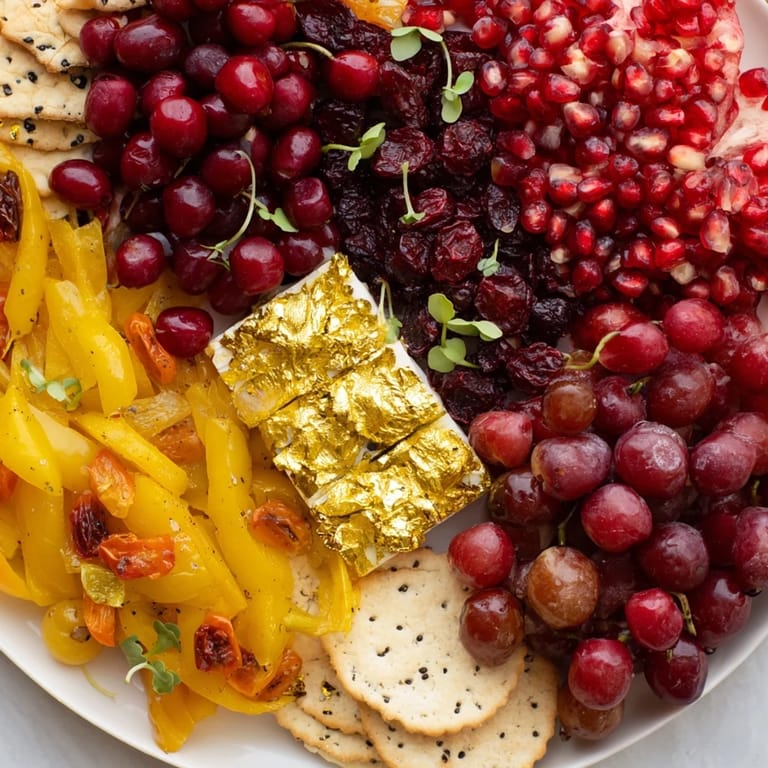
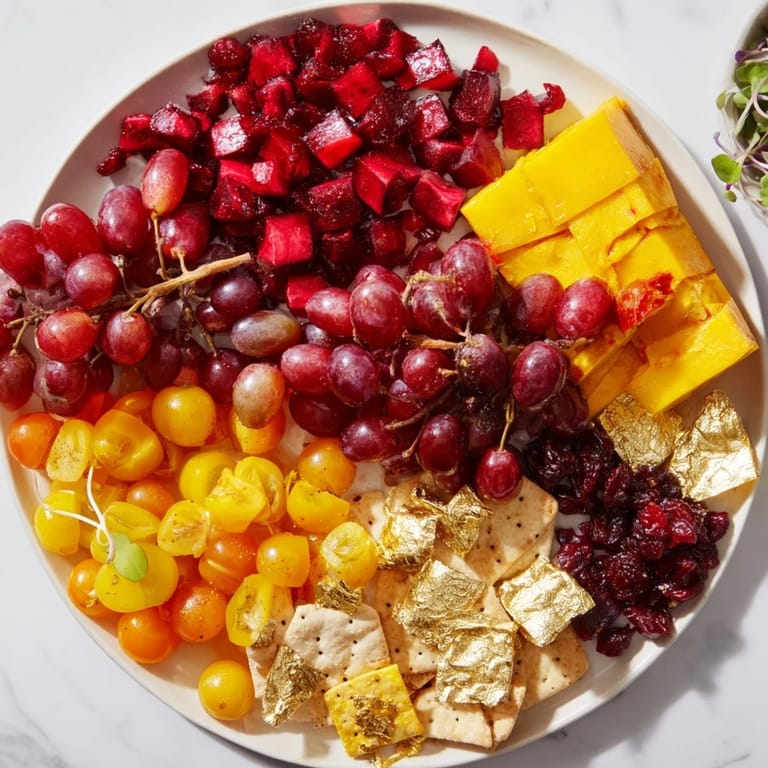
- On one side of your platter, create a tight arrangement of cherries, sliced wine-soaked cheese, dried cranberries, halved red grapes, and pomegranate seeds. Think of it as building with color—cluster like with like, and let the jewel tones speak. Leave no white platter showing. The tightness of the arrangement is part of the appeal.
- Build your golden opposite:
- On the other side of the platter, mirror that energy with roasted yellow pepper strips, cubed aged cheddar, your gold-leafed crackers, golden raisins, and halved yellow cherry tomatoes. Again, pack them in. These two blocks should feel like a deliberate contrast—opposite sides of the same conversation.
- Garnish with intention:
- Scatter fresh basil leaves or microgreens across and between both blocks. These green accents create breathing room and draw the eye across the whole arrangement. They're your final signature.
- Serve with permission:
- Bring this to the table and pause for a moment. Let people look before they touch. Encourage them to mix colors, to try the unexpected pairings. The magic happens when someone puts wine-soaked cheese with a roasted pepper and their eyes light up.
 Pin it
 There was a moment at that gallery opening when a stranger looked at the board and then looked at me and said, 'This is almost too beautiful to disturb.' Then she picked up a cherry and a slice of wine-soaked cheese and smiled like she'd discovered something secret. That's when I understood this recipe isn't really about food—it's about creating permission for people to feel joy in a room together.
The Art of the Cheese Board as Conversation
A well-arranged board tells a story without words. The color blocking here isn't just for show—it's a visual way of saying 'these flavors belong together because they complete each other.' When you build with intention, guests don't just eat; they engage. They pause. They notice. And that pause is where the real pleasure lives. This board taught me that presentation isn't vanity in food—it's respect for the people you're feeding.
Why Wine-Soaked Cheese Changes Everything
The first time I bit into Drunken Goat cheese, I didn't understand why anyone would soak cheese in wine until that moment. The wine doesn't just sit on the surface—it infiltrates the paste, creating this complex flavor that's both tangy and elegant. It's the anchor that makes this whole board sing. If you've only ever eaten plain aged cheddar, this wine-soaked version will feel like discovering a new language. It pairs with nearly everything on this board in unexpected ways, and it's the element that makes guests linger longer over their first bites, trying to figure out what they're tasting.
Building Boards That Actually Work
The secret to a great cheese board is contrast—not just in color, but in temperature, texture, and flavor. This Crimson and Gold approach teaches you that principle in the most visually obvious way possible. But once you understand how these opposite sides work together, you can apply it anywhere: cool items next to warm, soft next to crisp, sweet next to savory. A board is only as interesting as the conversations it starts on the plate. Arrange with intention, leave nothing to accident, and let the colors do the work.
- Build your board within two hours of serving to keep everything fresh and prevent fruit from browning
- If you have leftover wine-soaked cheese, use it in salads or melted over warm bread—it's too good to waste
- Always arrange on a platter larger than you think you need; crowding kills the visual impact
 Pin it
 This board is a reminder that sometimes the most memorable meals aren't complicated—they're just intentional. Serve it with something cold to drink and watch what happens when beautiful food becomes a reason for people to sit still and enjoy each other.
Recipe Questions & Answers
- → How should I roast the yellow peppers?
Roast whole yellow bell peppers at 425°F (220°C) for 10-12 minutes until skins char and blister. Let steam covered, then peel off skins, remove seeds, and slice.
- → Can I substitute the cheese with a vegan alternative?
Yes, plant-based cheeses can be used to create a vegan-friendly version without compromising flavor balance.
- → What is the purpose of the gold leaf on the crackers?
Edible gold leaf adds visual luxury and an elegant finish to the crackers, enhancing the platter’s striking appearance.
- → How do I arrange the platter for best visual impact?
Arrange crimson ingredients tightly on one side and golden ingredients in an opposing block, creating bold color contrast for presentation.
- → Are there any allergen concerns to consider?
This platter contains milk and gluten; some crackers may include sesame or soy. Always verify ingredient labels for allergens.
- → Can I add a drizzle or garnish for extra flavor?
A light drizzle of honey over the gold section or a sprinkle of saffron threads can enhance flavor and aroma.