 Pin it
 The steam rising from my skillet one humid evening was absolutely intoxicating—the scent of tangy kimchi mingling with sizzling sesame oil and sweet cabbage. I wasn't chasing tradition that night, just a satisfying answer to a crisper full of odds and ends. What started as a cleanup meal turned into a weeknight staple, bursting with color and kick. When my fried rice hit the plate and the runny yolk met spicy grains, I knew I'd hit on something crave-worthy. Turns out, a splash of kimchi juice goes a very long way.
One rainy Tuesday, I made this fried rice while chatting with a friend on video—she swore she could smell the garlic and kimchi through the screen and insisted I send her the recipe. We ate together, miles apart, each with our own bowl and slightly imperfect sunny-side-up eggs gracing the top. The whole experience was messy, fragrant, and full of laughter—not a speck of food left behind. It's hard not to feel lifted by such a bowl. This recipe officially became my go-to comfort dish that day.
Ingredients
- Napa cabbage: Go for firm leaves—a quick stir-fry keeps them crisp, releasing just enough sweetness to balance the spice.
- Kimchi: Tangy and full of life, with a splash of its brine for zing; if it’s a bit fermented, even better for depth.
- Green onions: Add a mellow bite and brightness—save a few for a fresh, crunchy finish on top.
- Carrot: Totally optional, but the pop of color and subtle sweetness make each bite feel playful.
- Cooked rice: Day-old rice is your best friend—clumpy, cool grains fry up perfectly without turning mushy.
- Soy sauce: Adds necessary savory depth; taste as you go so you don't overpower the kimchi.
- Gochujang: Optional, but a spoonful gives a warming chili backbone if you like a punchier bite.
- Toasted sesame oil: Just a drizzle at the end transforms the entire kitchen with its nutty perfume.
- Sugar: A pinch wakes up all the other flavors—don’t skip it, even if it seems tiny.
- Black pepper: Sometimes the simplest spice gives the biggest nudge—freshly ground if possible.
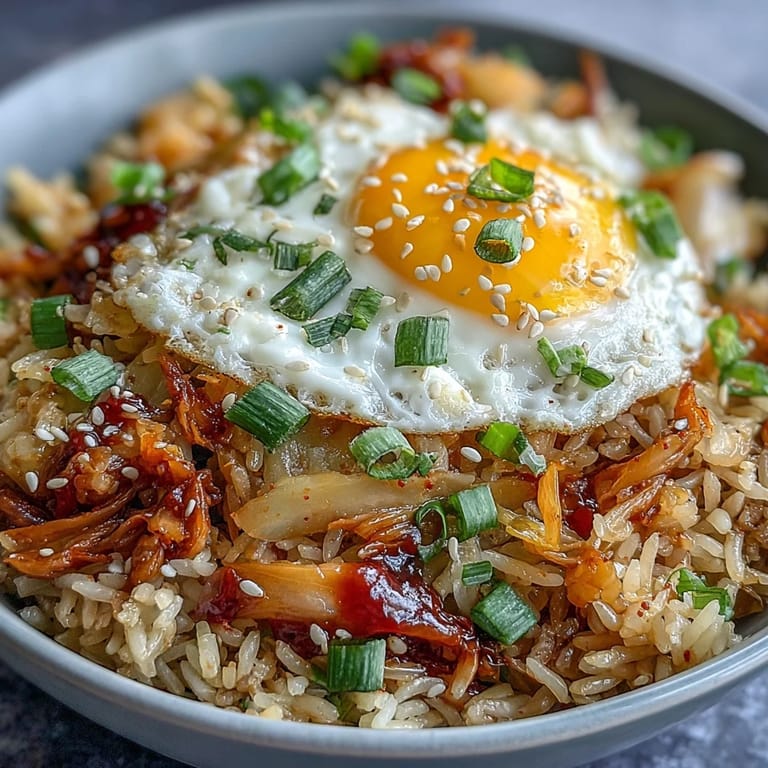
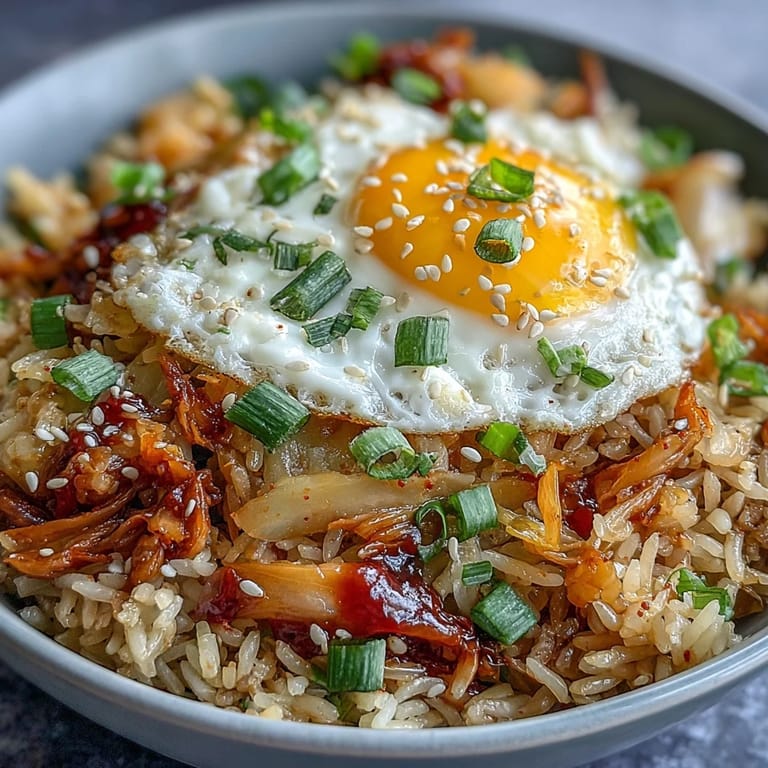
- Eggs: Sunny-side eggs add luscious richness; let the yolk run for an indulgent sauce.
- Neutral oil: Use something light with a high smoke point—no olive oil here.
- Toasted sesame seeds: A sprinkle gives crunch, aroma, and visual flair at the very end.
- Extra green onions: For garnish, layering more texture and freshness on top.
Tired of Takeout? 🥡
Get 10 meals you can make faster than delivery arrives. Seriously.
One email. No spam. Unsubscribe anytime.
Instructions
- Get everything sliced and chilled:
- Prep and chop all your veggies and have your cold rice ready, since things move fast once you start.
- Soften the cabbage and carrots:
- Heat half the oil in a big skillet over medium-high—toss in cabbage and carrot, hearing the sizzle as they soften, about two minutes.
- Add kimchi and green onions:
- Throw in kimchi (with some juice) and green onions, stir-frying until everything is fragrant and the kitchen smells irresistible.
- Mix in the rice:
- Add the cold rice, breaking up clumps with your spatula; keep things moving so nothing sticks.
- Season boldly:
- Pour in soy sauce, gochujang if using, sesame oil, sugar, and black pepper; keep stirring so every grain grabs the flavor and gets a nice golden hue.
- Taste and tweak:
- Give it a quick taste—adjust seasonings or even pop in more kimchi juice if you crave extra tang.
- Fry the eggs:
- In a separate nonstick pan, use the rest of the oil to fry eggs until whites are cooked but yolks still jiggle gently when nudged.
- Assemble and sprinkle:
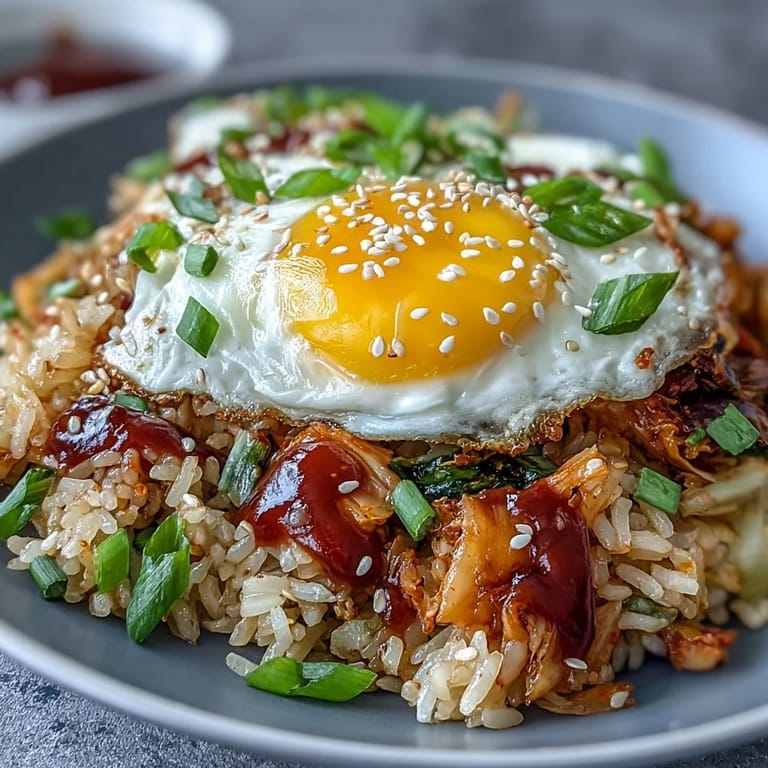
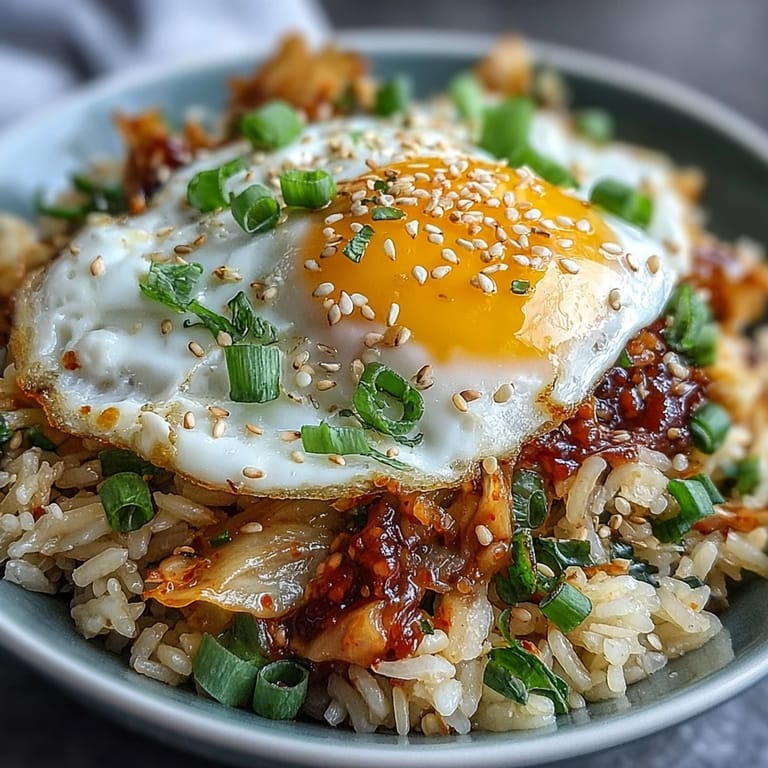
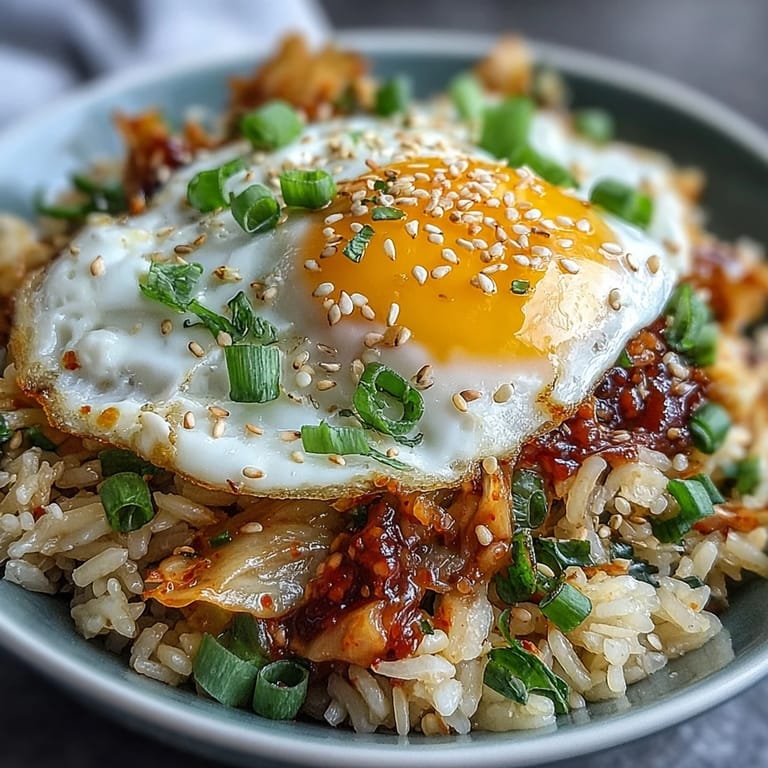
- Split the rice into two bowls, slide a glistening egg on top, then finish with sesame seeds and extra green onions for bite and color.
 Pin it
  Pin it
 The first time I made this after a late workday, the bright crunch of cabbage and that unmistakable tang pulled me right out of my stress slump. Sharing it with my partner—both of us hovering over the pan and vying for the crispiest bits—felt like reclaiming the evening.
Kimchi Matters
Through a few experiments, I realized more mature, well-fermented kimchi brings maximum punch and complexity to the rice. If your kimchi is a little older or funkier than you might eat plain, that's actually a bonus in this recipe. Its brine paints every grain with tartness, making leftovers anything but boring. Some days I even add a sneaky splash of extra kimchi juice for flavor.
Egg Perfection on Top
I used to rush the fried egg and ended up with tight, overcooked yolks—waiting for that gentle jiggle became a mini kitchen meditation. Lifting the edge of the egg with a spatula, I now watch for just-set whites and leave the middle sunny and bright. That silky yolk trickling through spicy rice is truly what makes this dish memorable. On especially lazy nights, I've even poached eggs right in the pan with the rice, no judgment here.
Little Tweaks, Big Results
A spoonful of gochujang stirred in at the end gives warmth and color—skip it if you want a gentler heat. Swapping in brown rice works, but you'll want to up the seasoning for extra depth. When the mood strikes, I top it all off with crunchy nori strips for another pop of the sea.
- Add a dash of vinegar for a tangy twist if your kimchi is on the mild side.
- A handful of diced tofu or shiitake mushrooms turns this into a heartier meal.
- Don't forget to taste as you cook—kimchi brands vary wildly in saltiness and spice.
 Pin it
  Pin it
 This fried rice never fails to shake up a tired routine or spark curiosity from guests—it’s comfort, fun, and just the right touch of chaos for any night. Hope you find just as many excuses to make it as I do.
Recipe Questions & Answers
- → What rice is best for this dish?
Day-old jasmine or short-grain rice works best; chilling the grains helps them separate and crisp when stir-fried. Freshly cooked rice can be used if it’s well cooled and slightly dried.
- → Should I include kimchi juice?
Yes — a little kimchi juice adds tang and depth. Add gradually while tasting, especially if your kimchi is very salty or sour.
- → How can I control the spice level?
Omit or reduce gochujang for milder heat, or use a teaspoon and adjust to taste. Gochujang adds both heat and umami, so balance with a touch of sugar if needed.
- → How do I get good texture without soggy vegetables?
Stir-fry cabbage and carrot over medium-high heat just until slightly softened; high heat and quick cooking preserve bite. Avoid overcrowding the pan to allow moisture to evaporate.
- → Can I make this vegetarian or vegan?
Use vegetarian or vegan kimchi (check labels) and replace the fried egg with sautéed mushrooms or pan-fried tofu for a vegan-friendly finish.
- → What's the best way to store and reheat leftovers?
Refrigerate in an airtight container for up to 3 days. Reheat in a skillet over medium heat with a splash of oil or water to refresh the grains; finish with a quick-fried egg if desired.