 Pin it
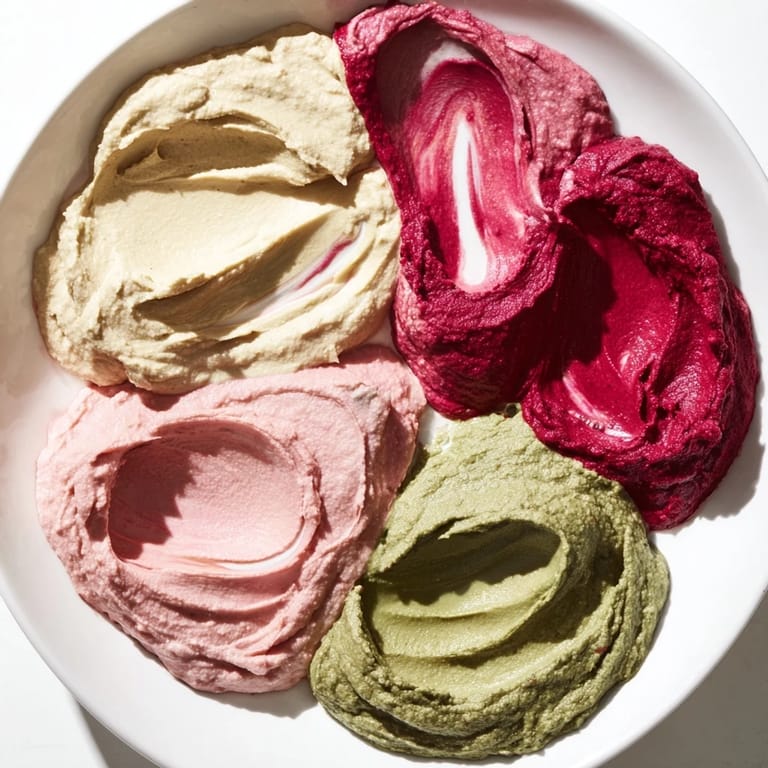
 The first time I made this was for a dinner party where someone asked me to bring "something that looks like it took hours but didn't." I stood in my kitchen at 4 PM, staring at four different dips in my fridge, and suddenly thought: what if I didn't choose just one? What if I let them all live together on one platter, swirled into something that looked like polished stone or a painter's palette? By 4:20, I had my answer, and by the time guests arrived, they were crowded around the board before they'd even taken off their coats.
I remember my friend Maya walking into the kitchen mid-swirl, watching me drag a butter knife through the dips, and saying, "Wait, you're not supposed to mix them evenly?" When I explained the whole point was the marbled look—to keep the colors distinct but flowing—she grabbed a cracker, doubled back, and never left that platter for twenty minutes. That's when I knew this wasn't just food; it was a conversation starter.
Ingredients
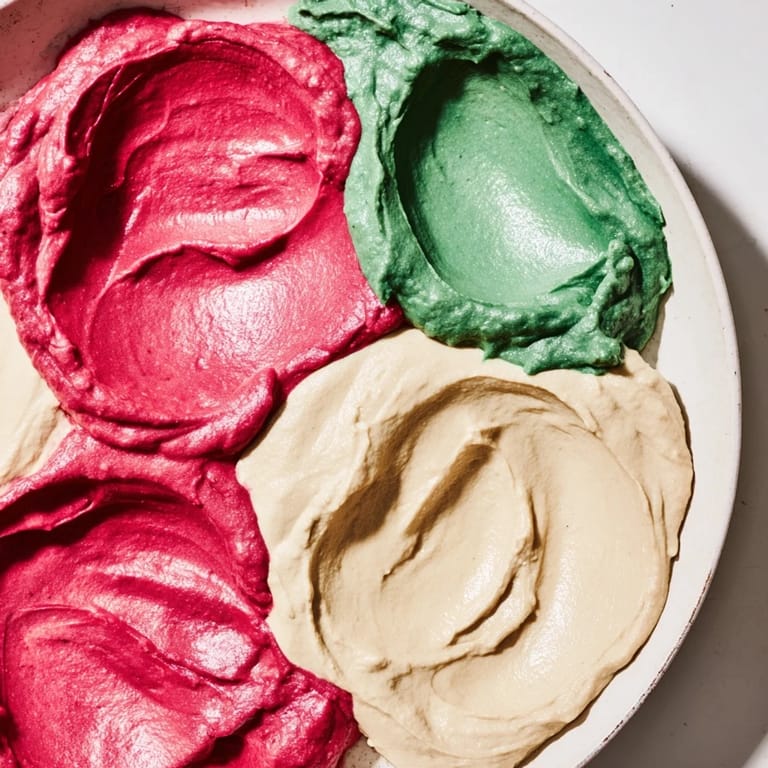
- Classic hummus: The neutral base that lets other colors shine and keeps the palette grounded.
- Beet hummus: Brings a deep magenta-pink that makes the whole board pop—this is your star color.
- Spinach or basil pesto hummus: The green keeps things bright and adds a herbaceous whisper that contrasts beautifully with the earthy tones.
- Roasted red pepper dip: Warm, slightly sweet orange-red that fills the gaps and makes everything feel connected.
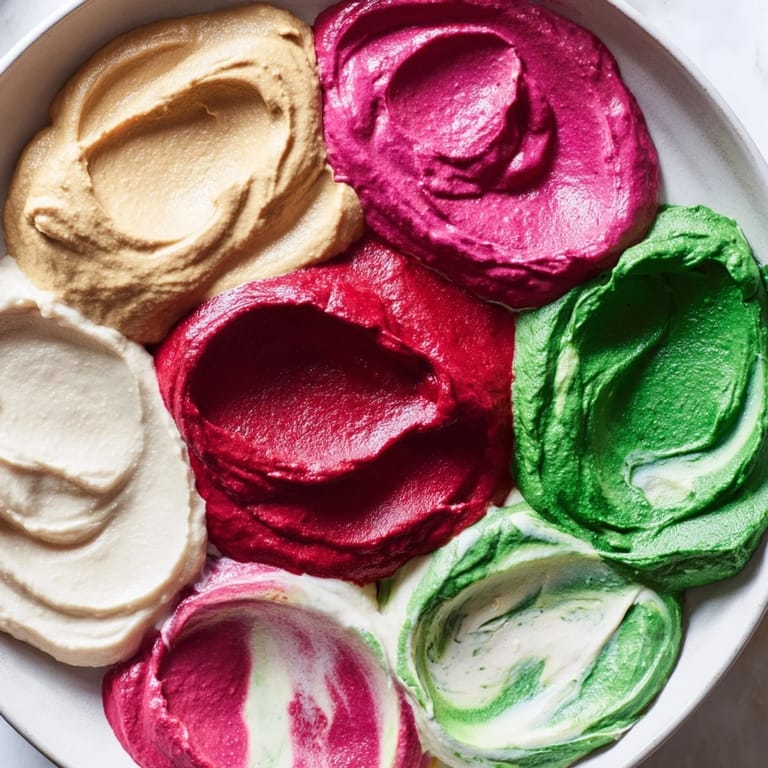
- Greek yogurt (plain): The secret weapon for softening lines and adding creamy white marble veins that pull the whole composition together.
- Black sesame rice crackers: Crispy and sophisticated, they echo the depth in the beet hummus without competing for attention.
- Beetroot crisps: Paper-thin and jewel-toned, they look like they belong next to the beet dip and add a satisfying crunch.
- Spinach or kale crackers: Naturally herbaceous and sturdy enough for any dip without falling apart mid-bite.
- Classic water crackers: Neutral and elegant, they serve as the blank canvas that lets the dips be the star.
Tired of Takeout? 🥡
Get 10 meals you can make faster than delivery arrives. Seriously.
One email. No spam. Unsubscribe anytime.
Instructions
- Set your stage:
- Choose a platter or shallow bowl that's at least 12 inches across—you want room for the dips to breathe and spread into each other without crowding. Chill it for five minutes if you can; cold ceramic keeps the dips from sliding around too much.
- Dollop with intention:
- Start with spoonfuls of hummus around the platter in a rough circle, leaving gaps between each color. Follow with beet dip, pesto dip, and roasted red pepper in no particular pattern—randomness is your friend here. Think of it like dropping paint onto canvas.
- Swirl like you mean it:
- Using a butter knife or the back of a spoon, drag gently through adjacent dips, creating ribbons and curves that blend colors without obliterating them. Work from the outer edge toward the center, then change direction. You're looking for marble veins, not a muddy mess.
- Add the white lines:
- Drizzle spoonfuls of plain Greek yogurt across the surface and swirl it in thinner lines than the colored dips. This creates those beautiful marble cracks and pockets that look intentional and polished.
- Arrange your crackers:
- Group each cracker variety around the edge of the platter, positioning them near their matching dip colors. This creates visual echo and makes it obvious which cracker goes with which flavor, though honestly, everything tastes good with everything.
- Serve and step back:
- Place small spoons or spreaders nearby and let guests go to town. The beauty of this is that as people dip and swirl their own portions, the pattern keeps evolving.
 Pin it
 The moment that made me fall in love with this dish wasn't about taste—though it's genuinely delicious—it was watching my eight-year-old niece point to different parts of the board and say which ones were her favorite colors, then discovering she liked them more when they were mixed together. She taught me that this recipe works because it gives people permission to mix and match, to experiment, to make it their own.
The Magic of Color and Contrast
What makes this board memorable is not the individual dips but how they talk to each other. The beet dip is stunning on its own, but it becomes transcendent next to the pale cream of the classic hummus. The green whispers instead of shouts. The red pepper bridges warm and cool tones. I learned this accidentally when I ran out of beet hummus and substituted a yellow turmeric dip instead—the effect flattened entirely because I'd lost the depth of dark tones. Colors matter as much as flavors here.
Why This Works as Party Food
There's something about a shared platter that makes people relax. Unlike individual appetizers passed on trays, this one invites lingering. People stand around it, talking, trying combinations, making small discoveries. I've noticed it gives nervous guests something to do with their hands, and it somehow makes strangers feel less like strangers when you're both reaching for the same corner of the board.
Variations and Seasonal Thinking
Once you understand the principle, you can adapt this to whatever you have or whatever season you're in.
- Try turmeric hummus for golden tones, black bean dip for deep purple-brown, or white bean dip with garlic for creamy contrast.
- Swap yogurt for coconut yogurt if you're vegan, or use cashew cream for something richer and more luxurious.
- Top with microgreens, pomegranate seeds, or edible flowers if you want to push the artfulness even further.
 Pin it
 This recipe taught me that sometimes the most impressive dishes are the ones that ask the least of you and give the most to your guests. It's a reminder that pretty food, shared food, is almost always better food.
Recipe Questions & Answers
- → How do I achieve the marbled effect in the dips?
Gently swirl alternating spoonfuls of different colored dips on a platter using the back of a spoon or butter knife, avoiding overmixing to keep distinct patterns.
- → What types of crackers pair best with these dips?
Visually matching crackers like black sesame rice crackers, beetroot crisps, spinach or kale crackers, and classic water crackers enhance both flavor and presentation.
- → Can I make this platter vegan?
Yes, substitute the Greek yogurt with a plant-based alternative such as coconut yogurt to maintain the swirling effect without dairy.
- → Are there gluten-free options included?
Yes, gluten-free crackers can be used, and the dips themselves are naturally gluten-free, making it suitable for gluten-sensitive guests.
- → How should I serve this platter?
Serve immediately with small spoons or spreaders to allow easy dipping and sharing among guests, making it an attractive centerpiece.