 Pin it
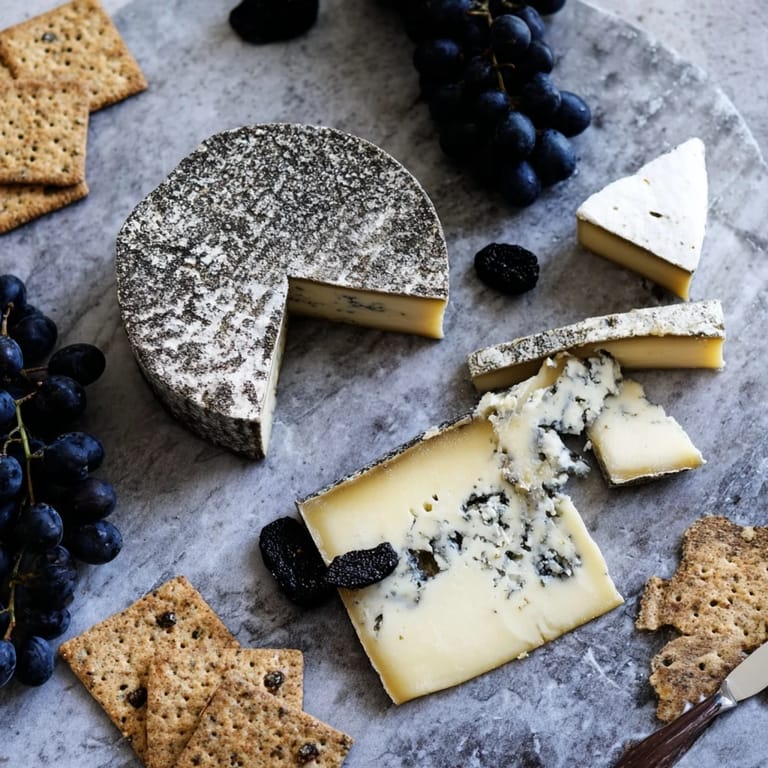
 I'll never forget the first time I attended an intimate dinner where the cheese board was the main event. It was a gray November evening, and as I walked into my friend's apartment, I was immediately struck by this stunning monochromatic cheese board sitting in the center of the table. The slate-colored crackers, the ash-rinded cheeses with their dramatic contrast, and those deep charcoal tones all arranged on a dark stone board felt like edible art. That night, I realized that a cheese board wasn't just about taste—it was about creating an atmosphere, a moment of pause where everyone gathered around something beautiful. That's when I became obsessed with crafting my own sophisticated boards, and this monochrome stunner became my signature creation.
The moment I truly mastered this board was when I served it at a small gathering after a long week of work. My guests actually put their phones away. They stayed standing around that board for nearly an hour, talking, laughing, breaking off pieces of creamy goat cheese and savoring those charcoal crackers. That's when I knew this wasn't just about the ingredients—it was about creating a reason for people to slow down together.
Ingredients
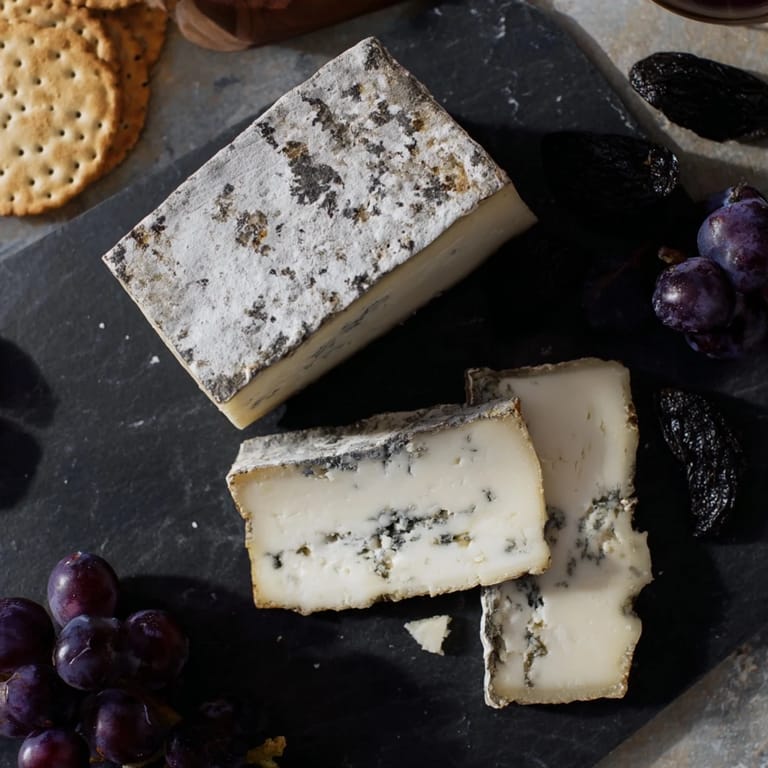
- Morbier or other ash-rinded semi-soft cheese, 150 g: This is your star ingredient with that dramatic dark line running through it. The ash rind gives it an earthy, slightly funky flavor that feels luxurious. I learned that slicing it just before serving keeps it creamy and perfect.
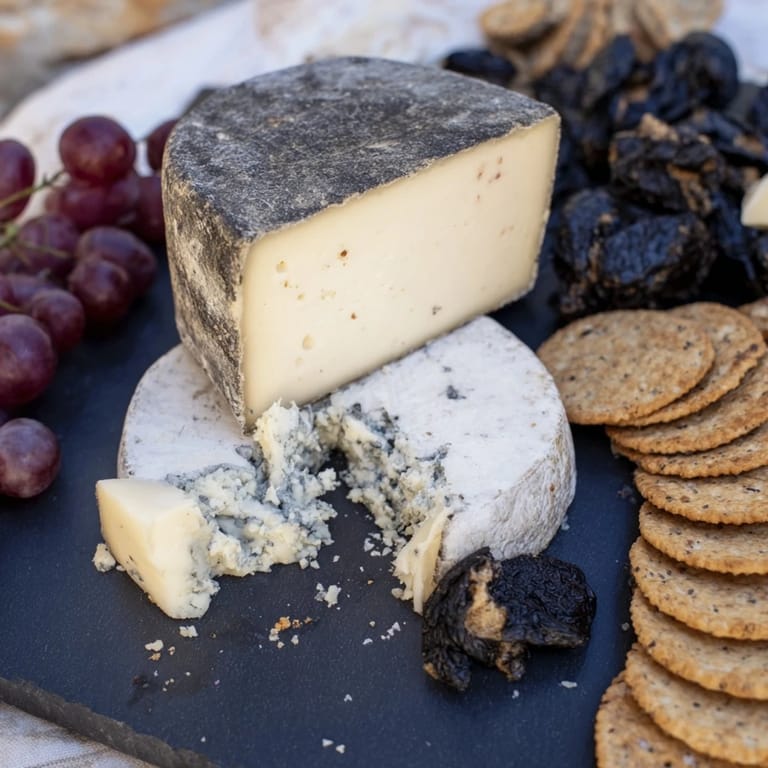
- Humboldt Fog or similar ash-ripened goat cheese, 120 g: Tangy, elegant, and naturally gorgeous with its ash coating. When you find a really good one, it becomes the cheese everyone gravitates toward first.
- Valdeon blue cheese or any blue cheese with gray veining, 100 g: The blue veining acts as nature's way of making this board cohesive. I prefer a cheese that's bold but not aggressively pungent, so it invites rather than intimidates.
- Slate-colored charcoal crackers, 8–10 pieces: These are the unsung heroes of monochrome boards. They echo the color story perfectly and have a subtle smoky undertone that plays beautifully with the cheeses.
- Dark rye or pumpernickel bread, 6–8 slices: Dense and earthy, this bread holds up to any cheese without crumbling or getting lost in the mix. Toast it lightly if you want extra crunch.
- Black grapes or dark plums: The juicy sweetness cuts through the richness of the cheeses and offers little palate-cleansing moments throughout the grazing experience.
- Blackberries or blueberries: I scatter these almost like edible confetti, creating pockets of visual interest and tartness that balances the creamy, salty elements.
- Black olive tapenade, 2 tbsp: A dollop of this adds umami depth and gives guests something unexpected to discover. A tiny spoon on the side prevents people from getting their hands messy.
- Edible charcoal salt: This is my secret for pushing the monochrome theme to the edge of luxury. A whisper of it on top of the softer cheeses adds texture and visual sophistication without overwhelming the palate.
- Fresh rosemary or thyme sprigs: Optional, but I use them sparingly. A few green sprigs break the monochrome theme intentionally, adding a fresh herbal note and suggesting there's life beyond the gray palette.
Tired of Takeout? 🥡
Get 10 meals you can make faster than delivery arrives. Seriously.
One email. No spam. Unsubscribe anytime.
Instructions
- Set your stage:
- Find your dark stone or slate board and place it where people will naturally gather. This board will be the centerpiece of your spread, so make sure there's good light hitting it. Cold the board in the refrigerator for a few minutes if you're preparing early—cool surfaces keep cheese fresher longer.
- Slice with intention:
- Remove your cheeses from the refrigerator about 30 minutes before plating if you want them at their creamiest. Slice the Morbier into thin, elegant triangles. Cut the goat cheese into wedges or rounds depending on its shape. For the blue cheese, I make rough, organic chunks that show off those beautiful gray veins. Use a clean knife between each cheese to keep flavors distinct.
- Create a composition:
- Arrange your cheeses in three separate clusters across the board, leaving plenty of negative space. Think of it like placing furniture in a room—each element should have breathing room. Stagger the heights and angles so nothing feels too symmetrical or static.
- Build the bread and cracker landscape:
- Fan out your crackers in small stacks. Group the darker pumpernickel bread together in one area. Position these so they're easy to grab but also so they fill in visual gaps between the cheeses. I lean the bread slices slightly, creating little mountains of texture.
- Scatter the jewels:
- This is where the board comes alive. Distribute the black grapes and sliced plums in clusters, letting them nestle between the cheeses and crackers. Sprinkle blackberries and blueberries almost randomly, creating pockets of discovery. Leave some open space—a board shouldn't feel crowded, it should feel curated.
- Add the umami moment:
- Place a small dark bowl on the board and spoon in your black olive tapenade. If you don't have a bowl, spoon it directly onto the board in a small dollop. This gives guests a rich, briny element to experiment with.
- Dust with sophistication:
- Use a light hand with the edible charcoal salt. A whisper across the surface of the cheeses adds visual depth and a subtle mineral complexity. This isn't about covering the cheese—it's about enhancing the monochrome moment.
- Garnish thoughtfully:
- If using fresh herbs, place just a few sprigs strategically. I tuck them between cheeses or let them lean casually against the bread. The green should feel like an accent, not a statement.
- Bring it to the table:
- Serve immediately with cheese knives, small plates, and napkins. Provide one knife per cheese so flavors don't cross-contaminate. Let your guests graze, explore, and discover at their own pace.
 Pin it
 There was this one evening when a guest—someone I hadn't seen in years—picked up a piece of Humboldt Fog on a charcoal cracker, tasted it, and just closed their eyes. No phone, no conversation, just that moment of genuine sensory pleasure. That's when I understood that feeding people isn't really about the calories or the nutrients. It's about creating those small moments of pause, beauty, and connection. This board does exactly that.
The Art of Monochrome Elegance
There's something deeply calming about a single-color palette on a cheese board. It forces you to think about texture, shape, and arrangement rather than relying on color contrast to do the visual heavy lifting. The monochrome approach feels modern and intentional, like you've made a deliberate creative choice rather than just throwing together whatever was in the cheese shop. I've learned that when you remove the distraction of color, guests actually taste more carefully. They notice the subtle differences between cheeses. They slow down. It's a small design choice with surprisingly big emotional consequences.
Pairing Beyond Wine
While a bold Malbec or smoky Pinot Noir pairs beautifully with this board, I've discovered unexpected magic in other directions. A crisp, dry sherry makes the blue cheese sing. A cup of strong black tea softens the intensity of the most challenging flavors and cleanses the palate between bites. Even sparkling cider or kombucha offer surprising complexity when sipped alongside these earthy, complex cheeses. The beauty of a cheese board is that it's flexible—it invites experimentation and personal interpretation.
Sourcing Your Stars
The secret to a board that feels special is hunting for cheeses that excite you. I've built relationships with my local cheesemonger, and they now set aside interesting ash-rinded varieties whenever they arrive. Ask questions about the cheese's origin, what animals produced the milk, and how long it's been aged. These conversations are part of the joy. If you can't find Morbier or Humboldt Fog, substitute any ash-rinded semi-soft cheese or any creamy goat cheese. The spirit of the board—elegant, sophisticated, intentionally restrained—matters more than hitting specific brand names.
- Visit specialty cheese shops and ask the staff for recommendations based on appearance and flavor profile rather than brand names.
- Buy from a cheesemonger who lets you taste before committing, so you know exactly what you're bringing home.
- Charcoal crackers and dark rye can be found in well-stocked grocery stores, but specialty food shops usually have more interesting options and better quality.
 Pin it
 A cheese board like this reminds us that not every meal needs to be complicated to feel like an occasion. This one celebrates simplicity, restraint, and the honest beauty of excellent ingredients thoughtfully arranged. It's proof that elegance often whispers rather than shouts.