 Pin it
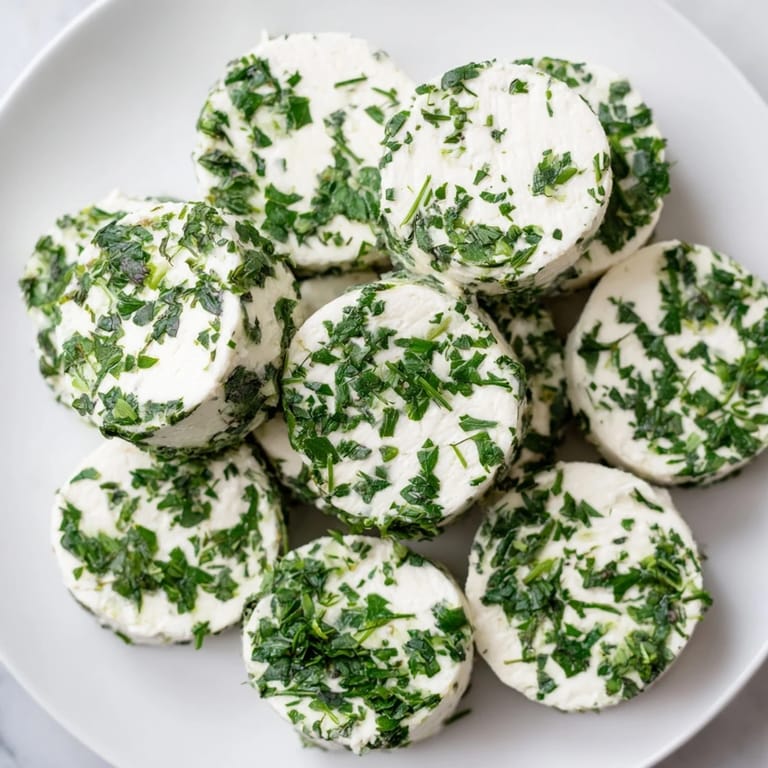
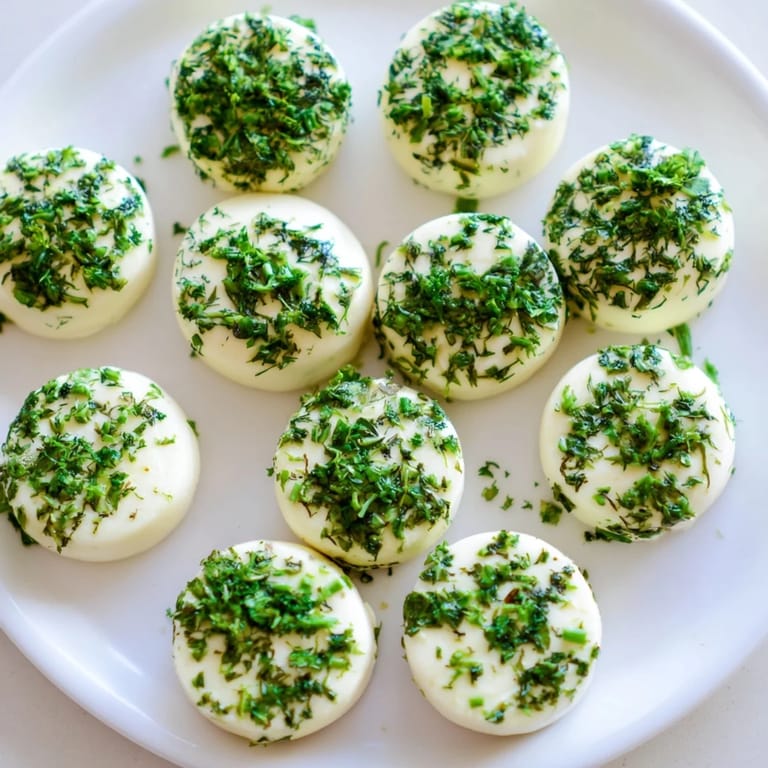
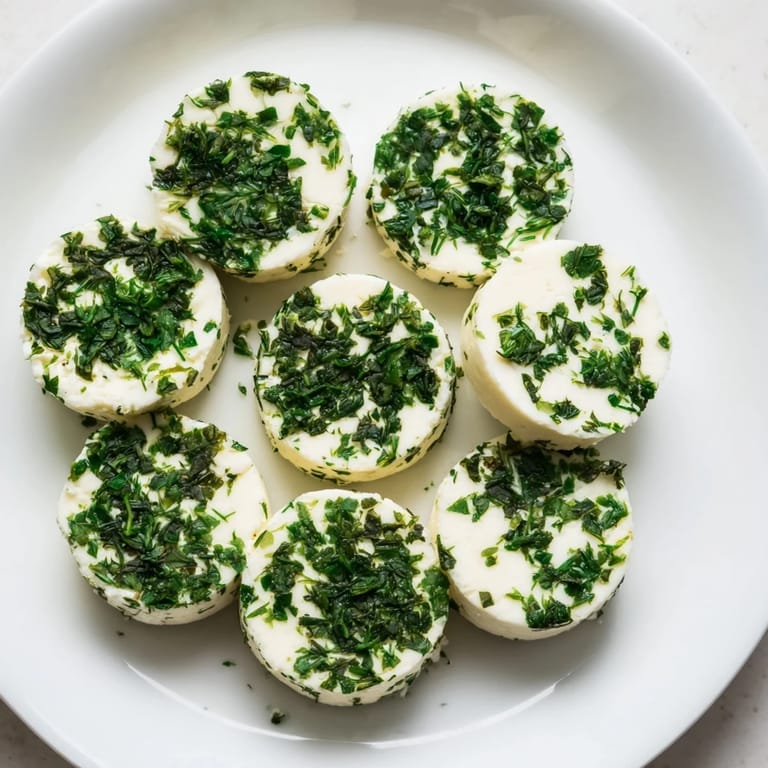
 I discovered these while wandering through a farmer's market on a gray afternoon, drawn to a vendor arranging tiny round cheeses with such care that I had to ask what they were making. She smiled and showed me her trick: rolling soft goat cheese through handfuls of fresh herbs until they looked like little moss-covered stones plucked from an enchanted forest. The simplicity caught me immediately—just cheese, parsley, dill, and a gentle hand. I made them that evening for a dinner party, and watching guests pick them up like they'd discovered something magical made me understand why she loved this so much.
My friend Sarah brought these to our book club one winter evening, nestled on a bed of microgreens with a few edible flowers scattered around. The room went quiet for a moment—not because anyone expected cheese to be earth-shattering, but because the presentation was so whimsical that it felt like we were about to eat something from a storybook. Someone joked about finding them in the garden, and suddenly everyone was playing along, treating the platter like it was a woodland discovery. That's when I realized these little rounds were more than an appetizer; they were conversation starters.
Ingredients
- Fresh goat cheese medallions: Buy them pre-formed at the market if you can—it saves time and keeps them perfectly uniform, though you can slice fresh logs and gently form them yourself.
- Fresh parsley: The green backbone of this recipe; finely chop it by hand rather than a food processor to keep the texture bright and slightly textured instead of pasty.
- Fresh dill: Don't skip this—the feathery fronds add an unexpected herbaceous note that makes these taste less like 'plain cheese' and more like a considered dish.
- Fresh chives: Optional but worth including; they add a subtle onion whisper that makes the herb blend feel complete.
- Edible flowers or microgreens: These are your stage dressing—pansies, borage, or peppery microgreens transform a simple platter into something that photographs beautifully and tastes intentional.
Tired of Takeout? 🥡
Get 10 meals you can make faster than delivery arrives. Seriously.
One email. No spam. Unsubscribe anytime.
Instructions
- Mix your herb carpet:
- Pour all your chopped herbs into a shallow bowl and give them a gentle toss together. The moment you do this, your kitchen will smell like someone just walked through an herb garden—that's your signal you're on the right track.
- Roll with intention:
- Take each cheese medallion and press it gently into the herb mixture, rolling it slowly so the greens cling evenly all around. Think of it less like coating and more like wrapping each round in a soft, verdant blanket.
- Arrange your woodland scene:
- Lay them on a platter and tuck edible flowers or microgreens between them. Step back and look—you're building something beautiful, not just plating appetizers.
- Serve and watch:
- Serve immediately if your guests are arriving soon, or cover loosely and refrigerate for up to 2 hours. The cheese stays creamy, the herbs stay bright, and everything stays ready.
 Pin it
 I watched my uncle—who never gets excited about food—pick one up with genuine curiosity at a family gathering. He took a bite and immediately asked if I'd made them, then asked how I did it, which was his way of saying it was good enough to replicate. That's the magic of these little rounds: they make people feel cared for because they look like they took real thought, even though the whole thing took less time than scrolling through your phone.
The Magic of Simple Ingredients
There's something liberating about a recipe this straightforward—no cooking, no timing, no temperature anxiety. You're not fighting against the process; you're just assembling things with intention. It taught me that appetizers don't need to be complicated to feel special. Fresh ingredients speaking for themselves, arranged with care, are often more memorable than anything elaborate.
Pairing and Presentation Ideas
Serve these alongside crusty bread, delicate crackers, or crisp raw vegetables for balance and textural contrast. A crisp white wine like Sauvignon Blanc cuts through the richness beautifully, or pair with sparkling cider for a non-alcoholic option that feels equally celebratory. The woodland aesthetic pairs naturally with seasonal platters—think autumn mushrooms and berries, or spring edible flowers.
Endless Variations Worth Trying
Once you master the basic formula, you can drift into variations that feel equally natural. Cream cheese works if goat cheese isn't available, though it's milder and less bright. Small bocconcini balls create a completely different texture—firmer and slightly stringier. For extra depth, add a tiny pinch of lemon zest to the herb mixture, or swap parsley for fresh tarragon for something more sophisticated.
- Try adding a whisper of garlic powder to the herbs for savory depth without overwhelming delicate cheese.
- Press the coated rounds onto a thin layer of softened cream cheese on a platter for anchoring that feels elegant and practical.
- Keep extra fresh herbs on hand so late guests can still watch you roll a fresh batch—the ritual is half the charm.
 Pin it
 These little mossy stones are proof that the most memorable food doesn't require culinary school or complicated techniques. It just needs freshness, intention, and the willingness to make something that makes people smile.
Recipe Questions & Answers
- → What type of cheese is best for this dish?
Fresh goat cheese medallions work best, offering a creamy yet firm texture that holds well when coated with herbs.
- → Can I substitute the herbs used for coating?
Yes, parsley and dill provide the fresh flavor and appearance, but chives or other mild herbs can complement or replace them.
- → How should I serve the herb-coated cheese rounds?
Arrange them on a serving platter with edible flowers or microgreens for a natural, woodland-inspired presentation.
- → Are there any suggested flavor enhancements?
Adding a pinch of lemon zest to the herb mixture brightens the flavor, offering a subtle citrus note.
- → What pairings complement this herb cheese dish?
This herb-coated cheese pairs well with crusty bread, crackers, raw vegetable sticks, and crisp white wines like Sauvignon Blanc.