 Pin it
 My daughter came home from school with a project about peacocks, and suddenly our kitchen became a creative studio instead of just a place to eat. She wanted to make something beautiful enough to photograph, something that would make her friends say wow. That's when the Peacock Tail was born—not from a cookbook, but from an afternoon of laughing over how seriously we were taking vegetable arrangement. It became our signature party trick, the thing people still ask us to bring.
I'll never forget the first time we made it for a potluck. Someone arrived just as I was finishing the radish eyes, and they literally gasped. That one moment—that genuine surprised delight—made me realize this wasn't just a snack, it was edible art. Now whenever I arrange those grapes and cucumber slices, I'm chasing that feeling again.
Ingredients
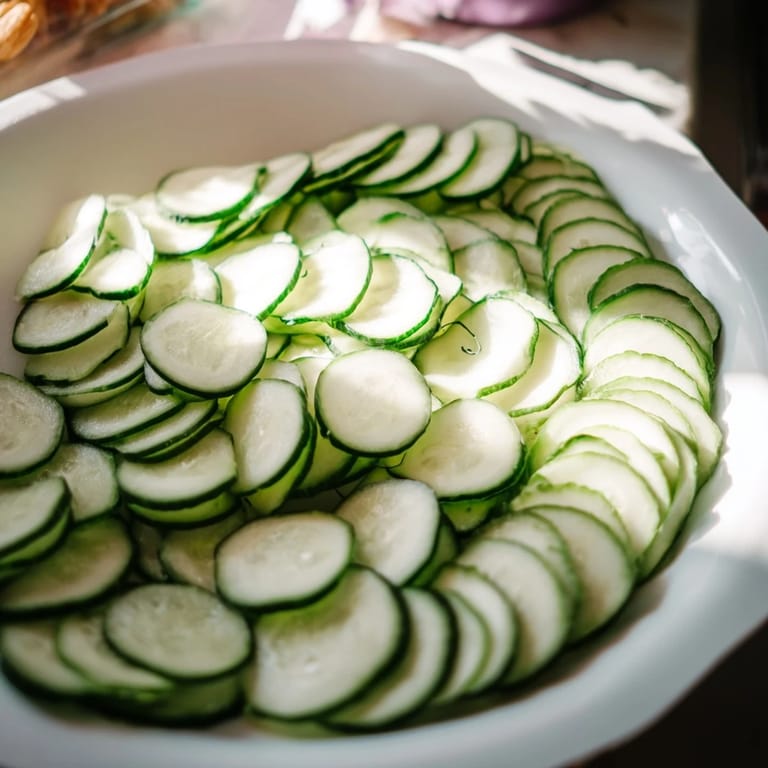
- Cucumbers (2 large): The foundation of your fan; choose firm ones that slice cleanly on the bias for those elegant oval shapes that catch the light.
- Blue or black seedless grapes (1½ cups): These are your statement, the jewels that make people stop mid-conversation—the deeper the color, the more dramatic your peacock becomes.
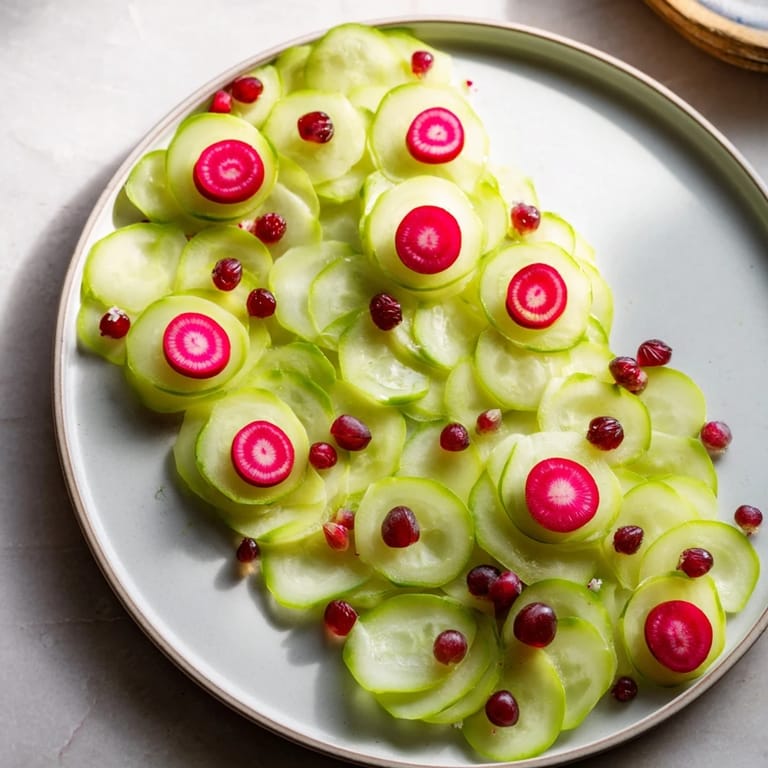
- Radishes (4 medium): Thin rounds that sit like the iris of each eye; they add a subtle bite and that perfect papery texture that contrasts with everything else.
- Fresh parsley or dill sprigs (optional): A whisper of green at the tail's base that softens the whole composition and adds a hint of freshness.
- Carrot (1 small, optional): For the beak and feet, this gives your peacock personality and a reason to use more knife skills.
Tired of Takeout? 🥡
Get 10 meals you can make faster than delivery arrives. Seriously.
One email. No spam. Unsubscribe anytime.
Instructions
- Prep like you mean it:
- Wash everything under cool water and pat completely dry—any moisture will make your vegetables wilt before your guests even arrive. This is the unglamorous step that determines whether your peacock dazzles or droops.
- Slice the cucumbers on a bias:
- Angle your knife about 45 degrees and slice into thin ovals, aiming for almost translucent edges that'll catch light beautifully. You want them paper-thin but sturdy enough to overlap without tearing.
- Thin-slice the radishes:
- Use a sharp knife or mandoline if you're confident with it—the rounds should be delicate enough to cup the grapes gently. Radishes can be surprisingly forgiving if your knife is sharp.
- Build your fan base:
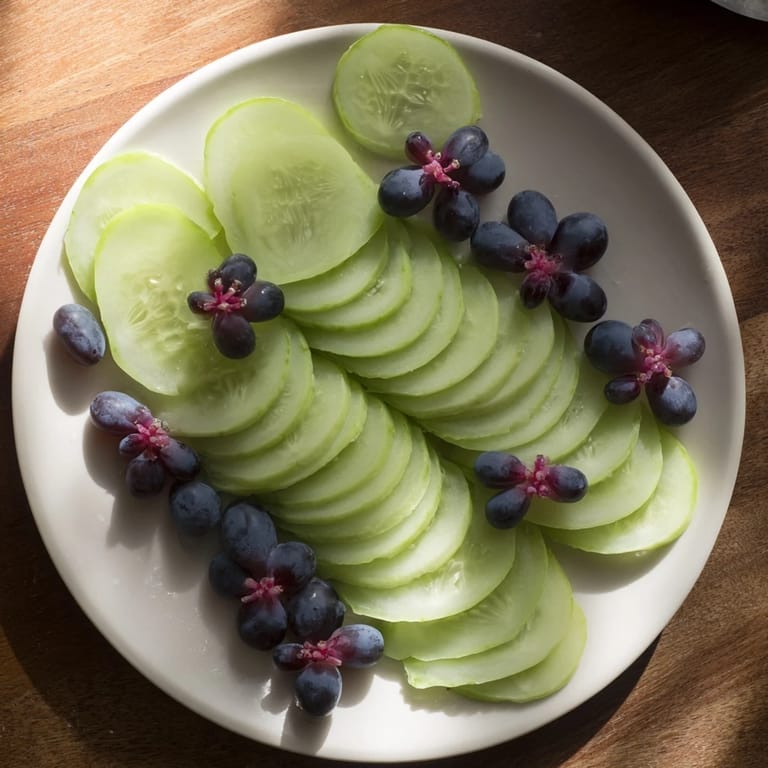
- On a large platter, start at one end and overlap cucumber slices like roof shingles, creating rows that spread outward. This is meditative work; take your time and trust that the pattern will emerge as you go.
- Cluster the grapes:
- Arrange groups of 3 to 5 grapes across the cucumber canvas, spacing them evenly to create visual rhythm. They should feel purposeful, not random.
- Crown each grape:
- Place one thin radish slice on top of each grape cluster, creating that hypnotic eye pattern that makes the whole thing come alive. This is where the magic happens.
- Add details:
- Carve a small beak and feet from carrot slices at the narrow end of your fan, giving your peacock character and intention. Don't overthink it—simple shapes work best.
- Tuck in the feathers:
- Arrange fresh herbs at the base of the fan if you're using them, creating a soft, feathery transition. This step is purely optional but adds an unexpected tenderness.
- Serve with confidence:
- Arrange just before serving to keep everything crisp and vibrant, or cover loosely and refrigerate for up to 2 hours if you're getting ahead of guests.
 Pin it
 There was a moment at my neighbor's garden party when three separate people photographed this platter before eating anything. I realized then that food isn't just about taste—it's about creating moments worth remembering and sharing. That's what this peacock does every single time.
Playing With Color
Once you've made it once with the classic combination, you'll start seeing variations everywhere. I've experimented with golden beets for a warmer tone, red grapes for drama, yellow bell pepper slices for unexpected brightness. The structure stays the same, but the mood shifts entirely. Some seasons ask for jewel tones, others for pastels—trust your instinct about what feels right for the moment.
The Dip Question
Honestly, this dish works beautifully on its own, but a creamy yogurt dip or herby hummus on the side turns it into a full appetizer experience. The cool creaminess contrasts perfectly with the crisp vegetables and sweet grapes. I usually serve both and let people choose their adventure.
Making It Your Own
The real joy of this recipe is how it invites interpretation. Arrange it however feels natural to you, and remember that imperfection is part of the charm. A peacock tail in nature isn't perfectly geometric—it's organic, slightly wild, utterly confident.
- Use whatever vegetables you have on hand that are colorful and crisp; cucumbers and grapes are the anchors, but everything else is negotiable.
- If you're making this for kids, let them help arrange it—they'll be invested in the result and proud to present something they created.
- Serve it immediately after assembly for maximum crispness, or cover it loosely with plastic wrap and refrigerate until you're ready to wow your guests.
 Pin it
 This recipe taught me that food can be art without being complicated, and that the simplest ingredients often make the biggest impression. Every time you make it, you're creating something beautiful and shareable.
Recipe Questions & Answers
- → How should the cucumbers be sliced for this dish?
Slicing cucumbers thinly on a bias creates oval-shaped slices ideal for overlapping and forming the fan effect.
- → What is the purpose of the radish slices in the arrangement?
Radish slices are placed atop grape clusters to mimic the eye spots, adding visual interest and a crisp texture contrast.
- → Can other types of grapes be used?
Yes, yellow or red grape varieties work well to add additional color vibrancy to the platter.
- → What herbs are recommended for garnish?
Fresh parsley or dill sprigs add a feathered base and enhance the overall presentation with herbaceous notes.
- → Is this dish best served immediately or can it be prepared in advance?
It is best served immediately to maintain crispness but can be covered and refrigerated for up to 2 hours before serving.