 Pin it
 I discovered this platter during a spring afternoon at a small gallery opening, where the food table felt like an artist's palette itself. The owner had arranged delicate pink and coral ingredients in soft, overlapping layers that looked like watercolor brushstrokes, and I remember standing there transfixed, unable to decide if I should admire it or eat it. That moment sparked an obsession with creating something equally beautiful at home, and I've been refining this Pink Petal Watercolor Wash ever since. It's become my secret weapon for entertaining—a dish that whispers elegance without demanding hours in the kitchen.
I remember my friend Sarah's face when she arrived for brunch and saw this platter spread across the table. She literally gasped and said it was too beautiful to touch, then immediately reached for a prosciutto rose paired with brie. We spent the next hour deconstructing flavor combinations, and what started as a visual centerpiece became the most talked-about part of the meal. That's when I realized this platter does something special—it invites people to play with their food again, like they're kids discovering tastes for the first time.
Ingredients
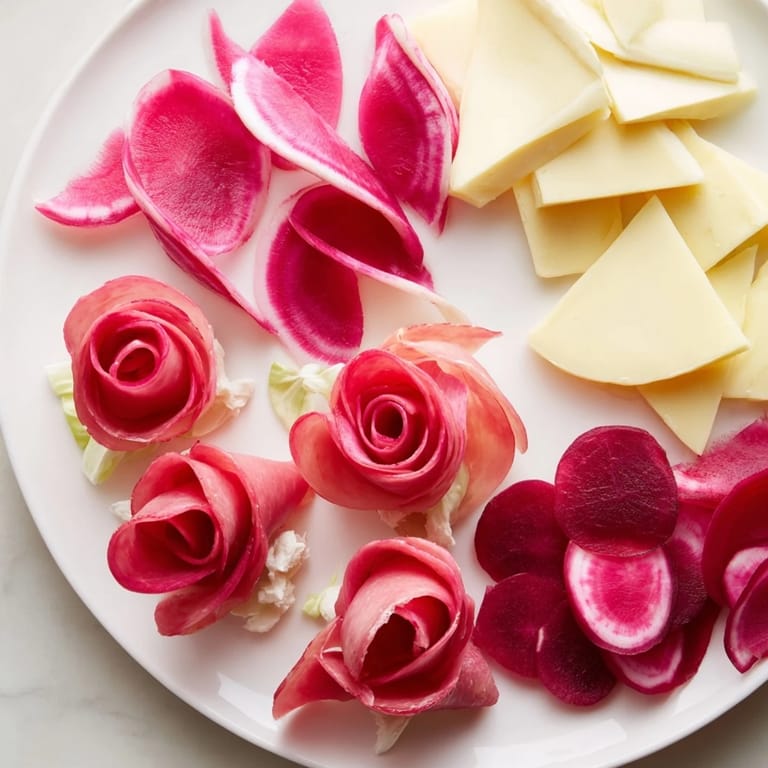
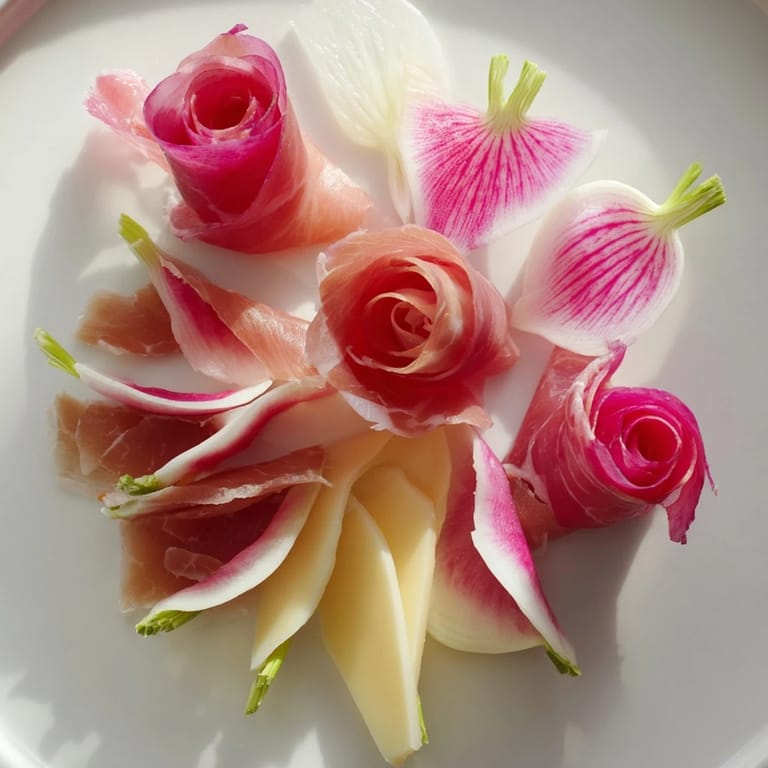
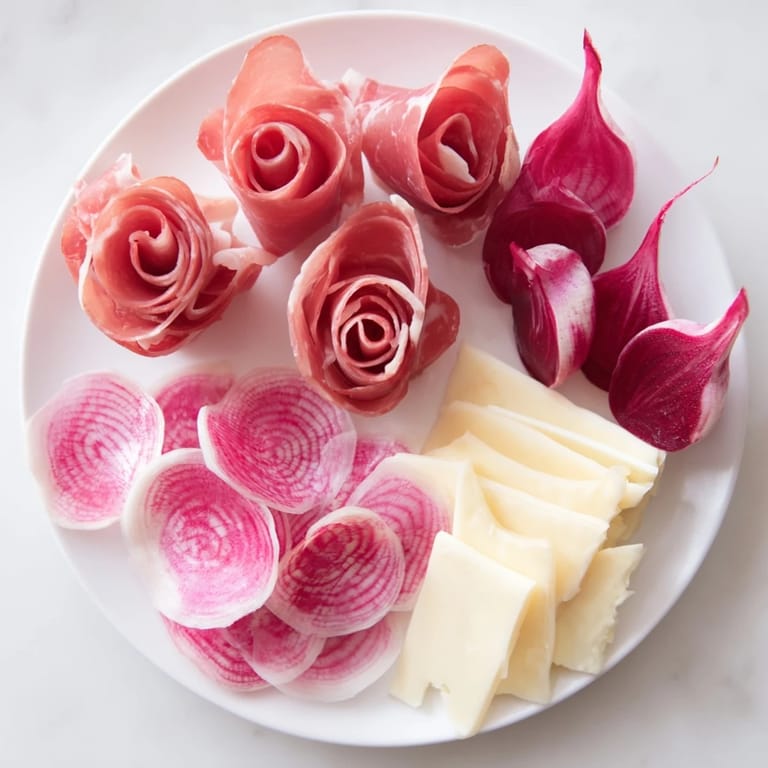
- Prosciutto, 100g thinly sliced: Shape these into delicate roses by loosely rolling or folding—it's easier than it sounds and creates those architectural moments that make the platter breathtaking. Choose prosciutto di Parma if you can; the deeper color and subtle nuttiness elevates everything around it.
- Mortadella, 100g thinly sliced: Let these drape in soft, casual folds rather than laying them flat. The slight sheen catches light beautifully and creates visual movement across the platter.
- Pink radishes, 6–8 small: Slice paper-thin with a mandoline if you have one—those translucent rounds catch light like stained glass. The peppery snap is essential for cutting through the richness of cheese.
- Watermelon radish, 1: When you slice into this, those pink and white striations appear like a gift. Arrange them slightly fanned so people see the interior pattern immediately.
- Beet, 1 small cooked: Roast or boil until just tender, then slice thin while still slightly warm so the edges are delicate. This gives you the deepest pink notes and earthy sweetness that anchors the whole composition.
- Pink-hued cheese (port wine Derby, rosé goat cheese, or berry-washed rind), 100g sliced: These cheeses are the color story's foundation. Their creamy texture softens as it sits at room temperature, becoming more luxurious by the handful.
- Brie or camembert, 100g cut into wedges: Cut these just before serving so the edges stay clean. The pale interior contrasts beautifully with the pink elements and provides a neutral, luxurious landing point.
- Baguette, 1 small sliced: Toast lightly if you like, but I prefer serving it room temperature so it doesn't overwhelm the delicate flavors. Gluten-free crackers work beautifully if that's your preference.
- Rice crackers, 1 package: These stay crisp longer than bread and their neutral flavor lets every other ingredient shine.
- Strawberries, 1 cup halved: Choose ones that are ripe but still firm so they don't weep liquid across your platter. Their sweetness surprises people after savory bites.
- Raspberries, 1 cup: These are delicate, so add them last. Their gentle tartness creates perfect balance against rich meats and creamy cheeses.
- Edible rose petals or microgreens: This is entirely optional, but they're the flourish that makes people believe you're a natural entertainer. Sprinkle them just before guests arrive.
Tired of Takeout? 🥡
Get 10 meals you can make faster than delivery arrives. Seriously.
One email. No spam. Unsubscribe anytime.
Instructions
- Start with your canvas:
- Choose a large platter or board—wood, marble, ceramic, anything that speaks to you. White or pale backgrounds make the pink tones sing, but I've had luck with almost anything. Let yourself get excited about this stage; the platter is your artistic statement.
- Shape the prosciutto roses:
- Take a slice of prosciutto and loosely roll it, or fold it in thirds and then gather the center. It doesn't need to look perfect; the slightly irregular edges are what make it romantic. Arrange these in small clusters across the platter, leaving white space between them.
- Layer the mortadella:
- Drape the mortadella slices beside the prosciutto in gentle, overlapping folds. Think of how fabric falls rather than how paper lays flat. This casual arrangement is what creates the watercolor effect.
- Paint with vegetables:
- This is where the magic happens. Scatter your radish slices in slightly fanned arrangements, letting them overlap like actual brushstrokes. The thin, translucent edges should catch light. Intersperse the watermelon radish slices and beet slices in clusters, allowing their colors to create visual flow across the board.
- Nestle the cheeses:
- Place your pink-hued cheese slices and brie wedges in small clusters, treating them as focal points. Let them peek out between the vegetables and meats, creating depth and visual interest.
- Add bread and crackers:
- Arrange these in gentle curves along edges or interspersed throughout, creating pathways that guide people's eyes and hands across the platter. Don't scatter them randomly; create intentional lines.
- Scatter the fruit:
- Add strawberry halves and raspberries in small piles, using them to enhance the pink palette and create sweet surprises. Don't hide them; let them be visible so people anticipate that sweetness.
- Final flourish:
- Sprinkle edible rose petals or microgreens across the composition if using. Step back and admire your work for a moment—you've created something beautiful.
- Serve with intention:
- Bring it straight to the table and let your guests be the first to interact with it. The moment of discovery is part of the experience. Serve immediately while everything is at its freshest.
 Pin it
 I served this platter to my grandmother once, and she spent fifteen minutes studying it before eating anything. She kept saying, 'It's like you've captured spring on a plate,' and I realized that somewhere between arranging the first rose and placing the final raspberry, I had created something that made people feel something beyond hunger. That's when I understood this recipe isn't really about the ingredients at all—it's about the moment you create when you set it on the table.
The Color Story
The entire power of this platter lives in its palette. Every ingredient was chosen because it speaks in shades of pink, coral, and pale red—a language that feels soft and intentional. The prosciutto roses are the deepest note, the beets provide earthiness, the pink cheeses bridge between savory and indulgent, and the strawberries and raspberries bring brightness. This isn't random; it's a conversation in color that makes people want to photograph and taste simultaneously. When you're assembling, think about how each element either echoes or complements what's beside it. The visual harmony is what makes this recipe memorable.
Building Flavor Combinations
What makes this platter endlessly interesting is how the flavors interact. There's the salty, umami depth of prosciutto against the gentle tang of goat cheese. The cool crispness of radish cuts through rich brie like a palate cleanser. The sweetness of strawberries becomes unexpected and luxurious when paired with mortadella. You're not serving a composed dish; you're offering a playground where guests discover their own flavor adventures. I've watched people taste the same combination three different ways—first with a cracker, then with bread, then with nothing but the ingredient itself—and each method reveals something new. This is what makes the platter feel interactive rather than intimidating.
Making It Your Own
Once you understand the principle—delicate arrangement, pink palette, mix of textures and temperatures—you can absolutely make this your own. I've done vegetarian versions by doubling the cheese selection and adding marinated vegetables. I've added pickled onions, pink peppercorns, or candied walnuts depending on what I have on hand. The foundation is flexible; the spirit is fixed. The beauty is that this formula works because it respects both aesthetics and appetite, which is rarer than you'd think.
- Try adding a small bowl of honey-whipped ricotta or a creamy beet hummus for extra richness and another color note
- Consider pairing with a rosé wine or sparkling beverage that echoes the color story
- Prep elements separately and assemble just before serving so everything stays fresh and the colors remain vivid
 Pin it
 This platter teaches you something every time you make it: that food is theater, and presentation is never shallow—it's one of the kindest ways to invite people into your space. It says you took time to think about beauty, which is its own form of generosity. Make it, serve it with confidence, and watch your guests fall in love with the moment.
Recipe Questions & Answers
- → How can I shape prosciutto into rose-like forms?
Gently roll or fold thin prosciutto slices into small spirals to resemble rose petals, placing them in groups to enhance the visual effect.
- → Which cheeses enhance the pink color palette?
Cheeses such as port wine Derby, rosé goat cheese, or berry-washed rind cheeses provide appealing pink hues and complement creamy brie or camembert wedges.
- → What vegetables are used to mimic watercolor brush strokes?
Thin slices of pink radish, watermelon radish, and cooked beet are layered with slight fanning to create a soft, blended watercolor effect.
- → Can this platter be adapted for vegetarians?
Omit the cured meats and increase the variety of cheeses and vegetables for a colorful and satisfying vegetarian version.
- → What garnishes add elegance to the platter?
Edible rose petals or fresh microgreens provide a delicate and elegant finishing touch to the presentation.
- → What beverages pair well with this platter?
A chilled rosé wine pairs beautifully with the blend of savory meats, cheeses, and sweet berries on the platter.