 Pin it
 I'll never forget the first time I attended a wine tasting event where a friend brought out a cheese board that made everyone pause mid-conversation. At its heart sat an elegant wine bottle surrounded by cheeses that actually tasted like wine—deeply infused, jewel-toned, and absolutely mesmerizing. That moment sparked something in me. I realized that a cheese board didn't have to be just an appetizer; it could be theater, a conversation starter, and a delicious celebration all at once. Now, whenever I want to impress guests without fussing over a hot stove, I create this Ruby Red Wine Stain Board. It's become my signature move.
I served this board at a dinner party last spring, and what surprised me most was how long people lingered around it. They weren't just eating—they were discovering. Someone would try the drunken goat cheese, then reach for a wine cracker, then the red wine jelly, creating their own little flavor journey. That's when I understood: this board isn't about having the fanciest ingredients. It's about creating an experience where every combination tastes intentional.
Ingredients
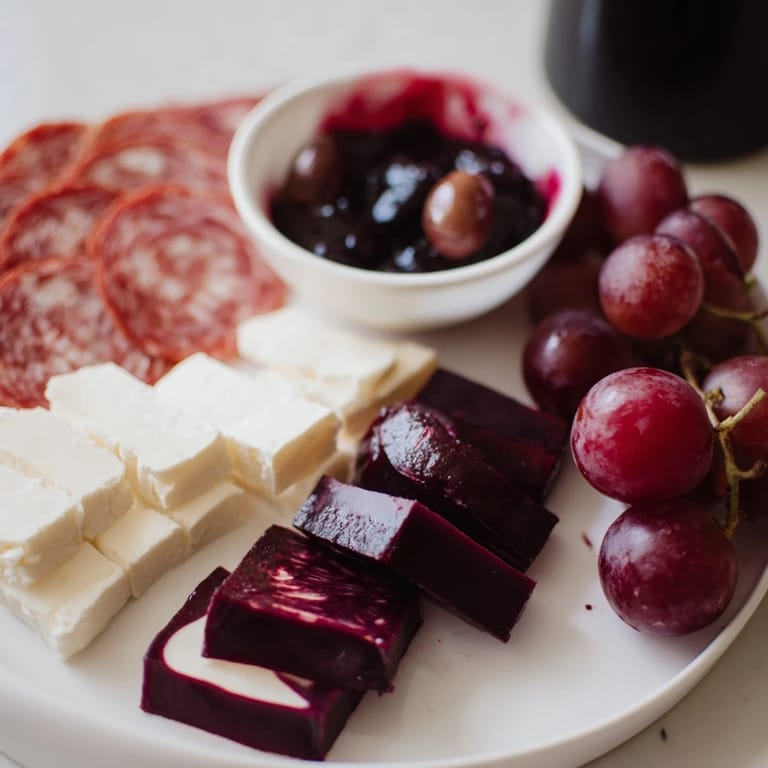
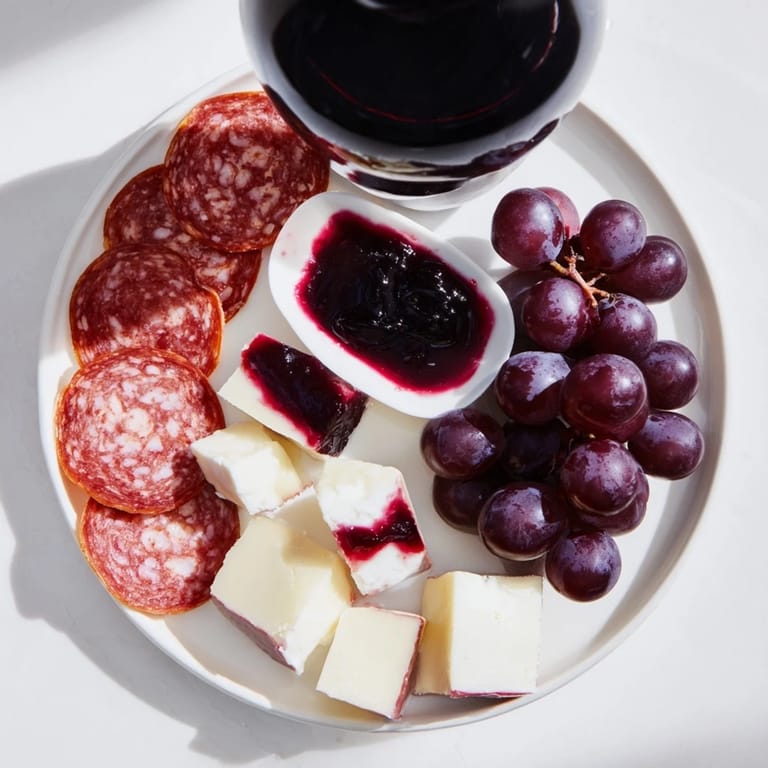
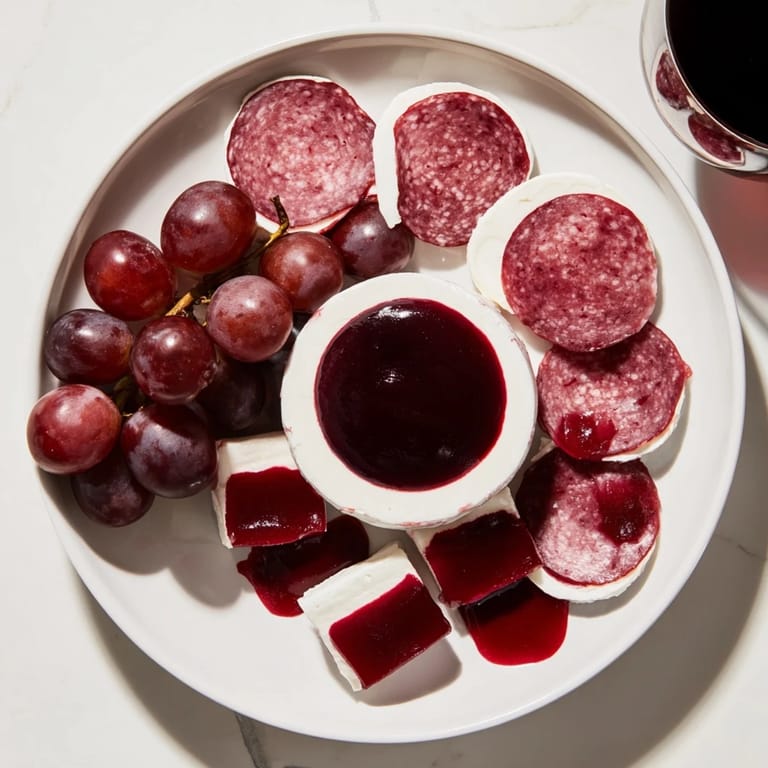
- Drunken goat cheese (200g, sliced): This is your star ingredient—the soft, wine-soaked texture melts on your tongue and tastes like velvet. The red wine gives it an almost berry-like undertone that surprises people. Don't skip this; it's worth seeking out at a good cheese counter.
- Red Wine BellaVitano or similar hard cheese (150g, cubed): This is the textural contrast that makes the board interesting. It's firm enough to hold together while being creamy enough that you actually want to eat it. The wine infusion gives it color and complexity.
- Red wine-cured salami (100g, thinly sliced): The saltiness here plays beautifully against the sweetness of the wine-poached grapes. Ask your butcher for something cured in red wine, or any quality salami will work in a pinch.
- Prosciutto (80g, torn into ribbons): This is optional but adds a delicate, salty elegance. Tearing it by hand instead of slicing makes the board look more organic and inviting.
- Red wine jelly (1/2 cup): This is pure magic in a small bowl. It's sweet, slightly boozy, and gives people something to spread on bread. You can buy it or make a quick version by simmering red wine with sugar and gelatin.
- Red wine-poached grapes (1/2 cup): These are tart, slightly wine-forward, and absolutely addictive. The process is simple: simmer them gently so they stay plump and beautiful.
- Red wine-infused dried cherries (1/4 cup): These add pops of dark color and a concentrated fruity sweetness. They feel luxurious without being fussy.
- Red wine-marinated olives (1/3 cup): Kalamata olives work beautifully here—briny, bold, and they stand up to all the wine flavors around them. The marinating step deepens their flavor even more.
- Baguette (1 small, sliced): Slice just before serving so it stays crisp. This is the vehicle for all the other flavors—don't underestimate good bread.
- Red wine and rosemary crackers (1 cup): These crackers echo the theme of the board and add a savory herb note. If you can't find them, any quality cracker works, though the thematic match is part of the fun.
- Fresh rosemary sprigs: These do double duty—they look beautiful and they release their aroma as people reach past them. Rosemary and red wine are old friends.
- Edible flowers (optional): A few pansies or nasturtiums turn this from impressive to stunning. They add color contrast and make people smile.
Tired of Takeout? 🥡
Get 10 meals you can make faster than delivery arrives. Seriously.
One email. No spam. Unsubscribe anytime.
Instructions
- Set your stage:
- Place that beautiful wine bottle in the center of your board or platter. This is your anchor point, your focal point. If the label looks nice, keep it; if not, remove it. This bottle is doing important visual work—it's telling the story of everything around it.
- Build your cheese foundation:
- Arrange the sliced drunken goat cheese in soft, casual piles around the bottle's base. Let some pieces lean against the bottle like they're drawn to it. Do the same with the cubed red wine BellaVitano. You're creating pockets and layers, not a rigid line. This is impressionistic, not architectural.
- Add the meat ribbons:
- Fan the salami slices out in small clusters—think of flower petals. Tear the prosciutto into rough ribbons and drape them nearby. These pieces should look abundant and generous, not perfectly counted.
- Nestle your sweet components:
- Pour the red wine jelly into a small bowl and tuck it into a gap between cheeses. Scatter the wine-poached grapes in small piles—they're little jewels. Do the same with the dried cherries. These colorful elements should dot around the board, not clump in one corner.
- Add the olives and crackers:
- Spoon the marinated olives into a small bowl or arrange them directly on the board. Arrange the baguette slices and wine crackers in gentle arcs or lines—they should be easy to grab without disrupting the whole composition. Think of them as serving pathways.
- Crown with freshness:
- Tuck fresh rosemary sprigs throughout, letting them poke up naturally. Add a few edible flowers if you have them. Step back and look. Does it feel abundant? Does it tell a story? If yes, you're done.
- Serve with intention:
- Encourage guests to taste things in combination. The wine jelly on a wine cracker with a piece of drunken goat cheese is not an accident—it's a conversation. Serve this board immediately after arranging so everything looks fresh and inviting.
 Pin it
 There's a moment, right when guests arrive and they see this board for the first time, where their faces change. It's not because the ingredients are rare or expensive—it's because they suddenly understand that you created something that feels special, something that tastes like you put thought and care into it. That moment is worth every second of the twenty minutes you'll spend arranging this.
The Story Behind Wine-Soaked Cheeses
Wine-soaked cheeses aren't some new invention—they're a European tradition that goes back centuries. Cheesemakers discovered that soaking young cheeses in wine doesn't just add flavor; it changes the entire character of the cheese. The wine seeps into the cracks, becomes part of the structure, and creates this complex, almost fermented quality that regular cheese simply doesn't have. When you taste drunken goat cheese or wine-stained cheddar, you're tasting history and chemistry meeting on your tongue. I love serving this board because it introduces people to these cheeses in a context where they actually want to explore them—surrounded by complementary flavors, without the pretension of a formal tasting.
Creating Balance on Your Board
The secret to a beautiful cheese board is understanding flavor and textural balance. You want soft cheeses next to hard ones, salty elements near sweet ones, rough textures beside smooth. On this particular board, the soft drunken goat cheese contrasts with the firm BellaVitano. The salty olives and salami play against the sweet jelly and poached grapes. The wine-infused elements tie everything together thematically, but they also create a flavor bridge—everything tastes like it belongs on the same board. This is the kind of balance that looks easy but actually takes a little thinking. Once you understand this principle, you can apply it to any board you create.
Making This Board Your Own
This board is a template, not a rulebook. Don't have red wine BellaVitano? Use any hard cheese you love and soak it in red wine yourself for a few hours before serving—it works beautifully. Can't find wine-poached grapes? Use regular grapes, dried cranberries, or even fresh figs. The beauty of a cheese board is that it's infinitely adaptable. I've made versions with different wines (a Burgundy one time, a Rosé version for summer), different cheeses based on what was at the market, different garnishes based on the season. The principle stays the same: choose ingredients that speak to each other, arrange them with intention, and create an experience that invites people to slow down and enjoy.
- Substitute wines based on what you're serving—a Merlot-based board will taste different from a Pinot Noir one, and that's intentional
- Make this board a few hours ahead if you need to, but add fresh herbs and soft cheeses right before guests arrive
- If you're worried about something drying out, cover loosely with parchment paper and refrigerate, then bring to room temperature before serving
 Pin it
 Making a beautiful cheese board is one of the easiest ways to feel like a confident host. There's no recipe to mess up, no timing to worry about, just arrangement and intention. That's something worth celebrating.
Recipe Questions & Answers
- → How is the red wine flavor incorporated?
Cheeses are soaked in red wine, complemented by red wine jelly, poached grapes, and infused dried cherries to layer the flavor throughout the board.
- → Can this be made vegetarian?
Yes, simply omit the salami and prosciutto, and add extra roasted nuts or cheeses to maintain variety and richness.
- → What type of cheeses work best?
Red wine-soaked cheeses like drunken goat and BellaVitano provide deep flavors and a striking appearance on the board.
- → How to prepare red wine-poached grapes?
Simmer seedless grapes in dry red wine with sugar and cinnamon for about 10 minutes, then cool before adding to the board.
- → What garnishes enhance the presentation?
Fresh rosemary sprigs and edible flowers add aroma and a pop of color, enhancing both flavor and visual appeal.