 Pin it
 There's something about the smell of fresh basil on a warm afternoon that just stops you mid-thought. I discovered this orzo salad completely by accident during one of those summers when my fridge was overflowing with farmers market tomatoes and I had no idea what to do with them all. A friend mentioned tossing pasta with them while it was still warm, and somehow that simple idea turned into this bright, herbaceous dish that became my go-to for every gathering after that.
I'll never forget bringing this to a potluck where I genuinely wasn't sure how it would land—I was the only one who showed up with a salad when everyone else brought heavier dishes. By the end of the night, my bowl was scraped clean and three people asked for the recipe. Watching someone take a second helping of something you made is a small victory that never gets old.
Ingredients
- Orzo: This rice-shaped pasta is the backbone of the dish—it's small enough to catch dressing in every bite but sturdy enough not to turn mushy. Rinsing it under cold water after cooking stops the cooking process and keeps it from clumping.
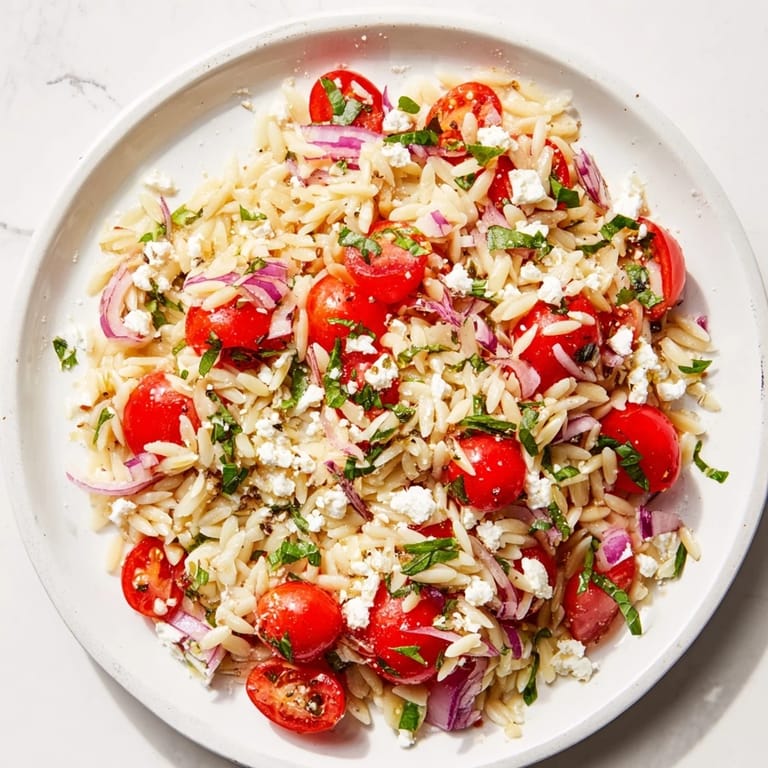
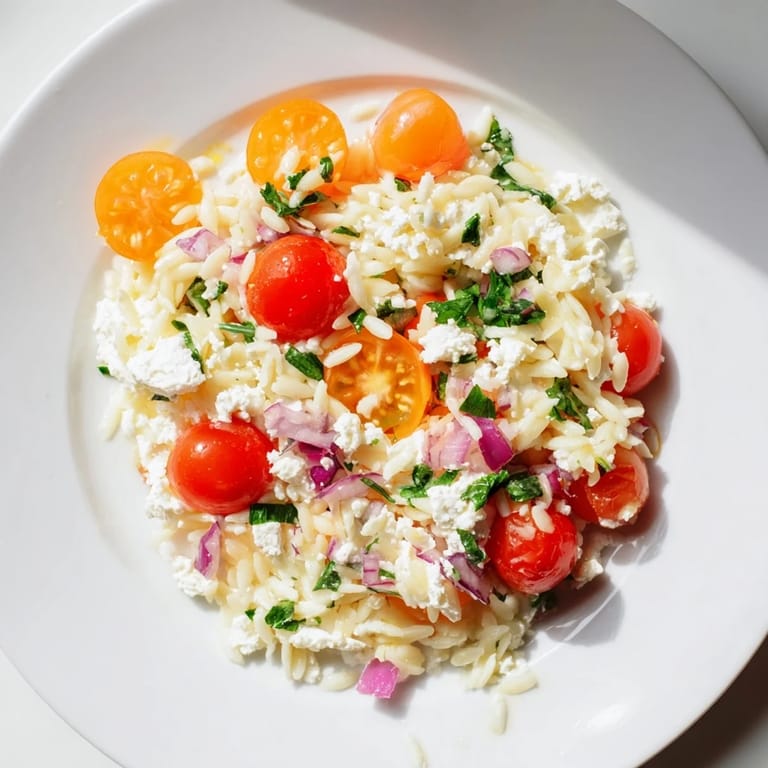
- Cherry tomatoes: Halving them instead of chopping releases their juice into the salad, creating a natural sauce that mingles with the dressing. Choose tomatoes that give slightly when you press them, not rock-hard ones.
- Red onion: The sharpness balances the sweetness of the tomatoes and the richness of the feta. Dice it finely so it distributes evenly and mellows as it sits.
- Feta cheese: Crumbling it by hand rather than using pre-crumbled gives you bigger, creamier pockets of flavor. It gets softer as everything chills, almost melting into the orzo.
- Fresh basil and parsley: Add these just before serving if you can—they stay brighter and more aromatic than if they've been sitting in the dressing for hours.
- Extra-virgin olive oil: This is where quality matters because it's not being cooked, just coating everything. Use one you actually enjoy tasting.
- Red wine vinegar: Its slight tang cuts through the richness without overpowering the delicate herbs. Taste as you go because vinegars vary in strength.
- Garlic and oregano: Mincing the garlic finely lets it distribute throughout the dressing without overpowering any single bite. Dried oregano is more convenient than fresh here and actually works better in the vinaigrette.
Tired of Takeout? 🥡
Get 10 meals you can make faster than delivery arrives. Seriously.
One email. No spam. Unsubscribe anytime.
Instructions
- Get the pasta ready:
- Bring a large pot of salted water to a rolling boil—the water should taste like the sea. Add orzo and cook according to package directions until it's tender but still has a slight firmness when you bite it, usually around 10 minutes. As soon it's done, drain it and run it under cold water while shaking the strainer gently, which stops the cooking and keeps each grain separate.
- Build the dressing:
- In your large bowl, whisk together olive oil, vinegar, minced garlic, oregano, salt, and pepper. The dressing should smell fragrant and look emulsified, not separated. Taste a drop on your finger—it should be balanced between tang and richness, hitting you with that oregano flavor.
- Combine everything:
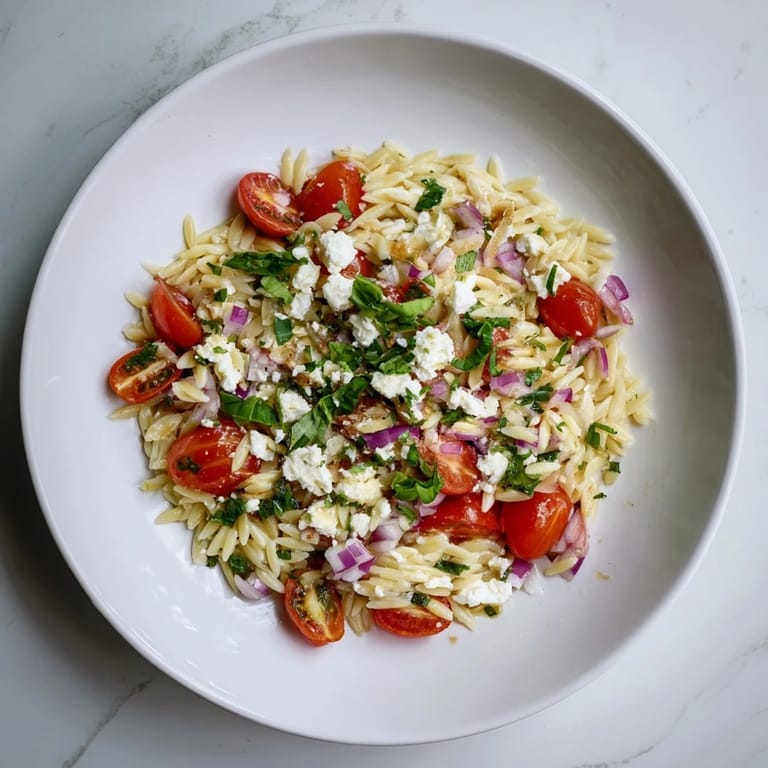
- Add the cooled orzo to the dressing along with tomatoes, red onion, feta, basil, and parsley. Use a gentle hand when tossing so the feta doesn't break apart into dust, but make sure everything is evenly coated. The whole mixture should glisten.
- Taste and adjust:
- Take a bite and think about what's missing—does it need more salt, more acid, more herbs? This is your moment to fix it. Remember that flavors become more pronounced once everything chills.
- Chill or serve:
- You can eat this immediately while it's still cool from the pasta water, or cover it and refrigerate for up to 4 hours. The flavors deepen and meld as it sits, which is why it's perfect for making ahead.
 Pin it
 There was this one moment, maybe three summers ago, when my neighbor tasted this at a backyard dinner and just closed her eyes. She didn't say anything for a few seconds, just stood there with her fork halfway to her mouth, and when she opened her eyes she smiled and said it tasted like summer. That's when I realized food isn't really about feeding people—it's about giving them a moment that feels like home.
Flavor Secrets That Make This Special
The magic happens in the waiting. When you first toss everything together, the flavors are bright and separate—you taste the tomato, then the feta, then the herbs. But as it sits, something shifts. The vinegar softens the sharpness of the onion, the feta gets creamier and more integrated, the oregano seeps into every grain of pasta. It's why this salad is actually better made a few hours ahead than eaten fresh. If you do want to serve it immediately, let it sit at room temperature for at least 15 minutes before eating so the flavors have time to say hello to each other.
When to Make This and Why It Works
This is the kind of dish that feels appropriate for almost any occasion. Potluck? Yes. Picnic? Absolutely, since it travels well and doesn't wilt or separate. Dinner party side dish? Perfect, especially if you're grilling something that needs a fresh complement. Even leftovers taste good straight from the fridge the next day, eaten cold or brought back to room temperature. The beauty is that it doesn't demand much from you once it's made, which means you can focus on the people you're feeding instead of finishing dishes.
Ways to Make It Your Own
Once you understand how this salad works, you realize it's less a strict recipe and more a template for whatever's in your kitchen and whatever you're in the mood for. Some days I'll add a handful of Kalamata olives for extra briny depth, or roasted red peppers for sweetness. If I'm cooking for someone who loves texture, I might throw in some toasted pine nuts or crispy chickpeas. You can use whole wheat orzo if you want more fiber, or even swap in another small pasta shape if that's what you have. The core formula—acid, oil, fresh herbs, something creamy, something bright—stays the same, and that's what makes it work.
- Kalamata olives and roasted red peppers add Mediterranean depth without changing the basic technique.
- Toasted nuts or crispy chickpeas give you textural contrast if the creaminess feels too dominant.
- A squeeze of fresh lemon juice instead of some of the vinegar brings a different kind of brightness that works with certain herb combinations.
 Pin it
 This salad has become the dish I reach for when I want to feel like I've created something effortless and intentional at the same time. It's the kind of recipe that reminds you why cooking for people matters.
Recipe Questions & Answers
- → What type of pasta is used in this dish?
Orzo, a small rice-shaped pasta, is used for its tender texture and ability to absorb flavors.
- → Can I make this dish ahead of time?
Yes, it can be prepared in advance and refrigerated for up to 4 hours to allow flavors to meld beautifully.
- → What herbs enhance the flavor here?
Fresh basil and parsley add bright, aromatic notes that complement the tomatoes and feta perfectly.
- → Is there a suggested variation for added flavor?
Sliced Kalamata olives or roasted red peppers can be added for extra depth and Mediterranean flair.
- → How is the dressing prepared?
The dressing is made by whisking extra-virgin olive oil, red wine vinegar, minced garlic, dried oregano, salt, and pepper for a tangy finish.
- → Are there alternatives for dietary restrictions?
Gluten-free orzo or small pasta can be used, and feta can be substituted with vegan cheese for dairy-free preferences.