 Pin it
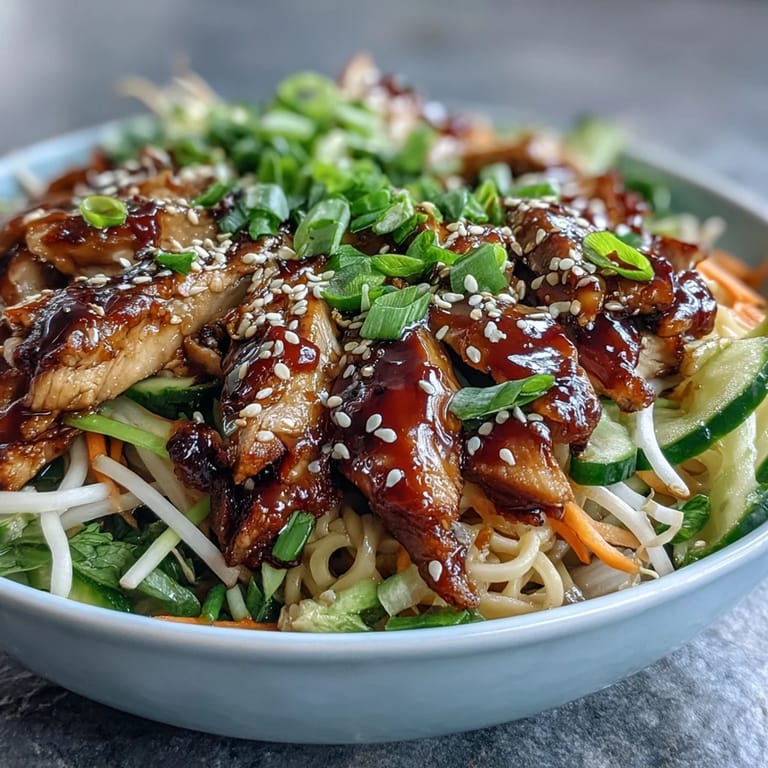
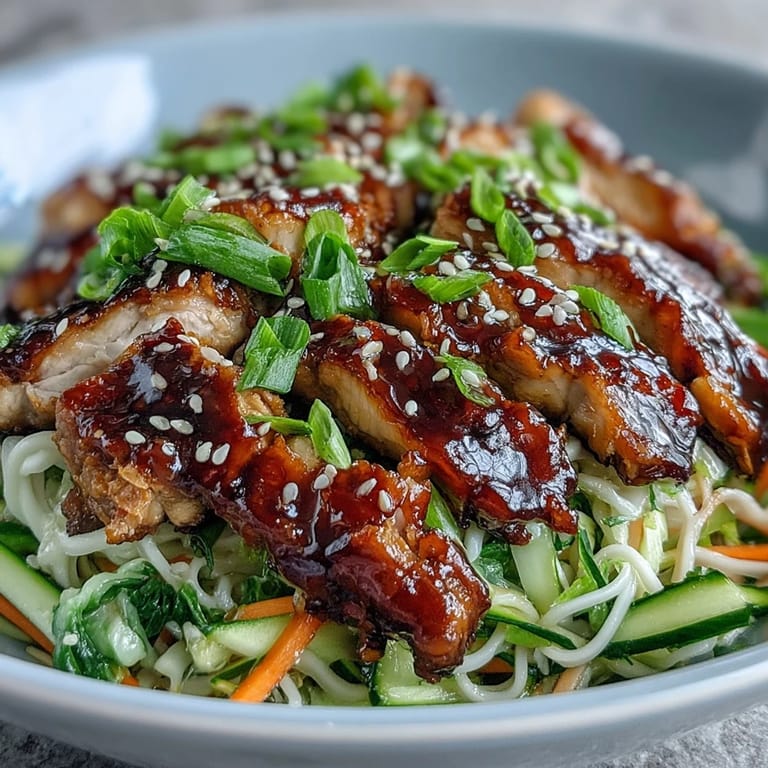
 My neighbor brought over a takeout container of something that smelled impossibly good, and I spent twenty minutes trying to recreate it in my own kitchen without asking for the recipe. It turns out the magic was simpler than I thought: tender chicken kissed with a savory-sweet sauce, silky noodles, and vegetables so fresh they practically crunch. This bowl became my go-to answer when friends ask what I'm making for dinner, and now I make it at least twice a week without getting bored.
I made this for a small dinner party once and watched my friend go silent mid-conversation to focus entirely on her bowl. That moment told me everything I needed to know about getting this recipe right. The combination of textures and that umami-forward sauce just works.
Ingredients
- Boneless, skinless chicken breast or thighs (500 g): Thighs are more forgiving if you tend to overcook, but breasts cook faster and stay lean if you're watching the timing closely.
- Tamari or low-sodium soy sauce (3 tbsp): Tamari gives a deeper, slightly less salty flavor than regular soy sauce, but either works—just taste as you go.
- Fish sauce (1 tbsp): This is the secret ingredient that makes people ask what's in your sauce, so don't skip it even though it smells funky in the bottle.
- Rice vinegar (2 tbsp): The acidity brightens everything and prevents the sauce from becoming one-dimensional and heavy.
- Honey (1 ½ tbsp): A touch of honey rounds out the sharp edges and adds a subtle sweetness that feels complex rather than cloying.
- Toasted sesame oil (2 tbsp): Use the toasted kind, not the light variety—it's nutty and aromatic and makes a real difference in the final flavor.
- Neutral oil (2 tbsp): This keeps the sesame oil from burning when you heat the pan, so don't skip it.
- Garlic and ginger: Fresh garlic and ginger add bite and warmth, though ginger is optional if you prefer a cleaner flavor.
- Rice noodles (250 g): Dried rice noodles cook quickly and have a tender, slightly slippery texture that soaks up sauce beautifully.
- Fresh vegetables: Use whatever's in your fridge—carrots, cucumber, bell peppers, and spring onions are the backbone, but bean sprouts and cilantro add that bright, fresh finish.
- Toasted sesame seeds and lime wedges: These garnishes aren't fancy touches; they're what make the bowl feel complete and intentional.
Tired of Takeout? 🥡
Get 10 meals you can make faster than delivery arrives. Seriously.
One email. No spam. Unsubscribe anytime.
Instructions
- Build your sauce:
- Whisk together tamari, fish sauce, rice vinegar, honey, sesame oil, neutral oil, garlic, and ginger in a bowl until the honey dissolves and everything emulsifies slightly. Split this mixture in half—one half will coat the chicken, and the other becomes your finishing sauce.
- Marinate the chicken:
- Toss your sliced chicken with the marinade and let it sit for fifteen minutes while you prep everything else. This time lets the flavors seep into the meat and keeps you from standing around waiting for the wok to heat up.
- Cook the noodles:
- Follow the package instructions, which usually means boiling salted water and stirring occasionally so they don't clump. Drain them in a colander and rinse under cold water to stop the cooking and prevent them from sticking together.
- Sear the chicken:
- Get your skillet or wok screaming hot over medium-high heat, then add the marinated chicken in a single layer. Cook for five to seven minutes until the edges are lightly browned and the interior is no longer pink—you want a little color but not a hard crust.
- Assemble your bowls:
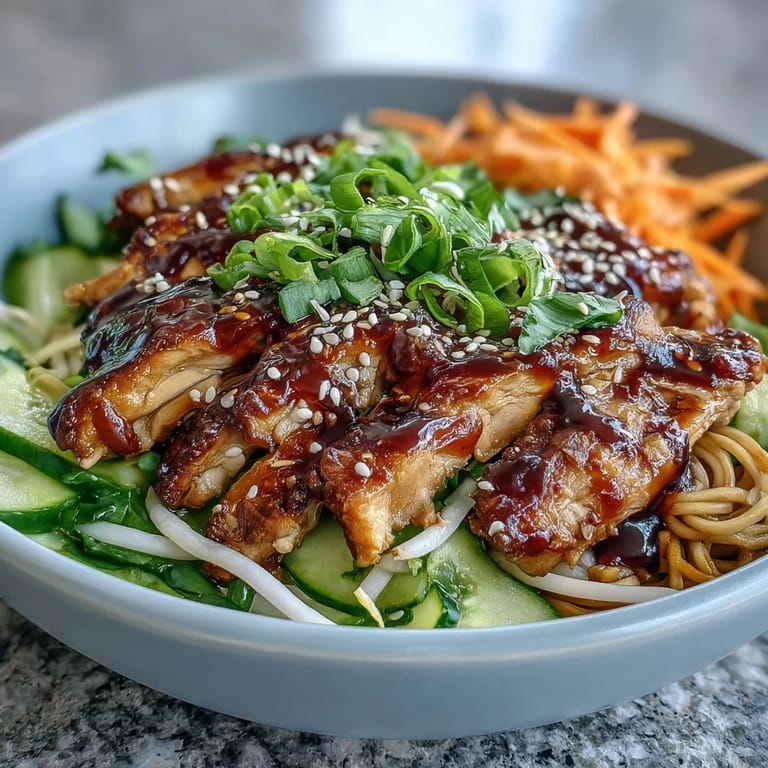
- Divide the noodles among four bowls, then arrange the chicken and raw vegetables in neat piles on top. The presentation doesn't have to be Instagram-worthy, but it should feel intentional and colorful.
- Finish and serve:
- Drizzle each bowl with the reserved sauce, then scatter cilantro and sesame seeds over the top. Squeeze fresh lime juice over everything and serve immediately while the noodles are still warm and the vegetables are still crisp.
 Pin it
 I realized one evening that this bowl had become my comfort food, something I make when I'm tired or need to feel like I've actually cooked something worthwhile. It's that rare dish where simplicity and flavor align perfectly.
The Sauce is Everything
This bowl lives or dies by its sauce, so take a moment to taste it before you pour it over the noodles. If it tastes too salty, add a splash of water and a touch of honey. If it's too sweet, add a small squeeze of lime juice or another teaspoon of fish sauce. The goal is a sauce that makes you pause mid-bite to savor it.
Customizing Your Bowl
This recipe is a framework, not a rigid instruction, so swap vegetables based on the season and what's in your crisper drawer. Shredded cabbage adds crunch, snap peas bring sweetness, and edamame makes it more substantial if you're extra hungry. Roasted mushrooms or tofu work beautifully if you want to skip the chicken, and a soft-boiled egg on top turns it into something decadent.
Make It Your Own
After a few rounds of making this, you'll find your rhythm and develop preferences—maybe you like your sauce spicier, or you prefer a certain vegetable combination. Listen to those instincts and make the bowl yours rather than chasing perfection. Some people add peanut sauce, others stir in coconut milk for richness, and some finish with a drizzle of chili oil for heat.
- Keep cooked noodles on hand in the fridge for nights when you just want to assemble rather than cook.
- Make the sauce in a jar and store it for up to a week so you can pull together a bowl whenever inspiration strikes.
- Double the recipe and eat it for lunch the next day—the flavors actually deepen after a few hours in the fridge.
 Pin it
 This bowl is proof that simple ingredients in the right proportion taste better than anything complicated. Make it once and you'll understand why it's become my answer to almost every dinner question.
Recipe Questions & Answers
- → Can I make this bowl gluten-free?
Use certified gluten-free tamari instead of soy sauce and ensure your rice noodles are labeled gluten-free. Most rice noodles are naturally gluten-free, but always check the packaging to be safe.
- → What's the best way to slice the chicken for even cooking?
Chill the chicken in the freezer for 15-20 minutes before slicing. This firms up the meat, making it easier to cut thin, even strips. Slice against the grain for the most tender results.
- → Can I substitute the fish sauce?
For vegetarian versions, use vegetarian fish sauce or additional soy sauce. You can also add a pinch of miso paste for depth, though the flavor profile will shift slightly.
- → How do I prevent rice noodles from sticking together?
Rinse them thoroughly with cold water after cooking and toss with a small amount of neutral oil. This prevents clumping and keeps them ready for your bowl assembly.
- → Can I prep the ingredients ahead?
Slice vegetables up to a day in advance and store in airtight containers. The sauce can be made 2-3 days ahead. Marinate chicken just before cooking for the best texture.