 Pin it
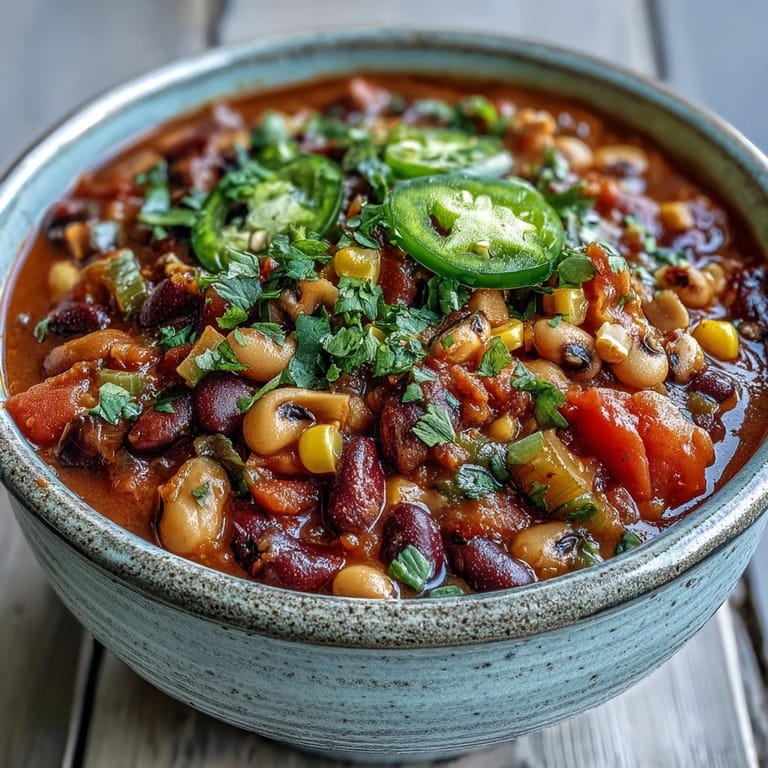
 I discovered black-eyed peas weren't just for New Year's Day luck when a friend served me this chili on a random Tuesday evening, and I've been obsessed ever since. There's something about their slightly sweet, earthy personality that transforms a pot of vegetables into something unexpectedly comforting. The first time I made it myself, I was surprised by how quickly the kitchen filled with the smell of cumin and smoked paprika, like autumn had decided to visit in the middle of winter. What started as a way to use up vegetables from the farmers market became my go-to recipe for feeding people who insist they don't want anything too heavy.
My neighbor knocked on the door one October afternoon just as I was ladling this into bowls, and the smell alone convinced her to stay for dinner. She came back the next week asking for the recipe, claiming it was the first vegetarian thing she'd actually wanted seconds of. That moment taught me that good food doesn't announce itself as virtuous or health-conscious, it just tastes genuinely satisfying, and people want to eat it.
Ingredients
- Black-eyed peas: Use canned if you're short on time, but rinse them thoroughly because the liquid they pack in can make your chili taste metallic and flat.
- Kidney beans: A supporting player that adds texture and substance without overwhelming the lighter earthiness of the black-eyed peas.
- Onion, garlic, bell peppers, carrot, and celery: This vegetable base is your foundation, and taking five minutes to dice everything evenly means they'll cook at the same speed.
- Canned diced tomatoes: Buy the unsalted version if possible so you're not fighting salt levels later.
- Corn kernels: Fresh is sweetest, but frozen works perfectly and honestly tastes fresher than most fresh corn in winter.
- Vegetable broth: Low-sodium broth lets the spices do their job without making everything taste like salt.
- Tomato paste: This concentrated flavor bomb is why your chili tastes restaurant-quality, so don't skip it even though it feels like a small thing.
- Olive oil: Just enough to help the vegetables soften without making the whole pot greasy.
- Ground cumin, chili powder, smoked paprika, oregano, and cayenne: Toast these spices briefly in the pot so they wake up and release their full personality into the chili.
Tired of Takeout? 🥡
Get 10 meals you can make faster than delivery arrives. Seriously.
One email. No spam. Unsubscribe anytime.
Instructions
- Heat and sauté the base:
- Warm your olive oil over medium heat, then add the onion, garlic, carrot, celery, and both bell peppers. Listen for a gentle sizzle and let them soften for five to seven minutes, stirring occasionally so nothing sticks or browns too early. You want them tender and fragrant, not caramelized.
- Bloom the spices:
- Stir in the cumin, chili powder, smoked paprika, oregano, and cayenne, cooking for about one minute until the kitchen smells like a southwest evening. This step is where the magic happens, so don't rush it or skip it thinking the spices will flavor everything anyway.
- Add the tomato paste:
- Stir in the tomato paste and cook for one minute, letting it coat all the vegetables in deep, concentrated flavor. This small moment of caramelization transforms everything that comes next.
- Build the chili:
- Add the diced tomatoes, vegetable broth, black-eyed peas, kidney beans, and corn, stirring everything together so nothing hides at the bottom. Bring it to a gentle boil, watching for those first breaking bubbles across the surface.
- Simmer and merge:
- Lower the heat, cover the pot, and let it bubble softly for twenty-five to thirty minutes, stirring every ten minutes or so. The longer it sits, the more the flavors find each other and create something greater than the sum of their parts.
- Taste and adjust:
- Before serving, taste it and add salt and black pepper until it tastes like itself, but more so. Some days you might want an extra pinch of cumin, other days a crack more heat.
 Pin it
 A rainy Saturday, two friends who normally can't agree on anything, and a shared bowl of this chili changed something. They both went quiet for a moment, tasting, and then started asking what spice was making it taste so warm and alive. That's when I understood that feeding people something simple and genuine sometimes matters more than anything elaborate.
The Joy of Vegetarian Comfort Food
There's a quiet confidence that comes from making a chili that doesn't need meat to feel substantial. The black-eyed peas carry enough earthiness and the beans provide enough protein that no one misses anything, and the vegetables somehow taste louder and more real when they're the main event instead of supporting cast. It taught me that vegetarian cooking isn't about substitution or sacrifice, it's about understanding what each ingredient already does well.
Seasoning and the Art of Restraint
I used to oversalt everything because I was afraid of bland food, until I made this chili and realized that the spices are doing most of the talking. Now I taste before adding salt, and I add it in small amounts, letting the recipe speak for itself. It's a good reminder that confidence in cooking isn't about doing more, sometimes it's about trusting that less is exactly enough.
Toppings and the Final Touch
The toppings are where people make this recipe their own, and that's the best part. Some mornings I add fresh cilantro and jalapeños, other times I dollop sour cream and call it dinner. The beauty is that the base is so good on its own that toppings become celebration rather than correction.
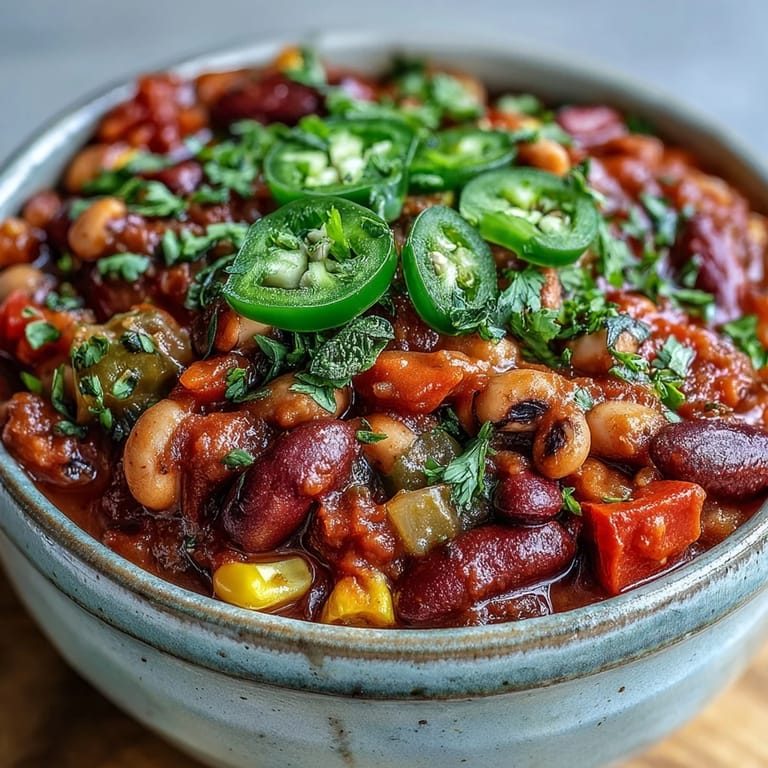
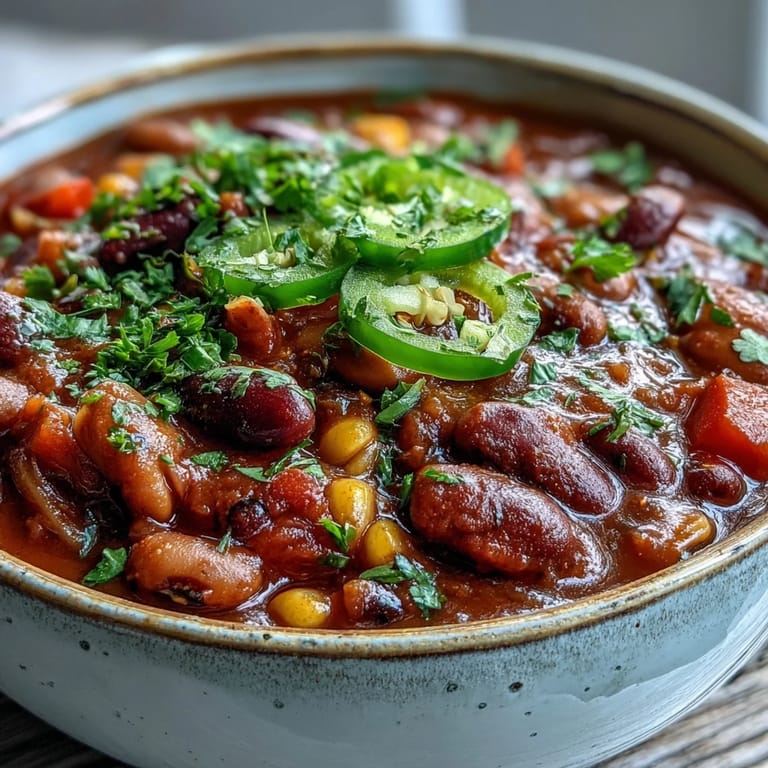
- Fresh cilantro and sliced jalapeños add brightness and heat if you like your chili to wake you up with each spoonful.
- A dollop of sour cream or plant-based yogurt cools and rounds out the spices in a way that makes every bite feel complete.
- Shredded cheese or vegan cheese is optional but transforms the whole thing into something richer and more indulgent if that's what you need.
 Pin it
 This chili has become my answer to almost every question about what to cook, from weeknight dinners to feeding a crowd. It's proof that the best recipes are the ones that ask for just enough effort and give back so much more.
Recipe Questions & Answers
- → Can I use dried black-eyed peas instead of canned?
Yes, soak dried black-eyed peas overnight and cook them until tender before adding to the chili. This will take longer but allows for better control over sodium content and texture.
- → How can I make this chili thicker?
Mash about one cup of the cooked peas and beans with a spoon against the side of the pot. This releases starch and naturally thickens the liquid while maintaining some whole beans for texture.
- → What vegetables work well in this dish?
Beyond the classic onion, carrot, celery, and bell peppers, consider adding diced sweet potatoes, zucchini, or butternut squash. These absorb the spiced broth beautifully and add extra nutrition.
- → How long does this keep in the refrigerator?
Store cooled chili in an airtight container for up to 5 days. The flavors actually improve after a day or two as the spices meld with the vegetables and legumes.
- → Can I freeze this chili?
Absolutely. Portion cooled chili into freezer-safe containers leaving some space for expansion. It freezes well for up to 3 months. Thaw overnight in the refrigerator before reheating.
- → How can I adjust the spice level?
Start with less cayenne pepper and chili powder, then add more gradually to taste. Removing the seeds from bell peppers also mellows the heat. Serve with cooling toppings like sour cream or yogurt to balance spiciness.