 Pin it
 I burned the butter the first time I tried to make a cream sauce for Brussels sprouts. The kitchen smelled like a diner griddle left on too long, and I stood there watching the onions turn brown too fast, convinced I'd ruined dinner. My neighbor knocked on the door asking if everything was okay. I laughed it off, started over, and this time kept the heat low and patient. That's when I learned that cream cheese melts into something luxurious if you just give it time and don't rush the heat.
I made this for a small dinner party in late autumn when the air had that first real chill. My friend Sarah, who usually skips vegetables entirely, took one bite and said it tasted like comfort food her grandmother might have made. We ended up talking about how food can surprise you when you stop assuming you know what something will taste like. That night, the bowl came back to the kitchen empty, and I felt quietly proud.
Ingredients
- Brussels sprouts (600 g): Choose firm, bright green sprouts with tight leaves, and trim the stem ends so they cook evenly without falling apart.
- Cream cheese (150 g): This is what makes the sauce cling and turn silky, so use full-fat for the best texture and let it come to room temperature if you can.
- Dijon mustard (2 tablespoons): The sharpness cuts through the richness and wakes up the whole dish, so don't skimp or substitute with yellow mustard.
- Vegetable broth (150 ml): It loosens the sauce and adds depth, but taste it first because some store-bought broths are very salty.
- Butter (2 tablespoons): Use unsalted so you can control the seasoning, and melt it slowly to avoid browning too early.
- Onion (1 small): Finely chopped onion melts into the sauce and adds a sweet, savory backbone that balances the mustard.
- Garlic (1 clove): One clove is enough to perfume the sauce without overpowering the delicate Brussels sprouts.
- Lemon juice (1 teaspoon): Just a squeeze brightens everything at the end and keeps the sauce from feeling too heavy.
- Fresh parsley: A handful of chopped parsley on top adds color and a fresh, grassy note that makes the dish feel finished.
- Salt and pepper: Taste as you go, because the mustard and broth already bring salt, and you want to layer the seasoning gently.
Tired of Takeout? 🥡
Get 10 meals you can make faster than delivery arrives. Seriously.
One email. No spam. Unsubscribe anytime.
Instructions
- Blanch the Brussels Sprouts:
- Bring a large pot of salted water to a rolling boil, then drop in the cleaned and trimmed sprouts and cook for 5 to 7 minutes until they're just tender but still have a little bite. Drain them in a colander and set aside so they stop cooking and stay bright green.
- Start the Sauce Base:
- Melt the butter in a large skillet over medium heat, then add the finely chopped onion and sauté for 3 to 4 minutes, stirring occasionally, until it turns soft and translucent. Add the minced garlic and sauté for just 1 minute until the kitchen smells warm and fragrant.
- Build the Creamy Sauce:
- Lower the heat and stir in the cream cheese and Dijon mustard, mixing with a wooden spoon until the cream cheese melts and everything blends into a smooth, thick paste. Gradually pour in the vegetable broth, stirring constantly, until the sauce loosens into a creamy, homogeneous consistency.
- Season and Finish:
- Taste the sauce and season with salt, pepper, and lemon juice, adjusting until the flavors feel balanced and bright. Add the cooked Brussels sprouts to the skillet, toss gently to coat each one in the sauce, and let everything heat through for 2 to 3 minutes.
- Serve and Garnish:
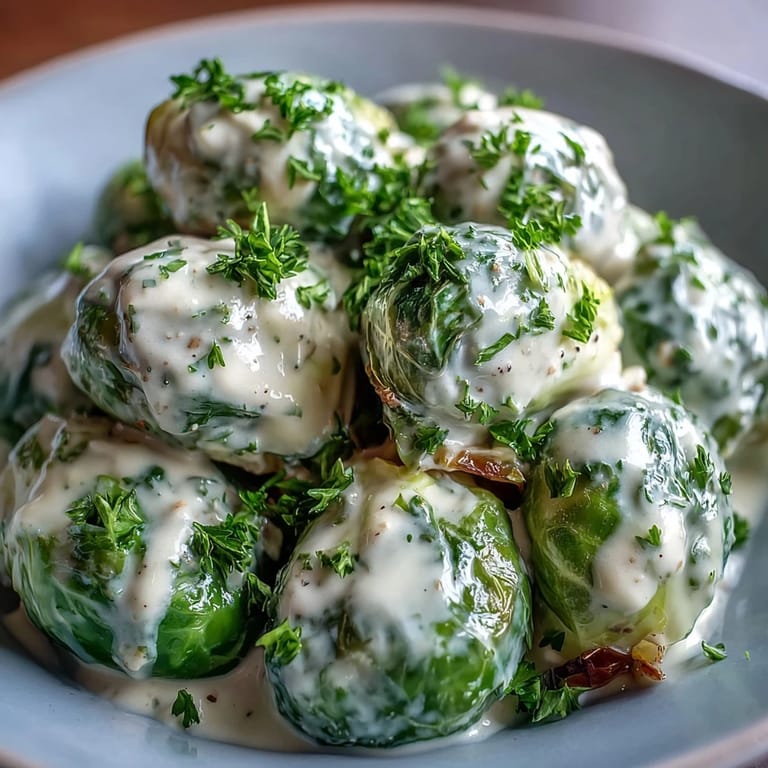
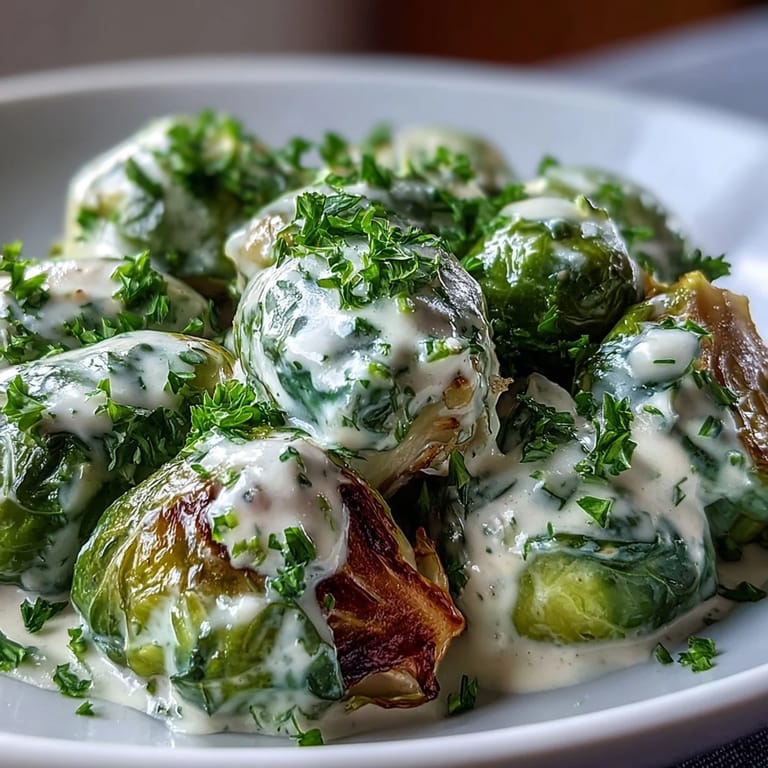
- Transfer the sprouts to a warm serving dish and scatter fresh chopped parsley over the top. Serve immediately while the sauce is still glossy and clinging to every sprout.
 Pin it
 One Sunday afternoon, I served this to my dad, who has always been suspicious of anything green and leafy. He took a cautious forkful, paused, then went back for more without saying a word. Later, he asked me to write down the recipe, which is his way of saying he actually liked it. That moment felt like a small victory, proof that a good sauce can change someone's mind about a vegetable they've avoided for years.
Serving Suggestions
This dish shines as a side for roasted chicken, pork tenderloin, or a simple grilled steak, where the creamy mustard sauce complements the richness of the meat. You can also serve it over rice or quinoa as a vegetarian main, adding a poached egg on top for extra protein. I've brought it to potlucks in a warm casserole dish, and it always disappears first. The sauce is good enough that people scrape the bowl with bread, so don't be surprised if that happens.
Storage and Reheating
Store leftovers in an airtight container in the fridge for up to three days, and the sauce will thicken as it cools, which actually makes it creamier when you reheat it. Warm it gently in a skillet over low heat, adding a tablespoon or two of broth or water to bring the sauce back to life. I've also microwaved it in short bursts, stirring in between, and it works fine if you're in a hurry. The sprouts hold up well and don't turn mushy, so this is one of those rare dishes that tastes just as good the next day.
Variations and Substitutions
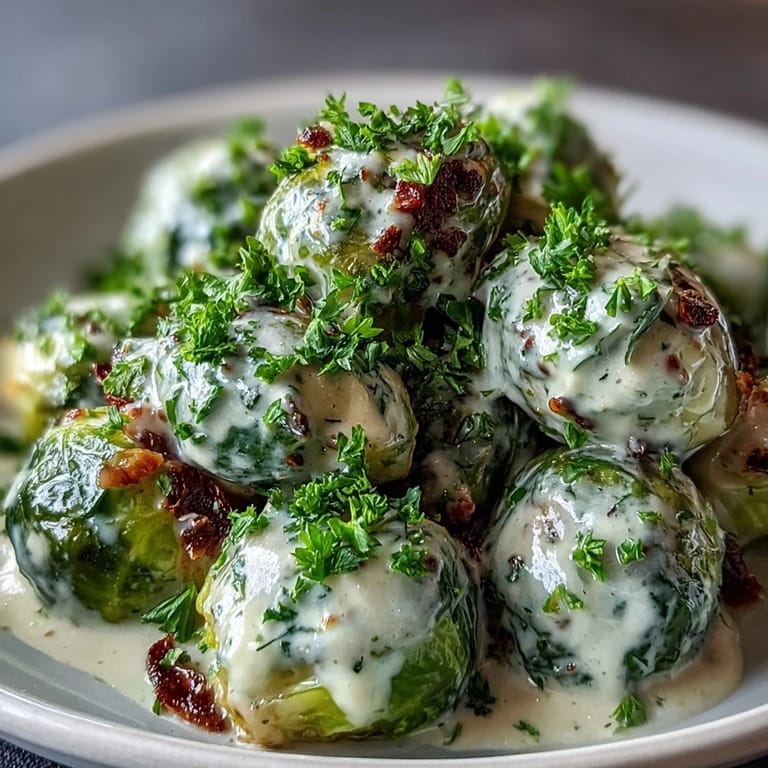
If you want to add a little heat, stir in a pinch of cayenne pepper or a few red pepper flakes when you season the sauce. You can swap the cream cheese for a tangy goat cheese or even a dollop of sour cream if that's what you have on hand. For a dairy-free version, use a cashew cream cheese and replace the butter with olive oil, though the flavor will be lighter and less rich. I've also added crispy bacon bits on top for a smoky, salty crunch that makes this feel like a special occasion dish.
- Try stirring in a handful of grated Parmesan at the end for an extra layer of savory depth.
- Add toasted walnuts or pecans for crunch and a nutty contrast to the creamy sauce.
- Use whole grain mustard instead of Dijon for a more rustic, textured sauce with little mustard seed pops.
 Pin it
 This dish has become one of those recipes I return to when I want something comforting but not complicated, something that feels like care without requiring hours in the kitchen. I hope it finds a place at your table, whether that's a quiet weeknight dinner or a meal shared with people you love.
Recipe Questions & Answers
- → Can I use frozen Brussels sprouts instead of fresh?
Yes, frozen Brussels sprouts work well. Thaw them first and reduce the boiling time to 3-4 minutes since they're already partially cooked. Pat dry before adding to the sauce to prevent excess water.
- → How do I prevent the Brussels sprouts from getting mushy?
Cook them just until tender but still firm, about 5-7 minutes. They should retain a slight bite. Drain immediately and don't overcook when reheating in the sauce—just 2-3 minutes is enough to warm through.
- → Can I make this dish dairy-free?
Yes, substitute the cream cheese with a dairy-free cream cheese alternative and use plant-based butter or olive oil. Ensure your vegetable broth is also dairy-free. The sauce will be slightly less rich but still flavorful.
- → What can I serve this with?
This pairs wonderfully with roasted chicken, pork chops, or grilled fish. For a vegetarian meal, serve alongside roasted potatoes, quinoa, or a grain pilaf. It also complements holiday roasts beautifully.
- → How long can I store leftovers?
Store in an airtight container in the refrigerator for up to 3 days. Reheat gently in a skillet over low heat, adding a splash of broth or water if the sauce has thickened. Avoid microwaving on high heat as it may make the sprouts rubbery.
- → Can I add other vegetables to this dish?
Absolutely! Cauliflower florets, broccoli, or green beans work wonderfully with this creamy mustard sauce. Adjust cooking times accordingly—cauliflower and broccoli need about 5 minutes, while green beans need 4-5 minutes.