 Pin it
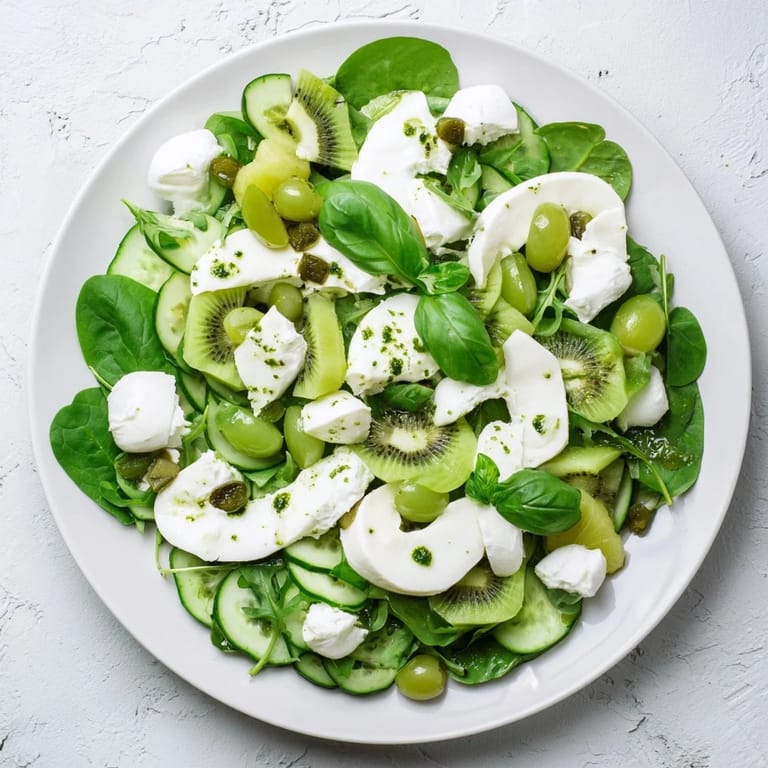
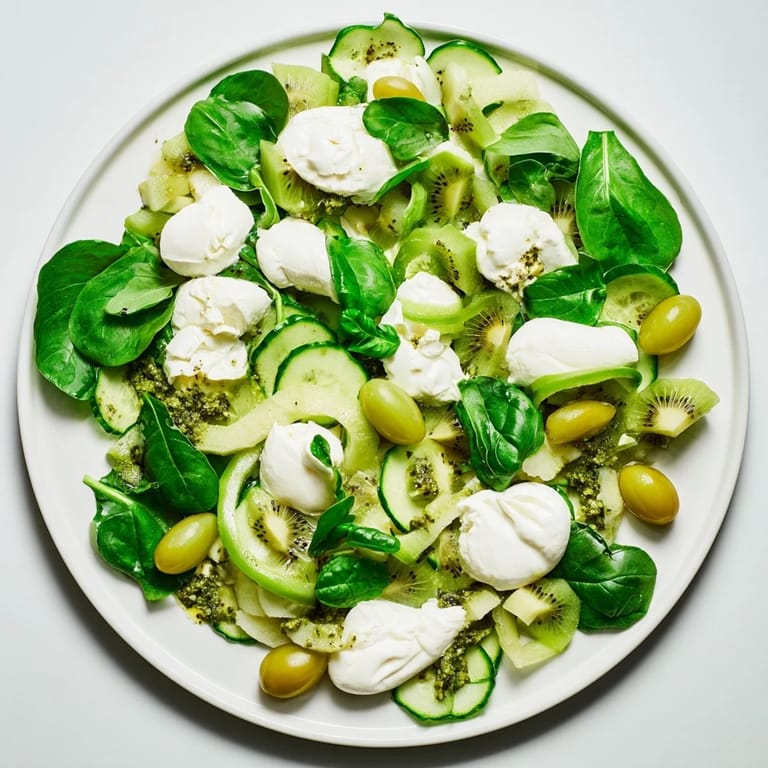
 I discovered this salad on a sun-drenched afternoon in a tiny countryside café, where the chef arranged greens on a plate like an artist composing a landscape. The moment I saw that creamy white mozzarella river cutting through layers of emerald, cucumber, and kiwi, I knew I had to recreate it at home. There's something magical about a salad that looks like edible art, and when friends first saw it on my table, they actually paused before eating because it was almost too beautiful to disturb.
I'll never forget making this for my sister's garden party last summer. She was nervous about hosting, and I suggested bringing a salad. When I unveiled it on her table under the afternoon light, surrounded by wildflowers, she actually teared up. Everyone at that gathering asked for the recipe, and suddenly my simple creation became the dish people still talk about.
Ingredients
- Baby spinach leaves (100 g): The foundation of your emerald landscape. Baby spinach is tender and mild, perfect for raw salads where you want the greens to disappear into silky bites rather than challenge your jaw.
- Arugula (50 g): Adds a peppery note that keeps the salad from tasting one-dimensional. Fresh arugula has a gentle bite that wakes up your palate.
- Cucumber (1 small, thinly sliced): The cooling element. Slice it thin so it catches the light and creates visual layers. I learned the hard way that thick cucumber slices overpower delicate greens.
- Green bell pepper (1, diced): Brings sweetness and crunch that contrasts beautifully with soft greens. The natural glossiness of the pepper adds shine to your composition.
- Kiwis (2, peeled and sliced): These are your secret weapons. Kiwi adds sweetness, tartness, and that gorgeous jade-green color that photographs like a dream. Slice them just before serving so they don't weep.
- Green grapes (100 g, halved): They catch light like little emerald jewels and provide bursts of sweetness between bites of greens and herbs.
- Green olives (50 g, pitted and sliced): These add depth and a salty note. They're your umami element in an otherwise light salad.
- Fresh basil leaves (30 g): Tuck these throughout like you're creating a scented garden. Basil connects all the green elements and adds aromatic freshness that elevates everything.
- Basil pesto (3 tbsp): This is your flavor backbone. Whether store-bought or homemade, pesto brings herbaceous richness that ties the whole salad together.
- Extra-virgin olive oil (2 tbsp): Use your best bottle. The quality of your olive oil is tasted in every bite of a simple salad like this.
- Lemon juice (1 tbsp): Brightens everything it touches and keeps your greens from wilting once dressed.
- Fresh mozzarella (100 g, torn or sliced): This is your river—the creamy white element that transforms a salad into a work of art. Tear it gently rather than cutting so it looks more organic.
- Crème fraîche or Greek yogurt (1 tbsp, optional): If you use this, it adds an extra dimension of creaminess without heaviness. I prefer the subtle tang of Greek yogurt.
- Salt and freshly ground black pepper: Always essential, but especially important here where there are no heavy flavors to hide behind.
Tired of Takeout? 🥡
Get 10 meals you can make faster than delivery arrives. Seriously.
One email. No spam. Unsubscribe anytime.
Instructions
- Build your base landscape:
- Spread your baby spinach and arugula across a large serving platter like you're creating the foundation of a painting. Don't pack it down—let the leaves have air and dimension. This is your canvas.
- Layer in your cool elements:
- Arrange thin cucumber slices and diced green bell pepper over the greens, distributing them so you create pockets of color variation. Imagine you're a landscape artist adding different shades to suggest depth and movement.
- Scatter your jewels:
- Now comes the fun part. Artfully place kiwi slices, grape halves, and olive slices across your creation. Step back and look at it. Does it feel balanced? Are there empty green spaces where a pop of color would help? Trust your eye.
- Tuck in the herbs:
- Nestle fresh basil leaves throughout the salad, letting some peek out from under the greens. This isn't just for flavor—it completes the emerald aesthetic and makes the whole thing smell incredible.
- Whisk your dressing:
- In a small bowl, whisk together your pesto, olive oil, and lemon juice until emulsified. You're looking for a consistency that will coat the greens gently without drowning them. Taste it and adjust salt and pepper. This dressing should sing.
- Crown your composition:
- Drizzle the dressing evenly across the entire salad with a gentle hand. If you over-dress it, you've lost the visual magic, so go lighter than you think you need to.
- Create the river:
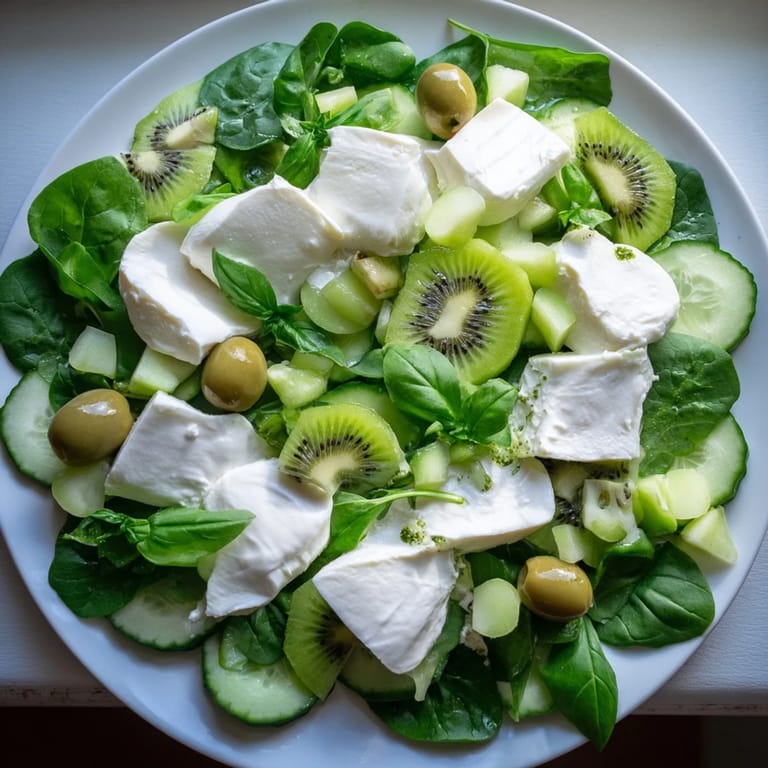
- This is the moment of magic. Arrange your torn mozzarella in a meandering line across the salad like a river cutting through an emerald landscape. Let some pieces sit naturally on top of greens, let others nestle into them. If you're using crème fraîche or yogurt, dot small spoonfuls along this river to deepen the white-on-green contrast.
- Serve with ceremony:
- Bring this to the table before tossing. Let people see what you've created. In that moment before the first fork touches it, you'll see the magic happen on their faces.
 Pin it
 What struck me most about creating this salad for those gatherings isn't the compliments or the requests for the recipe. It's that a simple arrangement of vegetables and cheese transformed an ordinary meal into a moment of connection. People slowed down to really look at their food before eating it, and that simple pause created space for conversation and laughter. That's when I realized this salad was never really about the ingredients—it was about creating a moment of beauty in an ordinary day.
The Art of the Arrangement
Making this salad taught me that presentation matters because it changes how we experience food. When you arrange vegetables with intention, you're not being pretentious—you're showing respect for your ingredients and your guests. I started thinking about color theory, about how certain shades of green make others pop, about where to place a red edge of kiwi to create movement. You don't need culinary training for this. You just need to pause and look at what you're creating as you build it, adjusting and refining until it feels balanced to your eye.
Making It Your Own
While this salad is stunning as written, I've learned that the best recipes are starting points, not final instructions. The core principle is consistency—keep everything in the green family so the visual impact stays powerful. But within that framework, you have freedom. If you love pistachios, toast them and scatter them throughout. If you want more richness, add sunflower seeds. If you prefer a different herb, swap the basil for dill or tarragon. The mozzarella river can be goat cheese, burrata, or any soft white cheese that catches the light.
Pairing and Serving Suggestions
This salad is elegant enough for special occasions but simple enough for weeknight dinners. Serve it alongside grilled fish or chicken if you want to build a meal around it, or let it stand alone as a light lunch. The beauty of this dish is that it works at any temperature—serve it immediately while everything is crisp, or let people graze on it throughout an outdoor gathering. A crisp Sauvignon Blanc or sparkling water with lemon truly elevates the experience, cutting through the richness of the mozzarella while complementing the bright acidity of the dressing.
- If you're making this vegan, use vegan pesto and plant-based mozzarella, though I'll be honest—fresh mozzarella is hard to replace
- Make extra pesto dressing in a small jar and let people drizzle more at the table if they prefer a bolder flavor
- Remember that this salad is a celebration of freshness, so source the best ingredients your budget allows
 Pin it
 This salad reminds me that sometimes the most meaningful food isn't complicated—it's thoughtful. Whether you're making it for a special occasion or simply because Tuesday needs something beautiful, you're creating more than a meal. You're creating a moment.
Recipe Questions & Answers
- → Can I prepare this salad ahead of time?
It's best to assemble this salad just before serving to preserve the fresh textures and vibrant colors.
- → Are there vegan alternatives for the creamy cheese?
Yes, substituting mozzarella with plant-based cheese and using vegan pesto keeps the dish vegan-friendly.
- → What is the purpose of the basil pesto dressing?
The basil pesto adds a rich herbaceous flavor that complements the fresh greens and fruity accents.
- → How does the 'cheese river' enhance the salad?
It introduces a creamy texture and visual contrast, winding gracefully through the layered greens.
- → Can I add nuts or seeds for extra crunch?
Toasted pistachios or pumpkin seeds make excellent crunchy toppings without overpowering the salad's flavors.