 Pin it
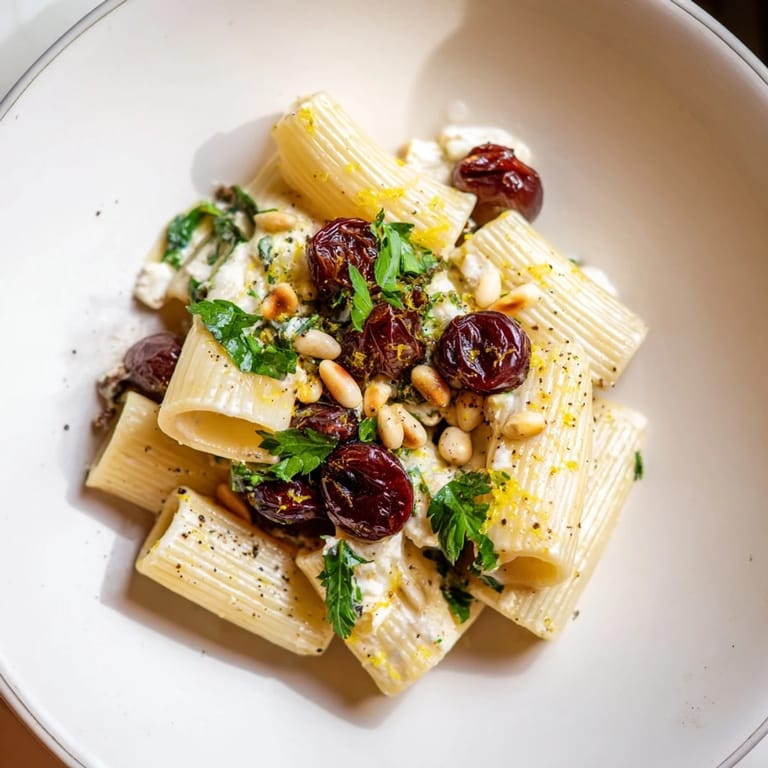
 I discovered this dish by accident on a Tuesday afternoon when I had a bunch of grapes sitting on my counter that were starting to wrinkle slightly, and ricotta I'd bought for something I never made. Instead of tossing them, I threw the grapes in the oven on impulse. Twenty minutes later, my kitchen smelled like caramelized honey and wine, and I knew I'd stumbled onto something special. The sweet, blistered grapes paired with creamy ricotta felt like the kind of thing an Italian grandmother would shake her head at—then secretly make again.
The first time I made this for friends, I was nervous about the whole grapes-in-pasta concept, but as soon as they tasted it, someone said, 'This feels like eating something you'd find at a really good restaurant,' and that sealed it for me. Now whenever I make it, I always roast extra grapes because they disappear before the pasta even finishes cooking.
Ingredients
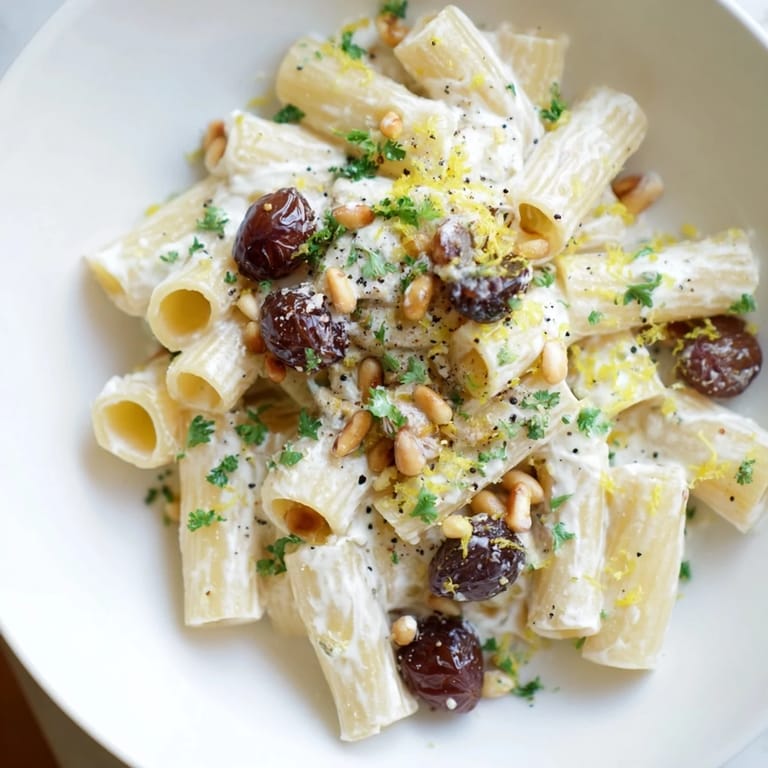
- Dried short pasta (penne, rigatoni, or fusilli): 350 g (12 oz). Use whatever shape speaks to you—I prefer rigatoni because the ridges catch the ricotta beautifully, but penne works just as well.
- Seedless red or black grapes: 300 g (2 cups), stems removed. Red grapes tend to be sweeter, but black grapes give you a deeper flavor if you want something less obvious.
- Olive oil (for roasting): 1 tbsp. This is your medium for magic—don't skip or substitute.
- Coarse salt and freshly ground black pepper: 1/2 tsp salt and 1/4 tsp pepper for roasting. Freshly ground makes a real difference in how the grapes taste.
- Fresh ricotta cheese: 250 g (1 cup). Buy it from a good source if you can—the difference between grocery store and fresh ricotta is worth noticing.
- Lemon zest and juice: 1/2 tsp zest and 1 tbsp juice. The zest is where the brightness lives; don't just skip to the juice.
- Fresh basil and parsley: 2 tbsp basil plus more for garnish, and 1 tbsp parsley. These herbs are what keep the dish from feeling heavy.
- Extra-virgin olive oil (for finishing): 2 tbsp. This one is worth the good stuff—it's the final voice in the dish.
- Toasted pine nuts (optional): 40 g (1/4 cup). They add a subtle nuttiness, but leave them out if you prefer simplicity or have allergies.
- Parmesan cheese (optional): For serving. I sometimes skip it, but shaved over the top it catches the light beautifully.
Tired of Takeout? 🥡
Get 10 meals you can make faster than delivery arrives. Seriously.
One email. No spam. Unsubscribe anytime.
Instructions
- Heat your oven and prepare the grapes:
- Preheat your oven to 220°C (425°F) and line a baking tray with parchment paper. Spread the grapes on the tray, drizzle with 1 tbsp olive oil, and toss with salt and pepper until they're evenly coated—this is your moment to make sure every single grape gets some seasoning.
- Roast until they blister:
- Pop them in the oven for 20–25 minutes, shaking the tray halfway through. You're looking for soft, wrinkled skins and a deep caramelized color; when you catch a whiff of something sweet and slightly jammy, you're almost there.
- Cook the pasta while the grapes work:
- Bring a large pot of salted water to a boil and cook your pasta until al dente—that moment when it's tender but still has a tiny bit of resistance. This timing matters because you want the pasta hot when it meets the ricotta.
- Save your liquid gold:
- Before you drain the pasta, reserve about 120 ml (1/2 cup) of the starchy pasta water in a separate cup. This water is your secret weapon for creating a silky, cohesive sauce.
- Mix the ricotta until smooth:
- In a mixing bowl, combine the ricotta with lemon zest, lemon juice, fresh basil, parsley, and salt, stirring until it's light and smooth. Taste it here—you want the lemon to whisper, not shout.
- Bring it all together gently:
- Return the hot drained pasta to the pot and add the ricotta mixture, tossing gently and slowly. Add splashes of that reserved pasta water as you go, letting the starch create a creamy sauce that coats each piece without being heavy.
- Fold in the roasted grapes:
- Once the pasta feels silky and cohesive, gently fold in the roasted grapes and every bit of their juice. A light touch here keeps everything intact and beautiful.
- Finish and serve:
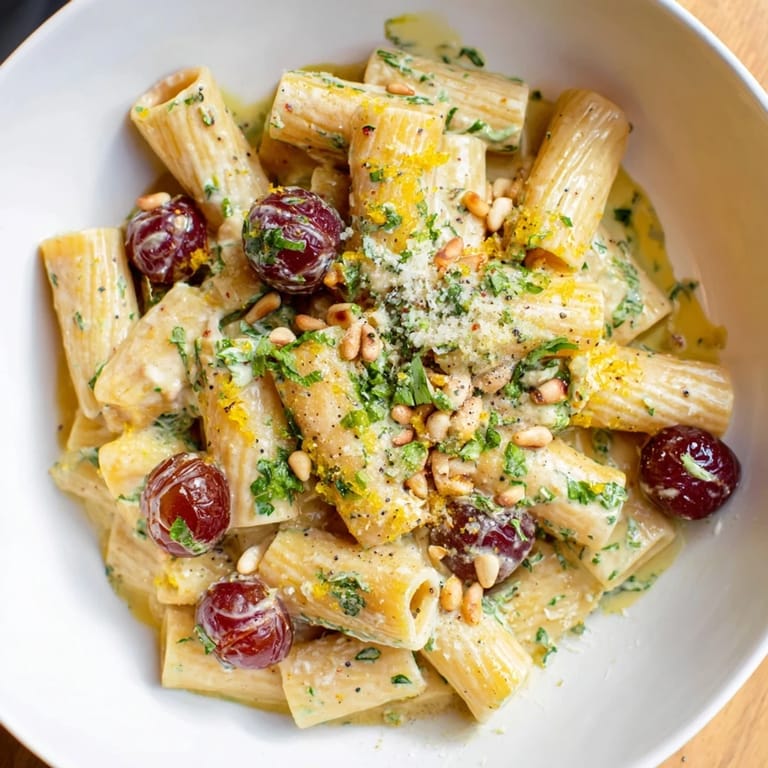
- Divide among bowls, drizzle with your best extra-virgin olive oil, and scatter with toasted pine nuts, fresh basil, black pepper, and Parmesan if you're using it. Serve immediately while everything is warm and the pasta still tastes like you just finished cooking.
 Pin it
 There was an evening when my partner came home right as the roasted grapes came out of the oven, and the smell alone made them say, 'Whatever this is, I'm in.' That's when I realized this dish had become more than an accident—it was something I actively want to make again and again.
Why the Grapes Change Everything
Roasting sweet fruit in pasta might sound like a dessert mistake, but it's actually an old Italian principle turned sideways. The heat concentrates the grapes' natural sugars and creates a subtle caramelization that balances the creamy ricotta and bright lemon. It's the kind of move that sounds clever but tastes completely natural once you try it.
Making It Your Own
This dish is forgiving in the best way. If you're nut-free, skip the pine nuts—the dish stands on its own. If you love tanginess, swap goat cheese for ricotta and watch how the whole thing shifts into something sharper and more assertive. You can even experiment with whole-wheat or gluten-free pasta if that's what your kitchen calls for.
Wine and Table Moments
Pour a glass of Sauvignon Blanc or Pinot Grigio alongside this pasta—the acidity in the wine echoes the lemon in the dish, and something magical happens when you taste them together. This is the kind of meal that turns an ordinary weeknight into something that feels a little bit special, without requiring you to be a special kind of cook.
- Serve this while it's still steaming, as the pasta cools quickly and loses some of its silky texture.
- If you're feeding a crowd, you can roast the grapes ahead of time and reheat them gently just before serving.
- Leftovers are good cold the next day, though the magic is always fresher on the first night.
 Pin it
 This dish reminds me that some of the best kitchen discoveries come from working with what's already in front of you, not from following a recipe you found online. Make it, taste it, and I promise the roasted grapes will surprise you.
Recipe Questions & Answers
- → What type of pasta works best?
Short pasta shapes like penne, rigatoni, or fusilli hold the sauce and roasted grapes well, providing great texture contrast.
- → Can grape varieties affect the flavor?
Yes, using seedless red or black grapes offers sweetness with slight tartness; roasting intensifies their caramel notes.
- → How to make the ricotta mixture smoother?
Mix ricotta thoroughly with lemon zest, juice, herbs, and a pinch of salt to achieve a creamy, well-blended consistency.
- → Are pine nuts necessary?
They add crunch and richness but can be omitted for nut-free preferences without sacrificing flavor.
- → What wine pairs well with this dish?
Light, crisp white wines like Sauvignon Blanc or Pinot Grigio complement the sweet and creamy elements beautifully.