 Pin it
 My kitchen got flooded with afternoon sunlight the day I stopped overthinking lunch. I was standing there, staring at a half-empty vegetable drawer, when it hit me—why not just celebrate each ingredient on its own? No sauce hiding anything, no monotonous mash. That's when this rainbow bowl was born, and suddenly those quiet weekday afternoons felt less like a chore and more like cooking for someone I actually cared about.
I made this for my friend Maya after she mentioned feeling tired all the time, and watching her actually finish the whole bowl—and then ask for the dressing recipe—reminded me that food is sometimes just permission to take care of yourself. She ate it in silence for the first few bites, which never happens, and that said everything.
Ingredients
- Large shrimp (200 g, about 7 oz), peeled and deveined: These cook fast and turn that gorgeous coral pink when they're perfect; buy them from the seafood counter if you can because they taste noticeably sweeter.
- Cooked quinoa (150 g or 1 cup): Cook it the night before so you're not waiting around on a weeknight, and fluff it with a fork so each grain stays separate and fluffy.
- Broccoli florets (100 g or 1 cup): The blanching keeps them bright green and crisp; never skip the ice bath or they'll keep cooking and turn sad.
- Asparagus (100 g, trimmed and cut into 2-inch pieces): The same blanch-and-shock method works here, and you'll taste the difference between properly stopped vegetables and overcooked ones.
- Red cabbage (100 g, thinly sliced): The crunch is non-negotiable, and it won't wilt or get soggy even if you assemble the bowl ahead of time.
- Ripe avocado, sliced: Add it right before eating so it doesn't oxidize into that sad gray color; a squeeze of lemon helps too.
- Tomato (1 medium, diced): Room temperature tomato tastes like actual tomato, not like cold sad water, so don't refrigerate it if you can help it.
- Balsamic vinegar (2 tbsp): The good stuff matters here because it's doing all the flavor work; a cheap bottle tastes thin and mean.
- Extra virgin olive oil (1 tbsp for dressing, 1 tbsp for cooking): Keep the fancy oil for the dressing and use regular olive oil for the shrimp so you're not wasting it on heat.
- Dijon mustard (1/2 tsp): This small amount acts like a flavor amplifier and keeps the dressing from being one-note.
- Salt and black pepper: Taste constantly and be generous; under-seasoned vegetables taste like nothing.
Tired of Takeout? 🥡
Get 10 meals you can make faster than delivery arrives. Seriously.
One email. No spam. Unsubscribe anytime.
Instructions
- Blanch the green vegetables:
- Bring a pot of salted water to a rolling boil, then drop in your broccoli and asparagus for exactly 2 to 3 minutes—watch them turn from dull to vibrant green, then fish them out immediately and plunge them into ice water so they stop cooking dead. The sound of that sizzle when cold meets hot is how you know you did it right.
- Sear the shrimp until pink:
- Heat a skillet over medium heat with a tablespoon of olive oil until it shimmers, then season your shrimp with a pinch of salt and pepper and let them sit undisturbed for 2 to 3 minutes per side so they develop a light golden crust. You'll smell the moment they shift from raw to cooked, and that's your cue to move them to a plate.
- Whisk the dressing:
- In a small bowl, combine balsamic vinegar, olive oil, and Dijon mustard, then whisk it together until it emulsifies slightly and tastes bright and balanced. Taste it before you commit—adjust salt and pepper until it makes you want to pour it everywhere.
- Assemble with intention:
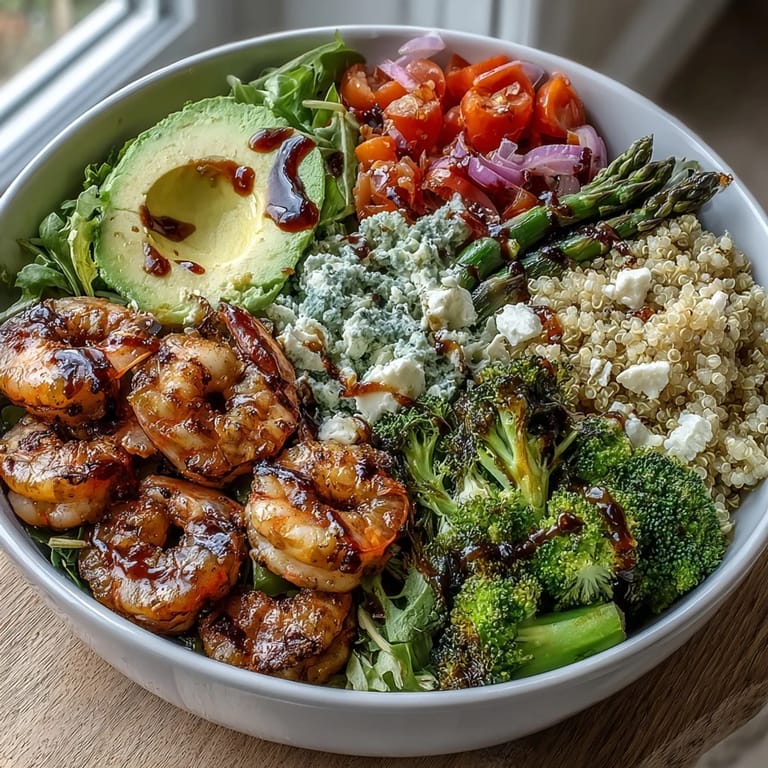
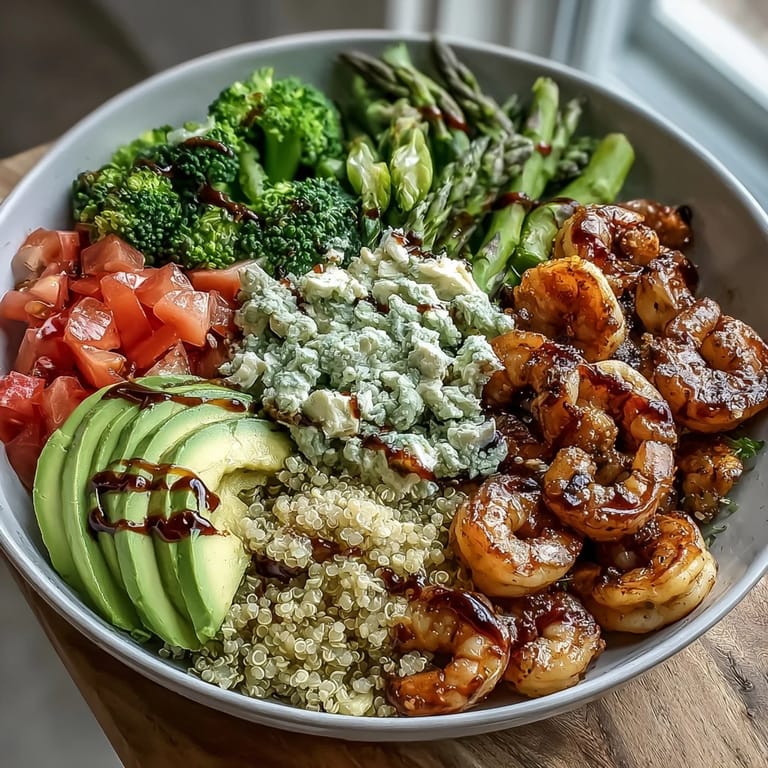
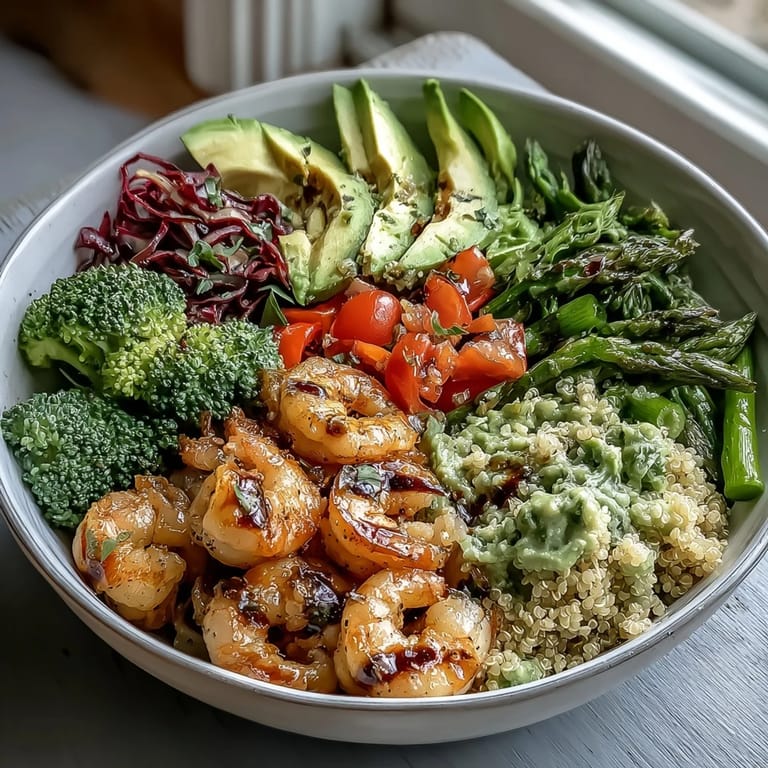
- Divide your quinoa between two bowls and arrange each vegetable and the shrimp on top in colorful sections so everything looks like a painter's palette. This isn't just for Instagram; when each ingredient has its own space, you can taste each one clearly.
- Dress and serve right away:
- Drizzle the dressing over the top just before eating so nothing gets soggy, and eat it immediately while the warm shrimp is still releasing its aroma into all the cool vegetables.
 Pin it
 There's a moment when you bite into this bowl and everything is cold and warm at the same time, crispy and creamy, and you realize you've actually made something that tastes like care. That's the moment it stops being a recipe and becomes something you'll want to make again.
How to Cook Quinoa So It's Actually Fluffy
I used to make quinoa like I was angry at it, and it always turned out mushy and weird. Then someone told me to use a 1:2 ratio of quinoa to water, bring it to a boil, then reduce the heat and let it simmer covered for exactly 15 minutes before fluffing with a fork. That small act of patience changed everything—now each grain stays separate and tastes the way quinoa is supposed to taste, which is actually pleasant.
Why This Bowl Works As a Whole
The genius of this bowl is that every single component serves a purpose; the shrimp gives you protein and richness, the quinoa provides substance and earthiness, the vegetables bring crunch and brightness, and the avocado ties it all together with creaminess. The balsamic dressing is acidic enough to make the whole thing feel cohesive without being heavy, which is why you can eat it on a Tuesday afternoon and feel genuinely full, not sluggish.
Variations and Swaps That Actually Work
Once you understand how this bowl is constructed, you can swap almost anything and it still works. Grilled chicken replaces shrimp without any fuss, roasted chickpeas or baked tofu turn it vegan, and if you don't have asparagus, snap peas or thin green beans blanch just as beautifully. The dressing stays the same, the structure stays the same, and you're never bored.
- Add toasted nuts or seeds for crunch if the vegetables aren't giving you enough texture contrast.
- Try a squeeze of lemon juice in the dressing if you want it brighter and sharper.
- Make the dressing the night before so the flavors have time to get to know each other.
 Pin it
 This bowl became my quiet rebellion against sad desk lunches, and now I make it whenever I need to remind myself that I deserve food that tastes as good as it looks. Eat it slowly, notice each bite, and don't be surprised when people start asking you what you're making.
Recipe Questions & Answers
- → Can I make this bowl ahead of time?
Yes, you can prepare components in advance. Cook quinoa and blanch vegetables up to 2 days ahead. Store separately in airtight containers. Assemble bowls fresh and add dressing just before serving to maintain texture and prevent sogginess.
- → What other protein options work well?
Grilled chicken breast strips, pan-seared salmon fillets, or baked tofu cubes make excellent alternatives. For plant-based options, try roasted chickpeas, edamame, or lentils. Adjust cooking times accordingly and season similarly with salt and pepper.
- → How do I store leftovers?
Store components separately in airtight containers in the refrigerator for up to 3 days. Keep the dressing in a small jar. Reheat shrimp and vegetables gently, or enjoy cold. Quinoa can be eaten chilled or slightly warmed. Avoid overdressing leftovers as it makes vegetables soggy.
- → Can I use different vegetables?
Absolutely. Try bell peppers, shredded carrots, cucumber, snap peas, or roasted sweet potato. Seasonal vegetables like zucchini in summer or roasted Brussels sprouts in winter work beautifully. Aim for variety in colors and textures for the most appealing presentation.
- → Is the balsamic dressing essential?
The balsamic dressing provides essential acidity that brightens all the flavors. Alternatives include a lemon-herb vinaigrette, tahini dressing, or a simple olive oil and lemon juice combination. The key is using something acidic to balance the rich avocado and sweet vegetables.
- → Can I use other grains instead of quinoa?
Brown rice, farro, bulgur, or cauliflower rice all work wonderfully. Choose something that absorbs flavors well and provides a pleasant texture. Adjust cooking time according to grain specifications and ensure it's properly cooked before assembling.