 Pin it
 I wasnt trying to invent anything the night I made this. I had leftover kimchi going funky in the back of the fridge and a craving for something rich and tomatoey. My partner walked in halfway through and said it smelled like a food truck collision in the best way. The tang from the kimchi cut right through the cream, and suddenly pasta night felt like an experiment worth repeating.
The first time I served this to friends, I didnt mention the kimchi until after. One of them kept asking what made it so different, and when I finally told her, she laughed and said she never would have guessed. That reaction stuck with me because it reminded me that good food doesnt need to announce itself, it just needs to taste right.
Ingredients
- Ground pork: It holds flavor better than lean beef and gets a little crispy at the edges if you let it sit undisturbed for a minute.
- Napa cabbage kimchi: Use the good stuff with visible fermentation, not the sweet grocery store kind. The juice is where half the magic lives.
- Crushed tomatoes: I prefer canned over fresh here because the acidity stays consistent and you dont have to worry about watery tomatoes.
- Heavy cream: This is what mellows the heat and binds everything into a sauce that clings to the pasta instead of pooling at the bottom.
- Gochugaru: Optional but worth it. It adds warmth without the sharp burn of regular chili flakes.
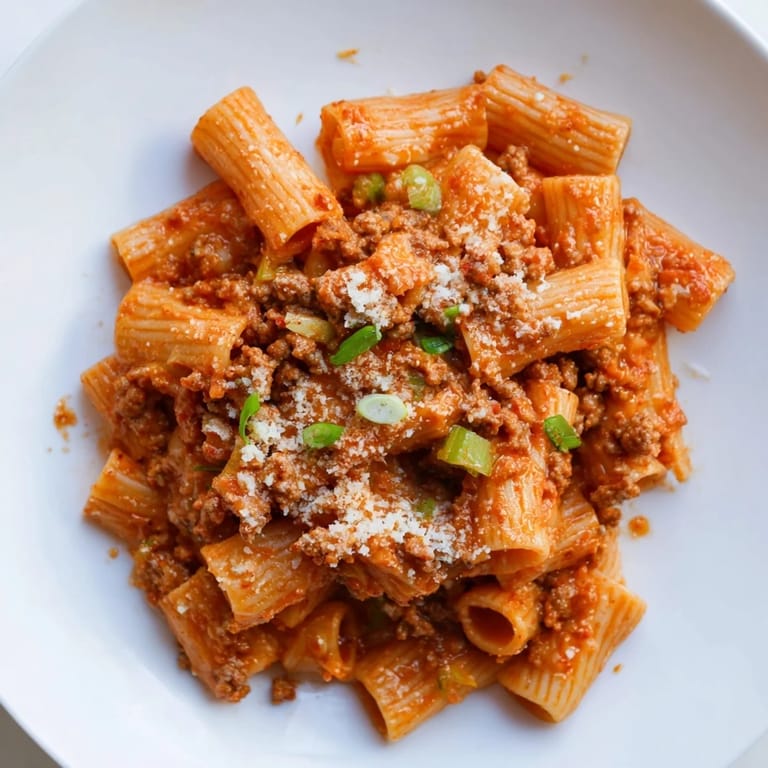
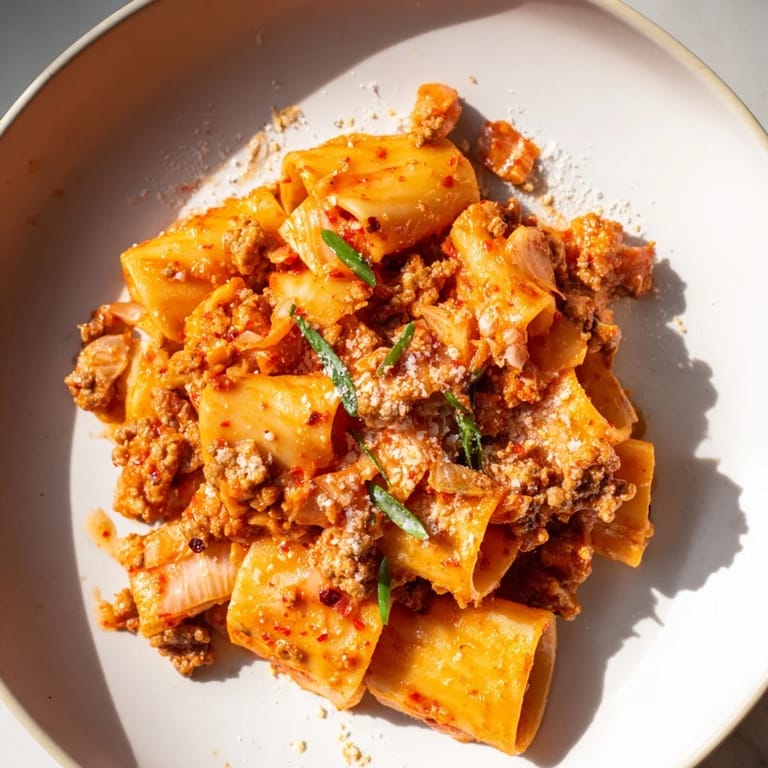
- Rigatoni or penne: The ridges and hollow centers trap the sauce. Smooth pasta just slides right past it.
Tired of Takeout? 🥡
Get 10 meals you can make faster than delivery arrives. Seriously.
One email. No spam. Unsubscribe anytime.
Instructions
- Start with the base:
- Heat olive oil over medium-high and toss in the onion, carrot, and celery. Let them soften and turn golden at the edges, about 5 minutes. Add the garlic and stir until you can smell it, just a minute.
- Brown the meat:
- Add the ground pork and break it up with a wooden spoon. Let it cook without stirring too much so some bits get crispy and caramelized, about 6 to 7 minutes total.
- Bring in the kimchi:
- Stir in the chopped kimchi and kimchi juice. Let it sizzle and soften for 3 to 4 minutes. This is where the funk starts to make sense.
- Build the sauce:
- Add crushed tomatoes, soy sauce, gochugaru, sugar, salt, and pepper. Let it simmer uncovered for 15 to 20 minutes, stirring now and then, until it thickens and the flavors settle into each other.
- Cook the pasta:
- While the sauce simmers, boil your pasta until al dente. Drain it but save about 100 ml of the starchy water.
- Finish with cream:
- Turn the heat to low and stir in the heavy cream and half the pasta water. The sauce should turn silky and coat the back of a spoon.
- Toss and serve:
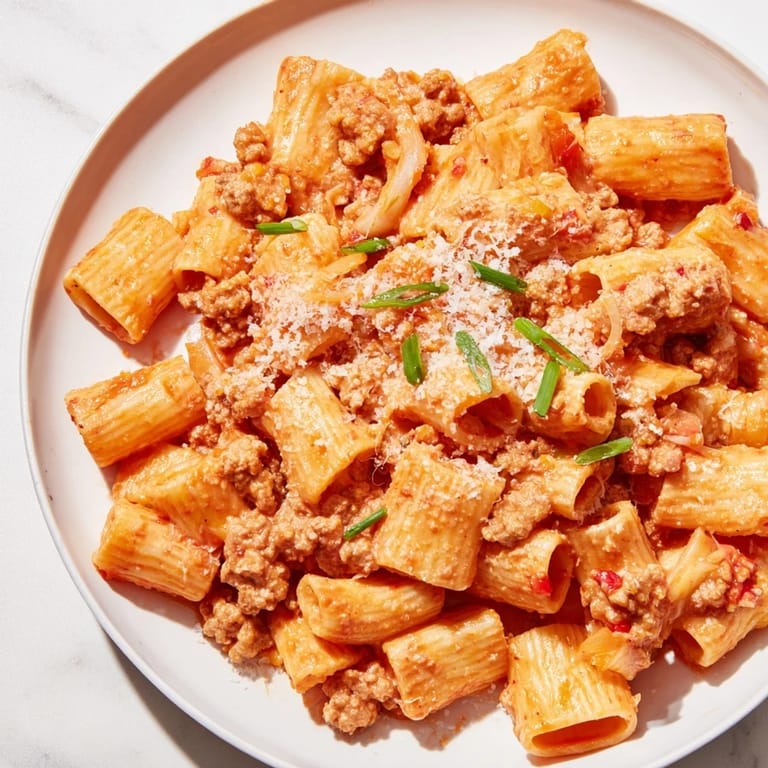
- Add the drained pasta to the ragu and toss until every piece is coated. If it looks tight, add more pasta water a splash at a time. Serve hot with scallions and Parmesan if you want.
 Pin it
 I made this on a Tuesday after a long day and ate it straight from the pot standing at the counter. My kid wandered in, tried a bite, and said it tasted like if spaghetti went to Korea. I took that as a win. Sometimes the best meals are the ones you dont overthink.
How to Adjust the Heat
If youre sensitive to spice, start with mild kimchi and skip the gochugaru entirely. You can always add a pinch at the table. If you want more kick, double the gochugaru or add a spoonful of gochujang for deeper heat. The cream will soften whatever you throw at it, so dont be afraid to experiment a little.
Making It Ahead
The ragu actually tastes better the next day after the flavors have had time to sit together. Make the sauce up to the cream step, cool it down, and store it in the fridge for up to three days. When youre ready to eat, reheat it gently, stir in the cream, and toss with freshly cooked pasta. It reheats beautifully and saves you from starting from scratch on a busy night.
Swaps and Substitutions
If you dont eat pork, ground turkey or chicken works fine, just add a little extra olive oil since theyre leaner. For a vegetarian version, use plant-based crumbles and make sure your kimchi is vegan. Coconut cream in place of heavy cream gives it a subtle sweetness that plays well with the spice. If you cant find gochugaru, use a small pinch of cayenne or smoked paprika, though the flavor wont be quite the same.
- Try short pasta like shells or cavatappi if you dont have rigatoni.
- A squeeze of lime at the end brightens everything up if it tastes too heavy.
- Leftover ragu makes an incredible filling for baked pasta or even toast the next morning.
 Pin it
 This dish doesnt need a special occasion, it just needs a willingness to try something a little different. Make it once and youll understand why I keep coming back to it.
Recipe Questions & Answers
- → What type of meat works best for this dish?
Ground pork delivers a rich and juicy texture, but you can also use beef or a 50/50 blend to suit your taste.
- → Can I adjust the spice level?
Yes, modify the amount of gochugaru and kimchi to increase or decrease the heat according to preference.
- → How do I keep the sauce creamy without dairy?
Use plant-based cream alternatives or coconut cream to maintain a smooth texture without dairy.
- → What pasta shapes work best?
Rigatoni or penne are ideal as their ridges and tubes hold the sauce well, enhancing each bite.
- → How should I serve this dish for best flavor?
Serve it hot, garnished with chopped scallions and optional Parmesan to add freshness and depth.
- → Are there good wine pairings for this fusion dish?
Try a chilled Lambrusco or a fruity Riesling to complement the savory and spicy notes.