 Pin it
 I was halfway through a K-drama marathon when my roommate came home from a Korean BBQ restaurant raving about the smoky beef and how it paired with everything. That's when it clicked: why not take those bold, charred flavors and throw them onto nachos? The first time I assembled these Korean BBQ nachos, I burned the beef slightly (impatience), but the crispy edges actually made the whole thing better. Now it's become my go-to move when friends want something familiar but exciting.
There was this moment at a potluck where I set these down and watched three different people reach for the same chip—total nacho chaos. Someone asked if I'd made them at a Korean restaurant, and I loved admitting I'd just assembled them at home. It became the thing people asked me to bring after that.
Ingredients
- Flank steak or sirloin, thinly sliced (300 g): Thin slices cook fast and soak up the marinade beautifully; ask your butcher to slice it if you're not confident with a knife.
- Gochujang (2 tbsp): This spicy-savory paste is the backbone—don't skip it or substitute with sriracha, they're different animals entirely.
- Soy sauce (1 tbsp): Adds umami depth that makes the beef taste restaurant-quality.
- Brown sugar (1 tbsp): Balances the heat and helps create a light caramelization when seared.
- Sesame oil (2 tsp): Use toasted sesame oil for that nutty punch; regular oil just doesn't have the same soul.
- Garlic and ginger (2 cloves minced, 1 tsp grated): These wake up the marinade and keep it from tasting one-dimensional.
- Rice vinegar (1 tsp): Cuts through the richness so each bite feels bright instead of heavy.
- Tortilla chips (200 g): Choose thicker, sturdy chips that won't crumble under the weight of toppings.
- Mozzarella and Korean cheese (100 g each): The blend creates pockets of melty goodness; Korean cheese adds a subtle tang.
- Fresh vegetables (red onion, carrot, cucumber, scallions): Raw vegetables add crunch and keep everything from feeling too rich.
- Kimchi (2 tbsp chopped): The funky fermented punch that makes people say "wait, what is that?"
- Sesame seeds and fresh herbs: Toasted sesame seeds add nutty texture; cilantro or shiso bring freshness that cuts through the heat.
Tired of Takeout? 🥡
Get 10 meals you can make faster than delivery arrives. Seriously.
One email. No spam. Unsubscribe anytime.
Instructions
- Build your marinade:
- Whisk gochujang, soy sauce, brown sugar, sesame oil, minced garlic, grated ginger, rice vinegar, and black pepper in a bowl until smooth. Add your sliced beef and coat it evenly, making sure every piece gets a bath in that rust-colored paste.
- Let it rest:
- Marinate the beef for at least 20 minutes while you prep everything else; this isn't just about flavor, it's about giving the beef time to relax so it cooks evenly.
- Sear the beef:
- Heat a skillet over medium-high heat until it's smoking just slightly, then add the beef in a single layer (work in batches if needed). Don't move it around—let each piece get golden and slightly charred for 2–3 minutes per side, then move it to a plate.
- Assemble the base:
- Line a baking tray with parchment and spread tortilla chips in a single layer, then scatter half of your cheese blend over them, making sure the chips are evenly covered.
- Layer the heat:
- Spread the seared beef over the cheese, then top with the remaining cheese, creating pockets where it can melt and bind everything together.
- Melt and bubble:
- Pop the tray into a 200°C (400°F) oven for 6–8 minutes, watching until the cheese is bubbling at the edges and starting to turn golden—you want melty, not brown.
- Fresh finish:
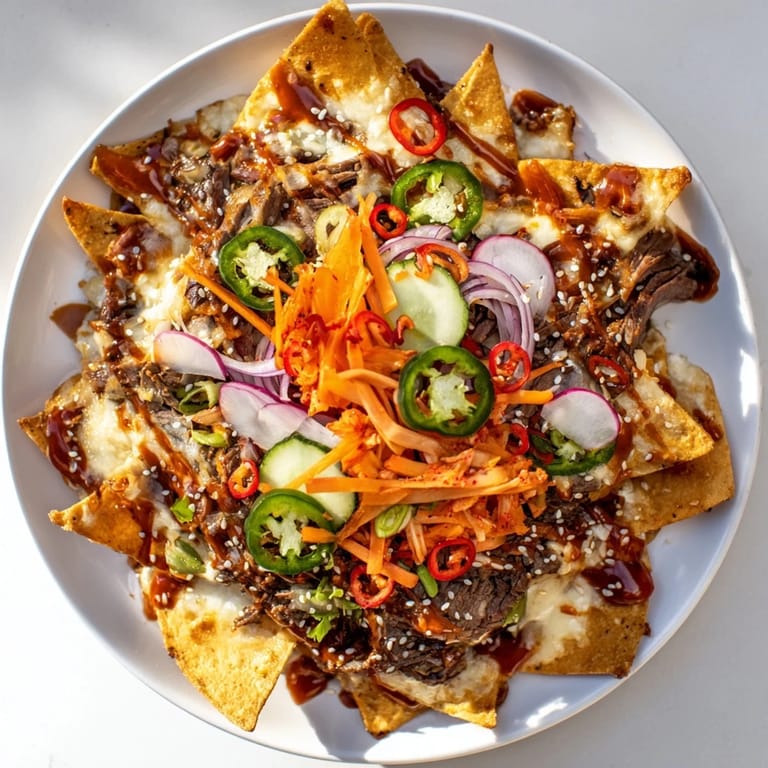
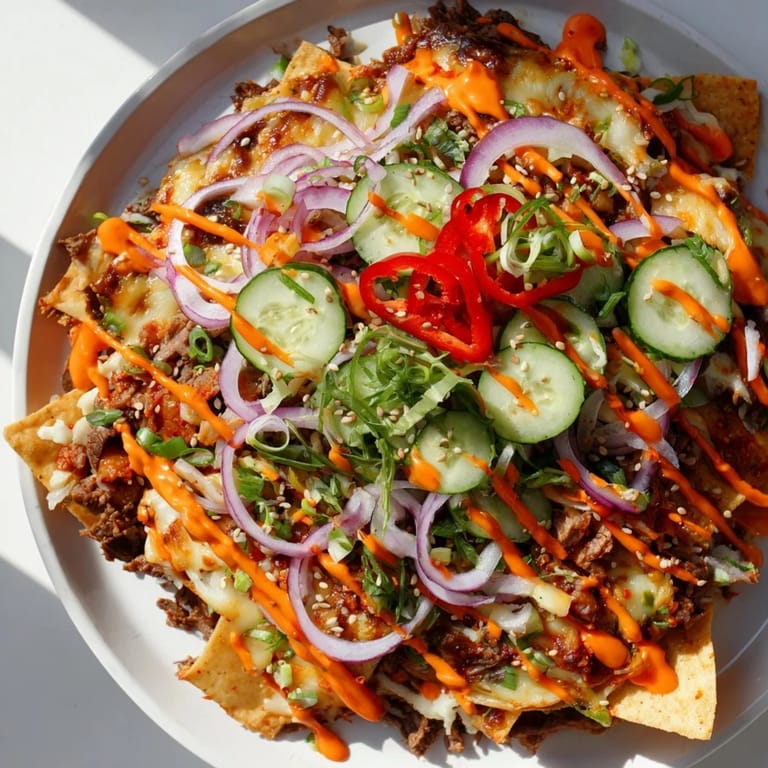
- Pull the tray out and immediately scatter over your raw vegetables, kimchi, and sesame seeds while the cheese is still warm enough to soften them slightly. Drizzle with gochujang mayo if you're using it and serve with lime wedges.
 Pin it
 The real magic happened when my mom tried these and said they tasted like the Korean restaurants she remembered from her childhood, just deconstructed and playful. That's when I realized this dish bridges two completely different food cultures without apologizing for either one.
Why This Works as Fusion Food
Korean BBQ is all about bold, smoky, umami-forward flavors, and nachos are about layers, contrast, and fun. When you combine them, you're not forcing anything; the gochujang-marinated beef has the same confidence as traditional BBQ sauce, and the crispy chips give you the same textural canvas as traditional nacho bases. The fresh vegetables and kimchi make sure it doesn't sit heavy on your palate, which is exactly what Korean meals do—they balance richness with brightness.
Building Your Own Variations
Once you've made this once, you'll start seeing where you can play. Swap the beef for grilled chicken breast if you want something lighter, or go vegetarian with marinated mushrooms or crispy tofu that's been brushed with the same gochujang mixture. Some nights I add avocado because it adds creaminess, or pickled jalapeños when I want extra tang. The marinade is the real hero here, so as long as you keep that consistent, the rest becomes about your mood and what's in your fridge.
Timing and Temperature Matter
The oven temperature of 200°C is specific—too hot and your chips burn before the cheese melts; too cool and everything stays slack and separate. I learned this by trial and error, and now I always set my oven five minutes before I even finish assembling, so it's ready to go the moment the tray is loaded. The beauty of this being a quick 6–8 minute bake is that you can stand right there and pull it out the instant the cheese looks bubbled and golden, giving you nacho perfection instead of a burnt mess.
- Set your oven to temperature while you're prepping and searing the beef.
- Use an oven thermometer if you're skeptical about your oven's accuracy.
- Serve immediately while the cheese is still melty and the chips are still crispy.
 Pin it
 These Korean BBQ nachos are proof that the best recipes come from happy accidents and saying yes to weird ideas. Every time I make them, they taste like a conversation between two cuisines that really understand each other.
Recipe Questions & Answers
- → What cut of beef works best for the marinade?
Thinly sliced flank steak or sirloin works well, absorbing the gochujang marinade while cooking quickly and staying tender.
- → Can I substitute the beef with another protein?
Yes, grilled chicken or tofu are excellent alternatives, allowing flexible protein options without losing flavor.
- → How do I achieve melty cheese on the chips?
Layer shredded mozzarella and Korean cheese, then bake the assembled chips at 200°C (400°F) until bubbly and golden.
- → What fresh vegetables complement the dish?
Thinly sliced red onion, julienned carrot, cucumber, scallions, and optional red chili add crunch and fresh brightness.
- → Are there good condiment options to enhance the flavors?
Sriracha mayo or gochujang mayo adds creamy, spicy notes, while lime wedges provide a zesty finish.