 Pin it
 The first time I made this, I was standing in my kitchen on a Tuesday evening, staring at leftover chicken and thinking about dessert. I'd just finished a lemon posset the night before, and that bright, almost burnt sugar crust kept playing in my head. What if that golden, crackling layer belonged on something savory? Twenty minutes later, I had caramelized sugar clinging to seared chicken, and the pasta water was already boiling. It felt like breaking a rule that turned into the best accident.
I made this for my sister last month, and she kept asking why the chicken tasted like it had been to pastry school. Her husband—who thinks most pasta dishes taste the same—went quiet after the first bite, then asked for seconds before finishing his first plate. That's when I knew the combination actually worked, that it wasn't just my own strange kitchen logic.
Ingredients
- Boneless, skinless chicken breasts (2 large): The blank canvas here, so don't skip patting them dry before seasoning—it's the difference between a golden crust and steamed chicken.
- Granulated sugar (2 tablespoons): The magic ingredient that sounds odd until it caramelizes and shatters under your fork.
- Lemon zest (from 3 lemons total): Fresh zest is non-negotiable; it carries the brightness that makes everything sing.
- Sea salt & black pepper: Use good pepper—pre-ground loses its bite, and this dish needs that sharpness.
- Olive oil (2 tablespoons for chicken, 2 more for sauce): Four tablespoons across two stages ensures you're not skimping on flavor.
- Dried linguine or spaghetti (320 g): Linguine has more surface area for the sauce to cling to, which matters here.
- Unsalted butter & heavy cream: Butter first, then cream—the order creates a richer emulsion than adding them together.
- Garlic (3 cloves, minced): Mince small; large chunks turn bitter when you're building this sauce fast.
- Fresh lemon juice (from 2 lemons): Squeeze it yourself; bottled juice tastes hollow next to fresh cream.
- Parmigiano-Reggiano (60 g): Grate it fresh, and taste as you add it—you're building creaminess, not saltiness.
- Fresh parsley (2 tablespoons chopped, plus leaves for garnish): Add it at the end so it stays bright green, not tired and dark.
Tired of Takeout? 🥡
Get 10 meals you can make faster than delivery arrives. Seriously.
One email. No spam. Unsubscribe anytime.
Instructions
- Get your chicken ready:
- Pat the breasts dry with paper towels—this is crucial for getting a proper crust. Season them on both sides with salt, pepper, and lemon zest, letting the flavors sit while you set up your pan.
- Sear until golden:
- Heat olive oil in a large skillet over medium-high heat until it shimmers slightly. The chicken should sizzle when it hits the pan; if it doesn't, wait another 30 seconds. Sear for 4-5 minutes per side, looking for a deep golden crust, not white or pale spots.
- Brûlée the tops:
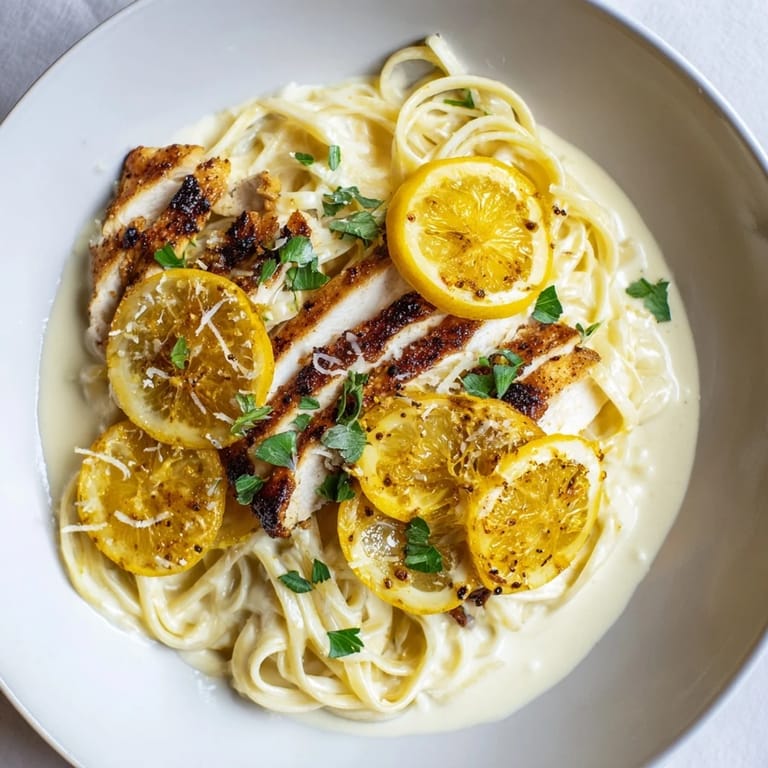
- Sprinkle one tablespoon of sugar across the top of each breast, spreading it evenly. If you have a kitchen torch, wave it slowly until the sugar melts into an amber crust with some darker spots; this takes about 60-90 seconds. If using a broiler, place the skillet under high heat for 1-2 minutes, but stay in the kitchen—it can char in seconds.
- Let it rest:
- Transfer the chicken to a cutting board and let it sit for 5 minutes before slicing thinly against the grain. This keeps the meat tender and lets the sugar crust set properly.
- Get pasta cooking:
- While the chicken rests, bring a large pot of well-salted water to a rolling boil. Add pasta and cook according to package instructions, but taste it two minutes early—al dente means it still has a slight firmness in the center, not chewy.
- Build the sauce:
- In your now-empty skillet, melt butter and olive oil over medium heat. Add minced garlic and let it turn fragrant and pale gold, about one minute—don't let it brown or it tastes bitter.
- Add brightness:
- Stir in lemon zest and juice, letting them bubble together for 20 seconds. Pour in heavy cream slowly while stirring, bringing it to a gentle simmer where small bubbles kiss the surface.
- Melt in cheese:
- Remove from heat and add grated Parmigiano-Reggiano a handful at a time, stirring gently until it disappears into the cream. This creates smoothness, not graininess—low heat is your friend here.
- Bring it together:
- Drain pasta, reserving half a cup of starchy water. Add pasta to the sauce and toss over medium heat for about a minute, adding reserved pasta water in splashes until the sauce coats each strand with a glossy sheen, not a puddle underneath.
- Finish & serve:
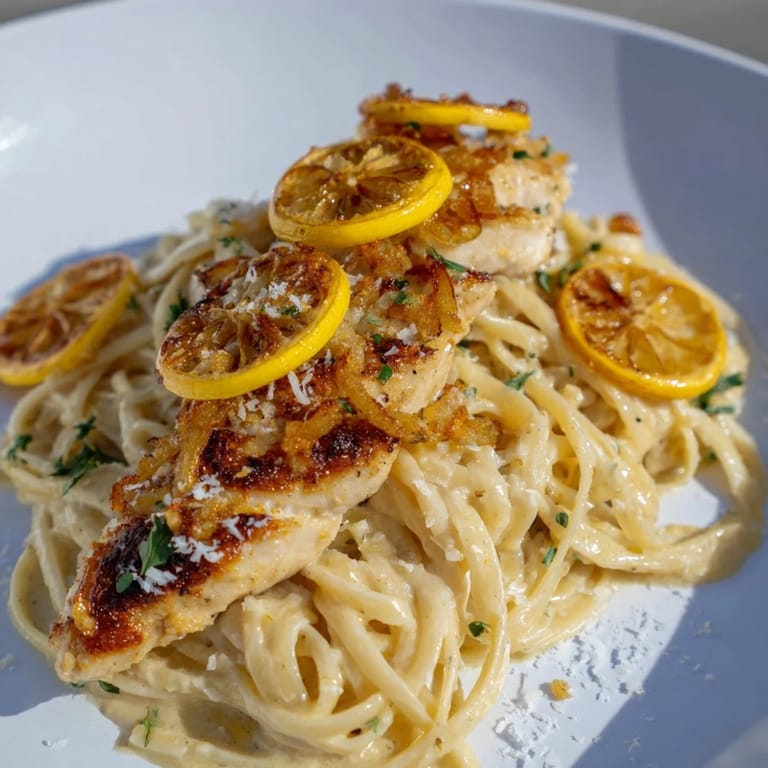
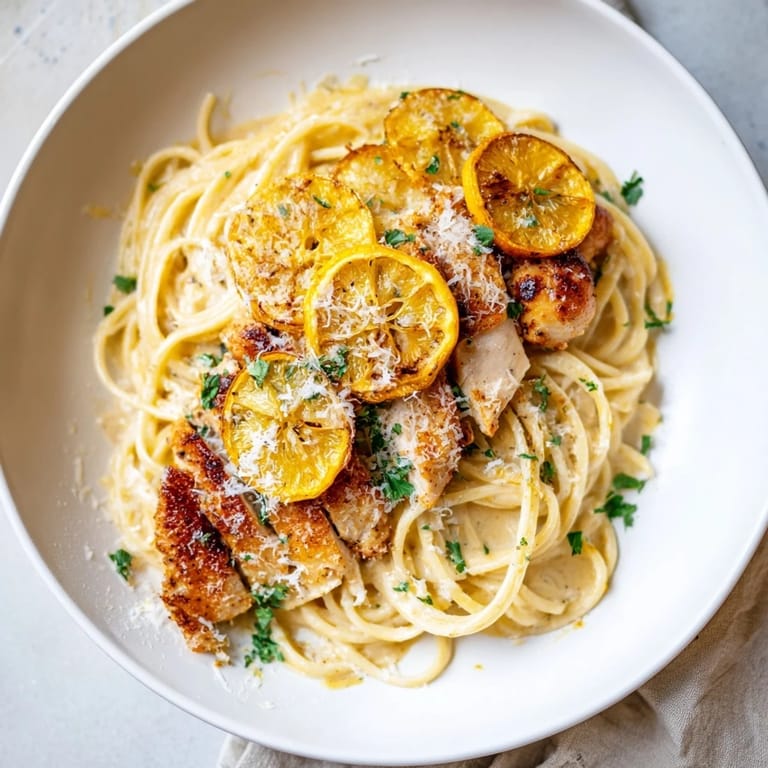
- Divide pasta among four bowls or plates. Top each with sliced lemon brûlée chicken, a scatter of fresh lemon zest, extra cheese shavings, and fresh parsley leaves. Serve immediately while the crust is still crisp.
 Pin it
 I've made this enough times now that I can tell when someone's had it just by watching their face. There's always that moment where they realize dessert flavor and dinner flavor can live in the same bowl, and it's like watching someone discover a new room in their own house.
Why This Combination Works
The brûléed sugar on chicken sounds like it shouldn't work with a creamy lemon pasta, but the two elements are built on the same principle: bright citrus balanced against caramelized sweetness. The cream sauce softens the sugar's intensity, while the chicken's crunch breaks up the pasta's smoothness. It's not a clash; it's a conversation.
Timing That Works
Start the water as soon as you pat the chicken dry, so the pasta's ready roughly when the sauce is. There's nothing worse than finishing a sauce and having to wait seven minutes for pasta, or sauce getting cold before you plate. If your timing's slightly off, a splash of pasta water and some gentle stirring over low heat brings everything back to silky perfection.
Variations You Can Try
Once you understand how this dish works, it becomes flexible. I've swapped spaghetti for fettuccine, which works beautifully because the wider ribbons catch more sauce. On nights when I want something tangier, I use crème fraîche instead of heavy cream—it cuts through the richness. Some people toast pine nuts or panko breadcrumbs for extra texture on top, and honestly, that crust adds something special when everything else is soft.
- Try adding a handful of fresh spinach to the sauce at the very end, just to wilt it in the residual heat.
- If you have fresh lemon zest left over, a few capers stirred into the sauce add a salty, briny pop.
- Grind your black pepper fresh at the table for maximum sharpness—it makes a real difference in a dish this simple.
 Pin it
 This dish taught me that the best recipes often come from asking strange questions in the kitchen, and some of the best meals happen when you're willing to sound a little foolish. Make this, and see what it becomes on your own stove.
Recipe Questions & Answers
- → How do I achieve the perfect caramelized lemon crust on the chicken?
After searing, sprinkle sugar on the chicken and carefully use a kitchen torch or broiler to caramelize until golden and crisp, avoiding burning.
- → Can I substitute the pasta type?
Yes, dry linguine or spaghetti works best, but feel free to use your preferred long pasta shape for similar results.
- → What is the purpose of reserving pasta water?
Adding reserved pasta water helps loosen the sauce and bind it to the pasta, enhancing silkiness and flavor distribution.
- → How can I add texture to this dish?
Sprinkle toasted pine nuts or crispy breadcrumbs on top before serving for a pleasant crunch.
- → Is there a way to make the sauce tangier?
Substitute heavy cream with crème fraîche to introduce a mild tang for extra depth.